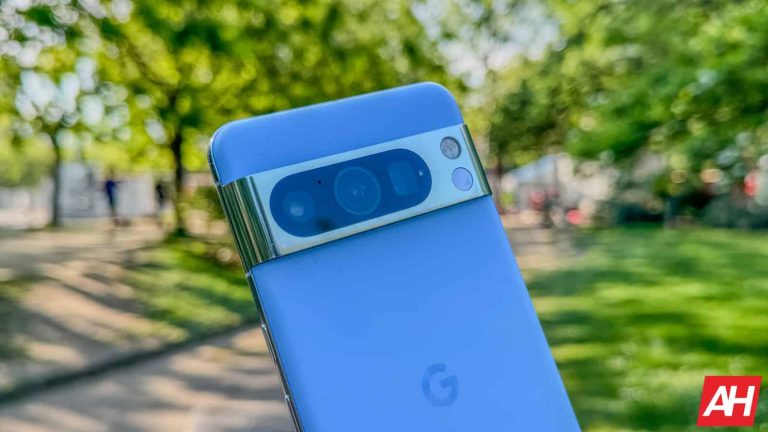
In the last few hours, multiple Pixel 8 series users have been reporting random internet connectivity issues. Apparently, some websites simply refuse to load for them. It seems that the VPN by Google app is to blame for the situation.
Yesterday was the date for the announced Google One VPN shutdown. Users of supported Pixel devices should now move to the VPN by Google app. The latter arrived in October last year with the Pixel 8 series. That said, several people have been facing connectivity issues on their Pixel 8 devices while using the VPN. There are even a few cases of people using Pixel 7 phones.
VPN by Google preventing sites and apps from loading on some Pixel 8 devices
According to reports, there are sites and apps failing to load with no apparent explanation. The problem does not affect all services, but rather some in particular. For instance, 9to5Google describes Amazon as one of those apps/sites failing to load. On the affected platforms, both the dedicated app and the website version are unusable.
The issue does not seem to affect everyone equally, since some even report not being able to access any app or website. There are also cases of devices that are totally free of problems. For those affected, VPN by Google causes problems on any platform, be it Android, iOS, Windows, or Mac.
Just disabling the VPN by Google would fix internet connectivity in most cases. Also, the app got a new version hours after the reports emerged, and some claim that its problems were fixed after updating. However, it is possible that you still do not have the new update available due to a possible gradual rollout.
More potential workarounds while a fix arrives
If you are still facing issues and have not received the latest app update, Google’s support page offers some potential workarounds for connectivity issues related to its VPN. You can try to disable the VPN directly from the system settings instead of from the app. You can also delete your Google One VPN account from your device.
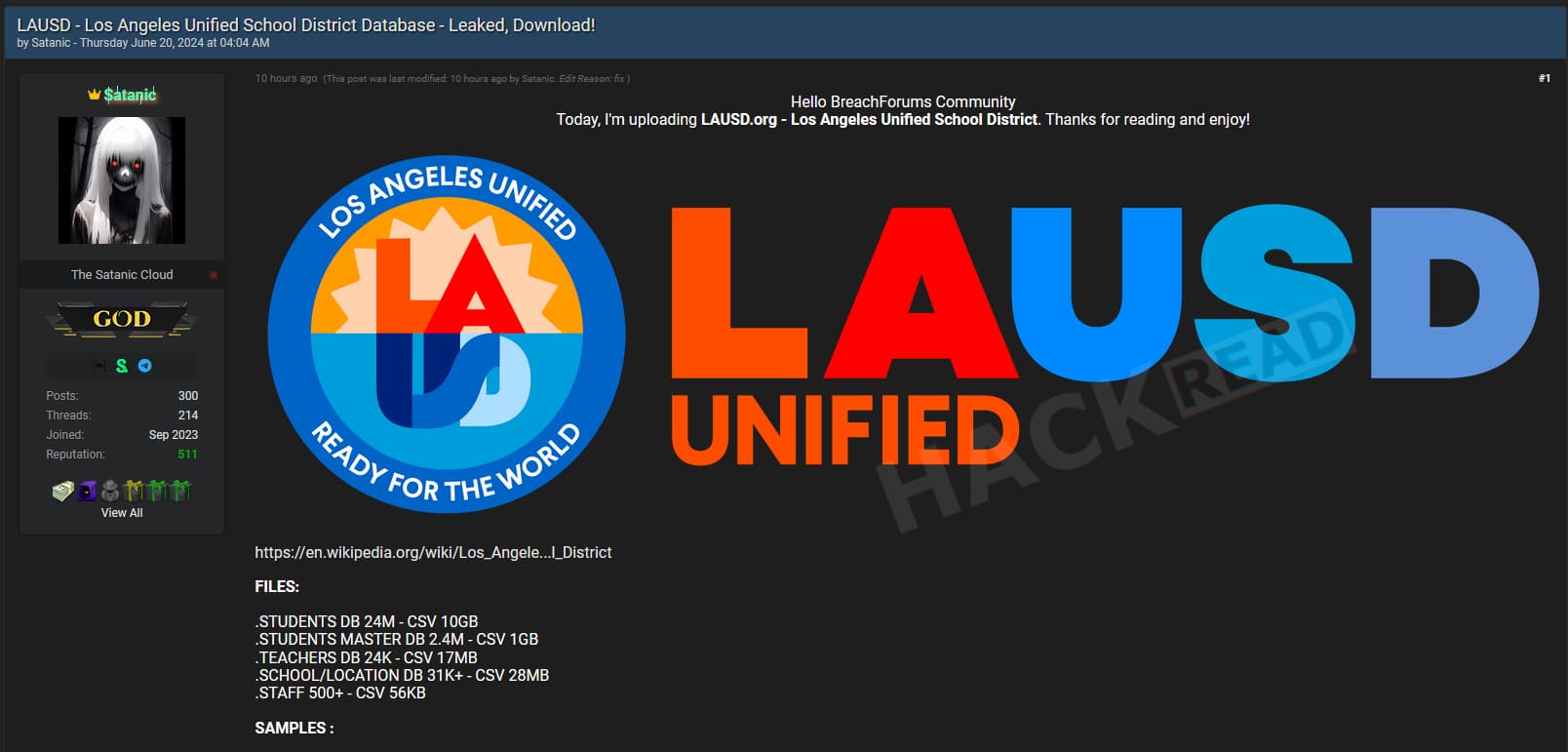
The Los Angeles Unified School District (LAUSD) has fallen victim to a significant data breach. A hacker identified as “Satanic” from the group “The Satanic Cloud” has leaked the personal, contact, and location details of millions of students, teachers, and other staff on Breach Forums.
The hacker’s post on the infamous Breach Forums (Screenshot: Hackread.com)
Even worse, the data, which was dumped yesterday earlier this month, is now being circulated on various hacking and cybercrime platforms, including Russian-speaking sites and database leak-related Telegram channels.
For context, the Los Angeles Unified School District (LAUSD) is a public school district in Los Angeles, California. It is the largest public school system in California by student enrollment and the second largest in the United States.
Hackread.com conducted an in-depth analysis of the entire dataset, comprising 10GB worth of records, and concluded that the breach was legitimate.
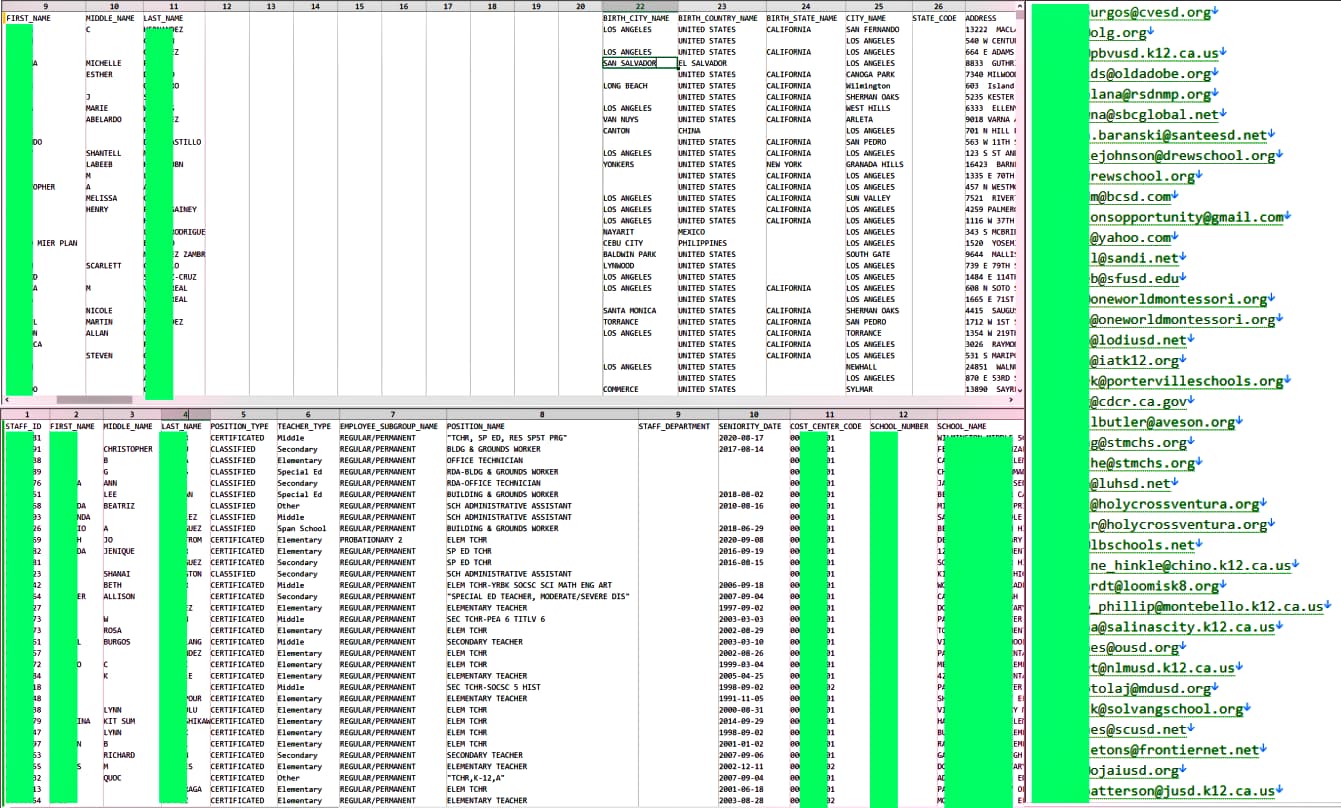
The dataset includes the personal information of over 24.16 million students (24,156,469), and almost 55,000 teachers and staff have been impacted by this data breach. The exact number of leaked email addresses, after removing duplicate data, is 1,954,991 (approximately 1.95 million). Here is the detailed breakdown of the entire dataset:
Students Data
The most critical part of this data breach involves student data, which includes personal, contact, and address information such as the following:
Gender
Ethnicity
Zip Codes
Current City
Date of Birth
ID Numbers
School Names
School Phone Numbers
Phone numbers
Email Addresses
Home Addresses
Home Location Coordinates
Immigration Status
Parent/Guardian ID Number
District Student ID Numbers
Full Names (First, middle, last)
The city and country where the student was born
Parents Details (Full name, phone numbers, home and email addresses)
and a lot more…
Teachers and Other Staff Data
Like students, the data breach has significantly impacted teachers and other staff at the school. Hackread.com identified the following records on teachers while analyzing the data:
Gender
Ethnicity
Full Names
Date of Birth
Seniority Data
Staff ID Number
Email Addresses
Home Addresses
School they work for
Location Coordinates
Education/Qualification
School Names
Campus Codes
Employment Status
Years of Experience
Type of Employment (Regular, permanent or temporary)
The position they hold in the school (Teacher, technical, or grounds worker, etc)
and a lot more…
Screenshot from the data analysed by Hackread.com
Snowflake Related Breach
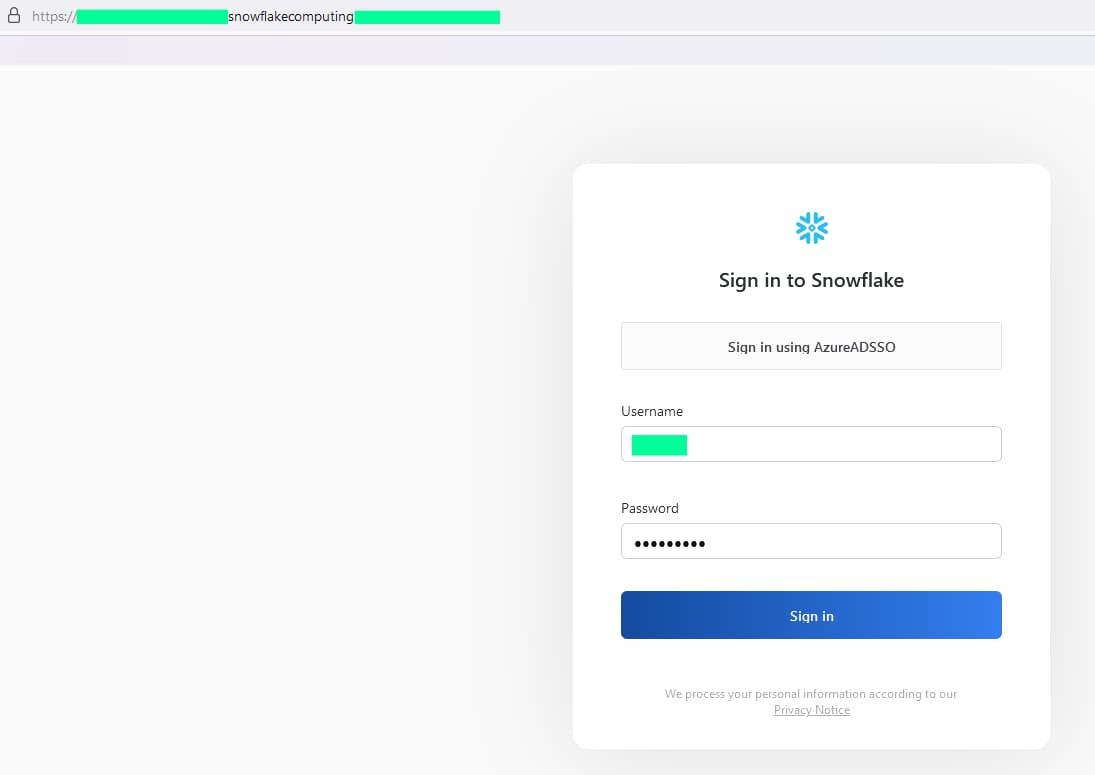
Hackread.com contacted the hacker who claimed responsibility for the attack and confirmed that this was a Snowflake-related breach. The hacker shared login credentials for the alleged Snowflake account used in the LAUSD data breach. They also warned that “a lot more is coming,” indicating further exploitation of the Snowflake vulnerability.
The login link and credentials provided by the hacker which they claim were used in extracting LAUSD data (Note: Hackread.com did not log in or attempted to log in to this portal)
It is worth noting that the Snowflake software vulnerability was also the cause of the infamous Ticketmaster data breach. This vulnerability continues to be exploited by cybercriminals worldwide. Additionally, according to Bloomberg, LAUSD has acknowledged that the data breach occurred because a third-party vendor stored the stolen data on Snowflake.
Implications
Although the leaked records do not contain passwords or Social Security Numbers (SSNs), this is not a random data breach. It involves contact details and the physical locations of children, who are among the most vulnerable members of our society.
Parents, teachers, staff, and students are advised to be vigilant for any malicious activities that may occur under their names. This could include phishing scams, identity theft incidents, fake social media profiles, or attempts to sign up on malicious sites.
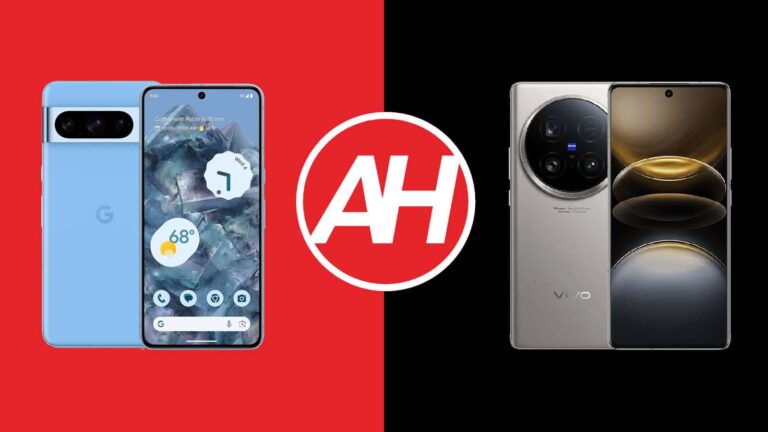
In this article, we’ll be comparing the very best smartphones from Google and Vivo. It’s a comparison between the Google Pixel 8 Pro vs Vivo X100 Ultra. Google’s handset arrived last year, while the Vivo X100 Ultra followed in May this year. They may both be flagship offerings from their companies, but they’re very different. That is not surprising at all, actually.
Before we start, do note that the Vivo X100 Ultra was launched in China only. A global variant is not available, but you can import it and install the Google Play Store on it. In any case, we’ll first list their specifications, and will then move to compare them across a number of other categories. We’ll compare their designs, displays, performance, battery life, camera performance, and audio output. Let’s get to it, shall we?
Specs
Google Pixel 8 Pro vs Vivo X100 Ultra, respectively
The two phones may not look that different from the front, even though they are. They both have a centered display camera hole and very thin bezels around their displays. The two phones also have a similar curvature on the corners. The thing is, the Pixel 8 Pro has a flat display, while the Vivo X100 Ultra has a curved one. Both phones include physical buttons on the right-hand side.
If we flip them over, you’ll see completely different camera islands on the back. The Pixel 8 Pro has a camera visor that is covered by metal. It stretches from the frame on the left side of the phone to the frame on the right side of the device. The Vivo X100 Ultra has a large camera oreo on the back. It is centered in the top portion of the phone. Both sets of camera islands protrude on the back quite a bit. The backplates on both phones are curved towards the sides.
Both of these devices are actually made out of metal and glass. They have an aluminum frame. The Vivo X100 Ultra is slightly taller, and slightly narrower while being a little bit thicker too. Vivo’s handset is heavier of the two, as it weighs 229 grams compared to 213 grams of the Pixel 8 Pro. Do note that both of these phones are IP68 certified for water and dust resistance. They are both also quite slippery. You’ll likely want to use a case regardless of which phone you end up getting.
Google Pixel 8 Pro vs Vivo X100 Ultra: Display
The Google Pixel 8 Pro includes a 6.7-inch 2992 x 1344 LTPO OLED display. That panel is flat, and it has an adaptive refresh rate of up to 120Hz. HDR10+ content is also supported, and the peak brightness of this panel is at 2,400 nits. The display aspect ratio is 20:9, while the screen-to-body ratio is around 87%. The Gorilla Glass Victus 2 is placed on the display to protect it.
On the flip side, the Vivo X100 Ultra comes with a 6.78-inch QHD+ (3200 x 1440) LTPO AMOLED display. This panel is curved, and it also has an adaptive refresh rate of up to 120Hz. Dolby Vision is supported here, and so is HDR content. The peak brightness of this display is set at 3,000 nits. The display aspect ratio is 20:9, while the screen-to-body ratio is around 89%. The display protection is unknown, though.
Regardless of which panel you end up using, you’ll get a great one. They’re both vivid and have great viewing angles. They also offer deep blacks and are very sharp. The blacks are deep on both of these displays. The touch response is also great, while both offer a high refresh rate. On top of all that, both displays do get more than bright enough when necessary, though the Vivo X100 Ultra is a bit better in that regard.
Google Pixel 8 Pro vs Vivo X100 Ultra: Performance
Google’s flagship comes with the Tensor G3 processor. That is Google’s very own chip, it’s a 4nm processor. The phone also includes 12GB of LPDDR5X RAM and UFS 3.1 flash storage. The Vivo X100 Ultra, on the other hand, is fueled by the Snapdragon 8 Gen 3 processor. Qualcomm’s most powerful chip, a 4nm processor. The device comes with up to 16GB of LPDDR5X RAM and UFS 4.0 flash storage.
The Vivo X100 Ultra does have a more powerful chip. They are both 4nm processors, but the Snapdragon 8 Gen 3 is more powerful. You will not notice that unless you’re gaming. The Vivo X100 Ultra does pull ahead in truly graphically-intensive games, even though the Pixel 8 Pro can play them. When it comes to regular games that are not that demanding, both phones do a great job. The heat is not an issue on either phone, even though the Pixel 8 Pro will pick it up sooner when it comes to gaming.
In regards to regular, everyday performance, they both do a great job. They are capable of providing smooth performance. Both phones open apps really fast, and they’re also great in terms of multitasking. The same goes for consuming multimedia, browsing the web, image processing, taking pictures, and so on. Basically everything works equally well from day-to-day, you probably won’t have any issues. Just note that the Vivo X100 Ultra does pull ahead in the gaming department.
Google Pixel 8 Pro vs Vivo X100 Ultra: Battery
The Google Pixel 8 Pro includes a 5,050mAh battery on the inside. The Vivo X100 Ultra comes with a 5,500mAh battery pack. Both phones are capable of providing good battery life, but the Vivo X100 Ultra does trump the Pixel 8 Pro. Getting over 7 hours of screen-on-time with the Vivo X100 Ultra is not a problem, even over 8 hours of screen-on-time if you’re careful. The Pixel 8 Pro can’t really go that high, at least it wasn’t able to do it for us.
The Pixel 8 Pro usually flies between 6 and 7 hours of screen-on-time, presuming that gaming is not included in the mix. You may have a different experience with both of these phones, of course. Battery life is very subjective, and there are a number of possibilities. It all depends on your usage, the apps you use, your signal strengths, and so on. There are so many variables to consider.
In terms of charging, the Vivo X100 Ultra is the clear winner. It supports 80W wired, 30W wireless, and 5W reverse wired charging. The Pixel 8 Pro supports 30W wired, 23W wireless, and 5W reverse wireless charging. The thing is, the Vivo X100 Ultra does come with a charger, while the Pixel 8 Pro does not. You’ll need to get one separately if you buy the phone, presuming you don’t already own one.
Google Pixel 8 Pro vs Vivo X100 Ultra: Cameras
Both of these phones have three cameras on the back. The Google Pixel 8 Pro includes a 50-megapixel main unit, a 48-megapixel ultrawide camera (126-degree FoV), and a 48-megapixel periscope telephoto camera (5x optical zoom). The Vivo X100 Ultra, on the flip side, has a 50-megapixel main camera (gimbal OIS), a 50-megapixel ultrawide unit (116-degree FoV), and a 200-megapixel periscope telephoto camera (3.7x optical zoom, macro). ZEISS is a part of the Vivo X100 Ultra camera setup and experience, by the way.
Now, both of these phones do a great job when it comes to taking photos. They do a different job, though. The Pixel 8 Pro shots are more contrasty and do often seem more processed. The Vivo X100 Ultra leans a bit more toward warmer colors. Both phones provide very detailed and sharp photos and are very consistent too. Their secondary cameras do a good job of following the color profile of the main shooters. The portrait, telephoto, and macro performance of the Vivo X100 Ultra are better than what the Pixel 8 Pro offers, though.
In low light, both phones do a great job. The Pixel 8 Pro has a tendency to brighten up scenes a bit more than the Vivo X100 Ultra does. Both do a great job of optimizing images, though the Vivo X100 Ultra handles light flares noticeably better than the Pixel 8 Pro. Chances are you’ll be happy with either phone’s camera setup, but there are some differences for you to consider.
Audio
You will find a set of stereo speakers on both phones. Those speakers are actually very similar in terms of loudness, and both sets are well-balanced. They’re not the loudest speakers around, but they’ll do the trick.
What is not located on either phone is an audio jack. You will need to use their Type-C ports if you’d like to connect your wired headphones. For wireless connectivity, the Pixel 8 Pro offers Bluetooth 5.3, while the Vivo X100 Ultra supports Bluetooth 5.4.
Treating your years shouldn’t always require you to pay an arm and a leg. There are far too many IEMs (in-ear monitors) that cost hundreds of dollars. Some go over $1,000! What if you want to have a high-quality pair of IEMs without needing to take out a second mortgage on your house? This is where the MEZE AUDIO ALBA come in. This is a set of IEMs with quality that far outweighs the price.
There are several IEMs on the market that will cost you a pretty penny. A good example would be the newly-launched Campfire Audio Fathom. This is a set of IEMs that have quality pouring out of every microphone hole. They’re for people who are on the more premium end of the IEM audiophile spectrum. These retail for $1,049, and they’re worth the money.
However, if you’re a newcomer to the audiophile scene, and you want to get a taste, you probably shouldn’t drop a grand on a pair of monitors. This is where products like the ALBA come in. They bring quality to a price point that’s not quite so scary.
The MEZE AUDIO ALBA are a set of premium (and not pricey) IEMs
Coming in at $159, the ALBA undercut much of the audiophile equipment market. While they’re more expensive than your typical store-shelf headphones, they’re worth so much more than their price. So, what makes these IEMs suitable to be your audiophile onramp? Let’s dive in!
Let’s talk design
Before you get an earful, you’re getting an eyeful. The ALBA are a very pretty set of IEMs. From a distance, it looks like they’re white, but when you look closer, you’ll see this beautiful glittery texture. This texture pervades the entire body of the monitors. They almost look pearlescent.
The design of the actual IEMs is pretty sleek with a unique rounded design. The silver microphone hole gives each IEM character. The same goes for the ring around the plug. It’s a design you can appreciate.
Even at their affordable price, the MEZE AUDIO ALBA IEMs have anodized aluminum components rather than plastic parts. This gives them a premium feeling in the hand and makes them sturdy.
Now, the sound
When it comes to the actual sound, you’re going to be getting some high-quality audio. These IEMs come with a set of drivers custom-tuned to deliver highly detailed sound. What’s neat about the drivers is that they’re designed to give you an all-around neutral sound profile with just a bit of added warmth. This way, you’ll be able to listen to a wide range of content without any issues. The audio will sound natural.
The MEZE AUDIO ALBA are designed to deliver top-notch noise isolation to give you the best possible listening experience. They’ll give you power when you need it along with incredible details.
The sound will be even better if you use the included 3.5mm to USB-C adaptor. The adaptor has a DAC included that pushes a high-quality audio signal to the monitors. Whether you’re using the headphone jack or the USB-C port, you’re going to be getting immersive audio.
Specs
Moving onto the specs, these IEMs come with 10.8mm dynamic drivers. They have an SPL of 109 dB SPL/V at 1 kHz, a Frequency Range of 15 Hz – 25 kHz, Distortion of <0.1% at 1 kHz, and an impedance of 32 Ω at 1kHz.
When you order your IEMs, you’ll get a braided 1.2m cable with a 3.5mm headphone tip, a USB-C adaptor, four ear tip sizes (Small, Medium, Large, and Extra Large), and a carrying case.
If you’re looking to start your journey to be an audiophile, you’re going to want to start with these IEMs. Your ears (and especially your wallet) will thank you!
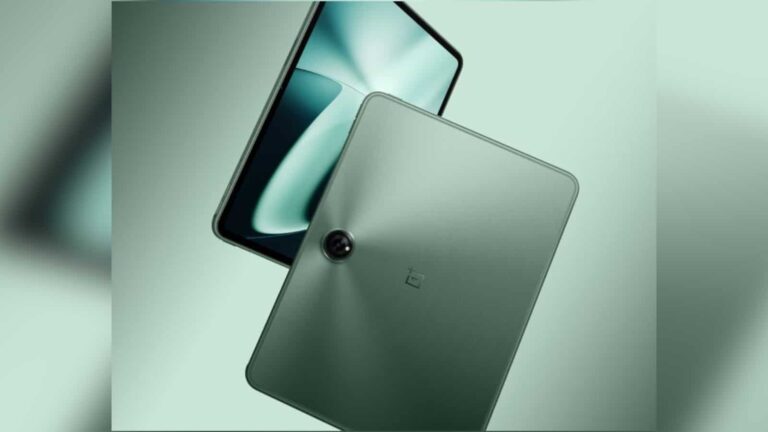
The OnePlus Pad 2 may have just been revealed in a new image, giving consumers a potential first look at what the design of the tablet may be like. OnePlus has recently unveiled the OnePlus Pad Pro in China, and the company has posted about it on its official social account on Weibo. It’s suspected that the image of the OnePlus Pad Pro may also be the OnePlus Pad 2. While OnePlus hasn’t confirmed this, it’s possible that ‘OnePlus Pad 2’ will be the name for its global/US release.
Detailed specifics are scarce, but OnePlus does mention a couple of key things that could point to this being the OnePlus Pad 2. For example, in its Weibo post, OnePlus says that the OnePlus Pad Pro will be “the most powerful Android tablet.”
This might suggest that the OnePlus Pad Pro is using the Snapdragon 8 Gen 3 mobile platform, as this is currently the most powerful mobile chipset on the market. The original OnePlus Pad was powered by MediaTek’s Dimensity 9000 chipset. So the key takeaway is that the Snapdragon 8 Gen 3 would be a notable upgrade from the Dimensity 9000 worthy of calling the OnePlus Pad Pro the “most powerful Android tablet.”
The OnePlus Pad 2 image shows a similar design to the old tablet, but it’s slightly different
It’s tough to tell if this is indeed the OnePlus Pad 2, at least when judging by the design. The OnePlus Pad Pro shown and the OnePlus Pad look essentially the same with very little difference in style. There’s still a big round camera sensor in the middle of the top edge on the back. There are two key differences in the design based on the image that OnePlus shared, however.
Despite being subtle, the OnePlus Pad Pro looks to have a different finish than that of the OnePlus Pad. On the OnePlus Pad, the back has a brushed metal finish and it comes in a color called Halo Green. The OnePlus Pad Pro looks to have no brushed metal look at all. Instead, the finish looks almost matte. The other key difference is the colors. While there is a green color, it’s not the same green as the Halo Green option from the OnePlus Pad by the looks of it. The OnePlus Pad Pro also very clearly comes in a new dark gray or black option as well.
OnePlus was already rumored to be using the Snapdragon 8 Gen 3
Back in mid-April, a rumor surfaced that the OnePlus Pad 2 would come powered by the Snapdragon 8 Gen 3 mobile platform. This detail hasn’t been confirmed just yet. However, with the Snapdragon 8 Gen 3 rumor already out there, OnePlus revealing the OnePlus Pad Pro and calling it the most powerful Android tablet adds to the suspicion that this could be the OnePlus Pad 2, just under its own name for the Chinese market.
In addition to those details, the image from OnePlus also shows a keyboard accessory and a stylus pen. OnePlus already offers a magnetic keyboard for the old tablet, but as Android Authority points this keyboard attachment looks newer. The stylus is also a new accessory as OnePlus doesn’t currently offer this in the store.
During the latest WWDC24, Apple revealed its suite of AI-powered features. Although several will arrive next year, users will receive some key ones in September. However, it seems that customers in the EU will have to wait a little longer, as the company confirmed a delay in the rollout of Apple Intelligence.
The EU has the Digital Markets Act (DMA) with regulations that companies must comply with to operate in member countries. The DMA has forced Apple to make some big changes to its business model. For example, discarding its own Lightning port in favor of the USB-C standard. Also to allow third-party app stores on iOS. The goal of the legislation is to guarantee a fairer market for all participants and avoid monopolistic practices.
Apple confirms a delay for the Apple Intelligence rollout in the EU
Apple has been one of the companies most affected by the DMA, and it seems that its AI-powered features are also struggling to comply. The company confirmed to the Financial Times a delay in the rollout of Apple Intelligence in the EU. There are other features affected by the delay, such as iPhone Mirroring, and SharePlay Screen Sharing. According to the Cupertino giant, they are working to make these services comply with DMA regulations.
Apple was going to start the global rollout, including EU countries, in September. While there is no exact new date for the rollout, Apple confirmed that it will not happen this year on the old continent. More specifically, the company spokesperson said “Due to the regulatory uncertainties brought about by the Digital Markets Act, we do not believe that we will be able to roll out three of these [new] features — iPhone Mirroring, SharePlay Screen Sharing enhancements, and Apple Intelligence — to our EU users this year.”
iPhone Mirroring and SharePlay Screen Sharing also delayed
Apple Intelligence is the company’s suite of AI-powered features for iOS 18. It includes features such as Genmoji, Image Playground, and Writing Tools, among others. However, users in the EU will have to wait a few more months to enjoy them. Apple confirmed that the iPhone Mirroring feature will also not arrive on time. The latter will allow you to use your iPhone remotely from a Mac.
SharePlay Screen Sharing is the other feature that will not be available in September in the EU. This one is intended as a tool to facilitate remote assistance. It lets someone else control what happens on your screen using SharePlay. It is possible that users in the UK will receive all those features in September since they have not been part of the EU for years.
More DMA-related issues for Apple
This isn’t the only DMA-related difficulty Apple is facing. Currently, a commission is studying whether Apple is really complying with the law regarding third-party app stores. There are questions about whether Apple is being fair because of its latest fee scheme for developers.
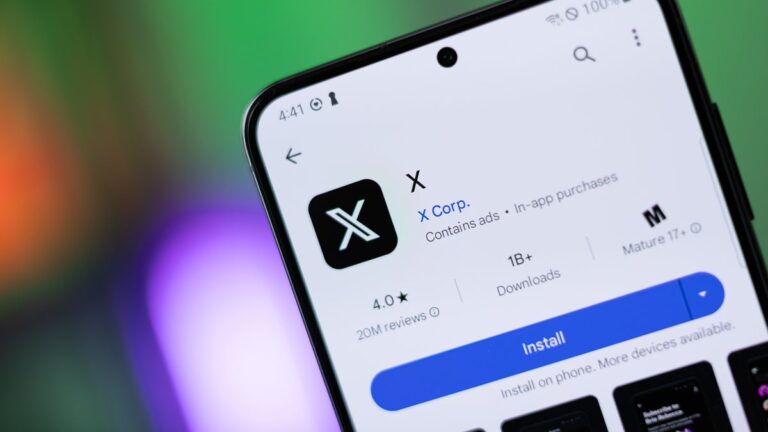
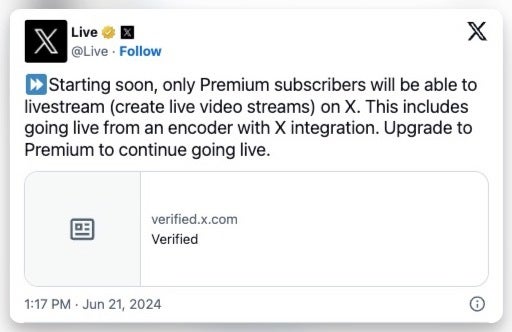
X, the social media platform previously known as Twitter, has announced that it will soon restrict live streaming to its premium subscribers. This move makes X the first major social platform to charge for this feature, which remains free on platforms like Facebook, Instagram, YouTube, Twitch, and TikTok.The company stated that “starting soon, only Premium subscribers will be able to livestream (create live video streams) on X. This includes going live from an encoder with X integration,” suggesting that the change will also affect X’s game streaming capabilities.
X announces that a premium subscription will be required in order to livestream on the platform
No explanation was given for this change. X has typically used additional features, such as post editing, long-form writing, and ad-free feeds to incentivize users to subscribe to its paid plans. This marks a departure from its usual practice, as it hasn’t previously restricted existing, widely available features to paying users. X Premium subscriptions currently start at $3 per month for the “basic” tier and go up to $8 per month for Premium and $16 per month for Premium+.This change is not the only indication that X is looking to charge for more features. The company recently introduced a $1 annual fee for new accounts in New Zealand and the Philippines to gain posting privileges. Although this is still being described as a test, Elon Musk, the owner of X, has hinted at the possibility of extending these fees to all new users globally. This suggests a potential shift in X’s strategy, moving from a primarily advertisement-based model to one that incorporates a mix of advertising and paid subscriptions.
No specific date was given for when the change would take place, however, already some reactions to the announcement by X users have been negative. The main point being brought up is the fact that no other platform, even those with a superior UI and video player, charges their users for streaming. It remains to be seen how users will react to this change once it is implemented, and whether it will lead other platforms to follow suit.
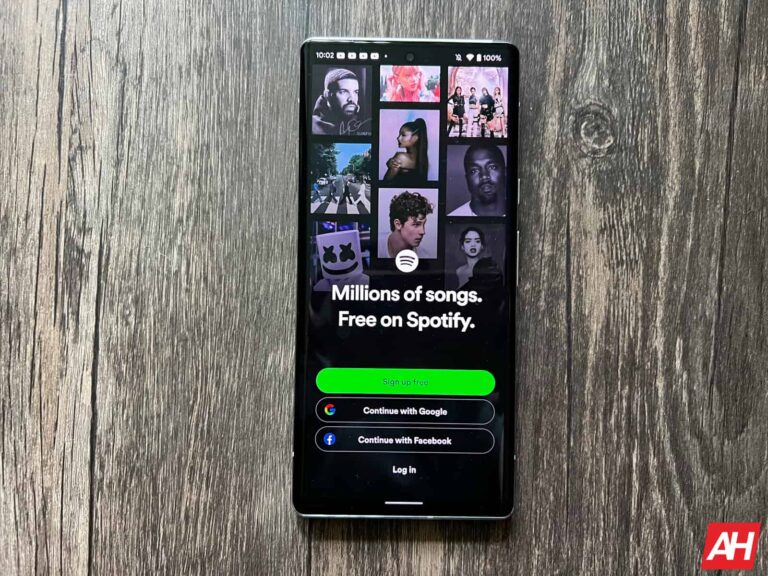
The new Spotify basic plan in the US costs the same as the old premium plan
Spotify’s new basic plan is priced at $10.99. It offers users access to offline and ad-free premium music streaming for a month with unlimited skips. However, it doesn’t provide 15 hours of audiobook listening time per month from Spotify’s catalog of over 250,000 titles.
Earlier, the Spotify premium plan in the US used to cost the same as the new basic subscription. The new basic plan saves you $1 on a Spotify premium subscription if you don’t want to listen to audiobooks.
Earlier this month, Spotify hiked the pricing of all the premium plans for the second time in less than a year. Pricing of the Individual, Duo, and Family plans was increased up to $3 in the US. The Spotify Individual tier now costs $11.99, a $1 bump from earlier.
The Spotify Duo and Family plans saw a hike of $2 and $3 respectively in the country. The former now costs $16.99, while the latter now sets you back by $19.99. The Family plan gives you premium Spotify access to up to six members.
Spotify could also launch a Hi-Fi tier with lossless audio this year
Spotify could finally launch its high-fidelity music streaming tier this year, which has been in the pipeline for quite some years now. The Spotify Hi-Fi streaming option is expected to be released at some point by the end of this year. If the reports are to be believed, the Hi-Fi option will be offered as an add-on for the existing premium plans. It could cost at least $5 more per month on top of your existing plan. We should have more details in the coming weeks, so stay tuned.
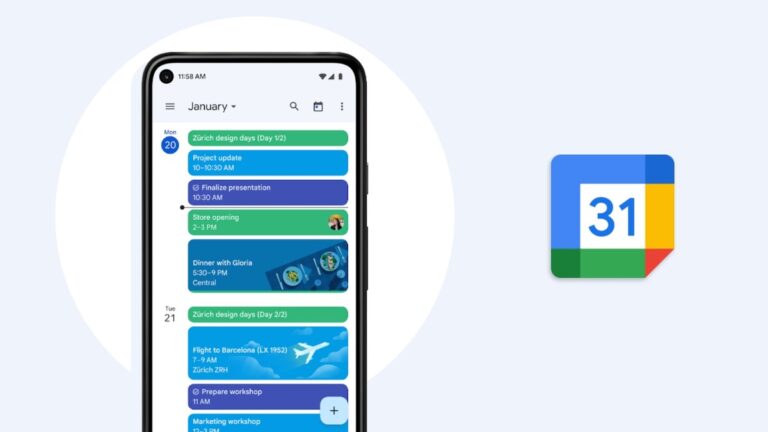
Google Calendar image credit — Google | Composition by PhoneArena
Google has announced a beta program aimed at improving how Google Calendar syncs with third-party calendar services, such as Outlook. This initiative comes in response to customer feedback highlighting concerns about the reliability of syncing and the abundance of email notifications associated with the process.To address these issues, the update brings several improvements. First, it enhances the accuracy of event syncing between Google Calendar and third-party calendars. This means that users should experience fewer discrepancies when events are updated or changed across different platforms. For instance, if a meeting time is adjusted in Google Calendar, the corresponding event in the linked third-party calendar should automatically update to reflect the new time. This eliminates the need to manually update events in each calendar and reduces the risk of confusion or missed appointments.
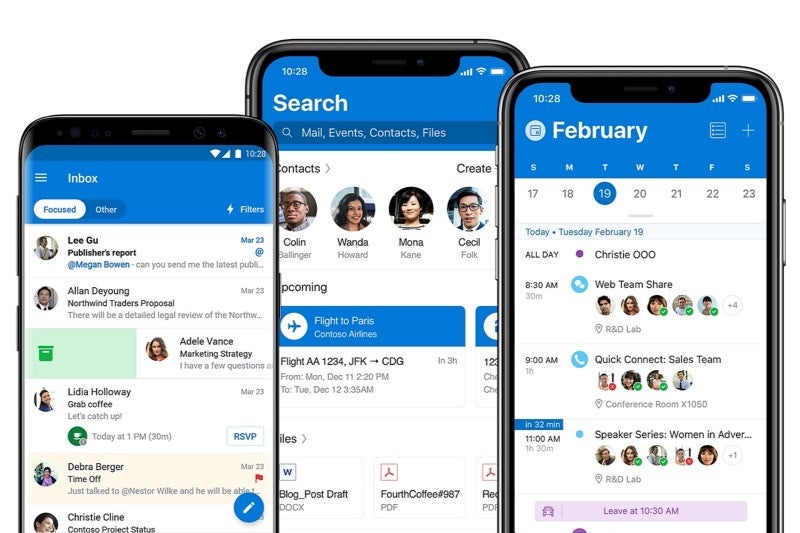
Outlook for iOS and Android | Image credit — Microsoft
Additionally, the update tackles the issue of email clutter. Notifications solely related to syncing will now be clearly marked as such in the email body and sent from a distinct, identifiable email address. The emails will also provide instructions on how to set up inbox filters to prevent these notifications from clogging up users’ inboxes.
For Outlook users specifically, there are additional options for filtering these emails, either individually or at the system level by administrators, using Microsoft’s Powershell. The beta program is open to all Google Workspace customers until July 10, 2024. Interested administrators can sign up using the provided form.
By addressing the pain points of syncing with third-party calendars, Google is helping its products work seamlessly with the tools users already rely on. This not only benefits Google Calendar users, but also fosters a more collaborative environment where users can easily share schedules and stay on the same page regardless of their preferred calendar platform. The streamlined syncing process and reduced email clutter will ultimately lead to increased productivity and improved time management for users who juggle multiple calendars.
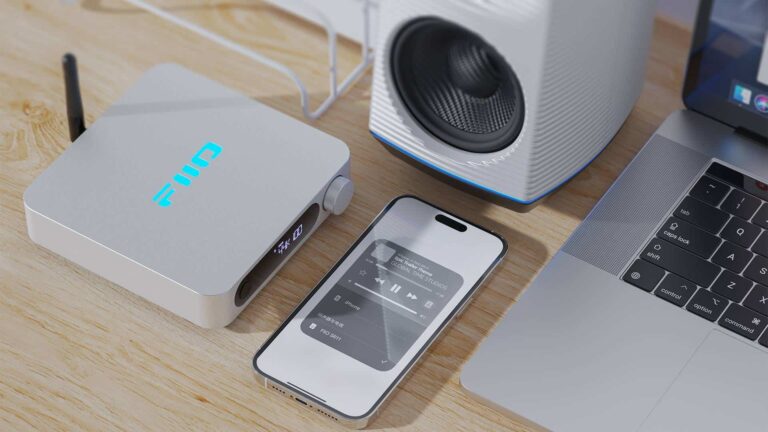
There are few things that everyone in the world can agree with, and one of them is the fact that being an audiophile is EXPENSIVE! Getting great audio is a multi-step chain, and each link is made of gold. However, there are companies like FiiO that grant high-quality audio equipment to the price-conscious folks among us. The company just released the FiiO SR11. This is an audio streamer that will only set you back $99.
This sounds too good to be true, but most quality affordable devices do. The fact of the matter is that becoming an audiophile requires owning several devices to perform one task. It’s a scary thing to get into, so devices like these that bring power down to a palatable price are well appreciated.
What is the FiiO SR11?
If you’re used to plugging your headphones into your computer and listening to music that way, you might want to look into getting a streamer if you want the best audio quality. The thing is that your computer introduces a lot of noise into the audio signal.
This is where dedicated audio streamers come in. They help get rid of that noise. The FiiO SR11 is designed to intercept the lossless audio signal from a streaming service and output that signal to a DAC (Digital to Analog Converter). Since it’s such an affordable device, there were some compromises that needed to be made, so this device does not include a built-in DAC.
In any case, it’s still a heck of a bargain. It has a premium aluminum alloy body that protects the internals. While it’s affordable, it’s still well-built.
Along with that, there are several output options for you that make it compatible with most audio setups. The SR11 can output to USB-A, USB-C, coaxial, and optical. If you have a DAC that takes those as inputs, then you’re good to go.
Speaking of inputs, the FiiO SR11 uses Wi-Fi to receive audio. However, if you want an even faster connection, then you’ll be able to connect an Ethernet cable.
All of these input/output options come in a svelte and lightweight package. This makes the SR11 perfect for most audio setups.
Connectivity
There’s no point in having an audio streamer if it can’t integrate with any services. This device is compatible with Tidal, Amazon Music, and Apple Music. All of these services offer lossless streaming. The SR11 will transfer the lossless audio directly to the DAC with bit-perfect quality. There’s a chance that your computer or phone will compress the audio before transferring it to your headphones. That’s the case with Android.
You can pair this device with your Android phone, iPhone, or computer to control your audio. Also, it comes with a remote for added control.
On the front of the device, there’s a convenient LCD monitor. It lets you know the sample rate of the music you’re streaming. This way, you can keep track of which songs give you the best audio quality. Along with that, it’s compatible with Apple Airplay and it’s Roon Ready out of the box.
Specs
Moving onto the specs, the FiiO SR11 supports 1000Mbps Ethernet and it’s compatible with 2.4GHz + 5GHz dual-band Wi-Fi. When it comes to outputs, it supports up to 768kHz/32-bit audio, DSD256.
Such a powerful and capable device should cost more than $99. It comes with several amazing features, a premium design, and many output methods. If you’re looking to start your audiophile journey, there’s no better first step than the FiiO SR11.