It’s mindboggling how many lives have been destroyed since the rise of AI-generated content. The fact that you can’t do anything against AI deepfakes of yourself is one of the many issues many people confronted with.
Big social media companies like Meta and Google do very little to protect their customers’ privacy. YouTube has finally announced that it’s expanding its privacy request process to allow users to request the removal of AI-generated or other synthetic or altered content of themselves.
According to the social company, the decision to have a more responsible approach to AI-generated content is related to the fact that AI deepfakes have become more common lately. In other words, they have received so much negative feedback that they’re now forced to make some changes.
In any case, those who would like to request the removal of their AI deepfake(s) must use YouTube’s privacy request process. The service will evaluate the request and consider “a variety of factors before removal,” such as whether the content is altered or synthetic and could be mistaken for real.
However, YouTube doesn’t seem to be too keen on removing what it tags as parody and satire content involving well-known figures. Obviously, YouTube will also check whether the person making the request is identifiable.
Last but not least, YouTube announced that creators notified about privacy complaints will not receive any strikes since privacy violations are separate from Community Guidelines strikes.
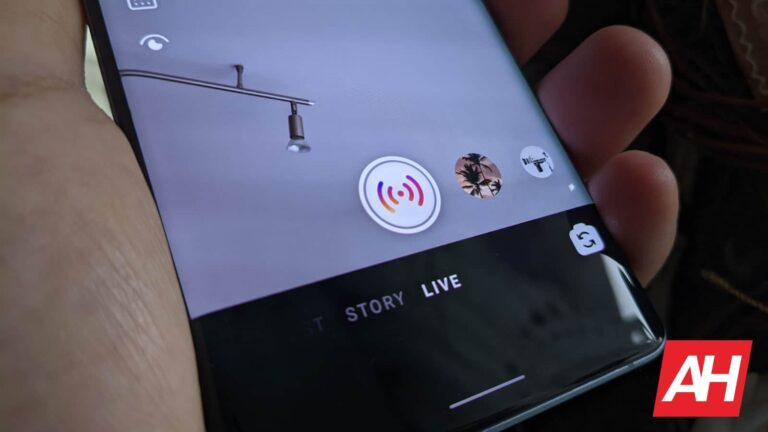
Instagram users now have the option to start Lives only accessible to members of their Close Friends list. Until now, you could only restrict live streams to individual profiles.
For a while now, Instagram has allowed you to create a Close Friends list. People included in the list can see the Stories and posts (pics/Reels) you upload through that option, while the rest of your contacts cannot. However, the feature still feels a bit lacking in functionality. It seems that Meta wants to start solving this since they announced a new privacy feature related to Lives.
Instagram now allows you to restrict Lives to Close Friends
An option to start Instagram Lives that only your Close Friends can access will now be available. This will help you quickly limit the number of people who can access your Lives, instead of having to waste a lot of time adding each individual profile to the restricted list. If you have thousands of followers, hiding your live streams from a certain audience could become a rather tedious process.
The new feature to restrict Instagram lives allows up to three people from your Close Friends list to join. According to Meta, this will allow you to quickly start more intimate Lives to organize things or do collaborative tasks. It would even open up new monetization possibilities for creators. They could offer private Lives for followers who pay a subscription, for example.
Instagram has also added other new features. Among them is the possibility of adding music to carousel posts that include videos. Until now, you could only do it with posts that included images. In addition, they remembered that the Notes feature also supports videos. This is something that many were unaware of, since most only uploaded music or text in their Notes. So, the company wanted to remember how to get the most out of Instagram features.
For the average user, diagnosing potential hardware issues on their device can be a somewhat complicated process. However, Google wants to make this easier by integrating on-device diagnostics into Android 15. This will allow you to know if your phone has a fault in a key part before taking it for technical service. This joins privacy options such as Repair Mode which Pixels and some other brands have.
The on-device diagnostics tool was spotted by Android Authority in the latest Android 15 Beta 3. The option is not available by default, but it can be enabled. Once you have it, you can access it by going to Settings > System > Device Diagnostics.
The on-device diagnostics tool has two main display items: “Component health” and “Evaluation mode.” The “Component health” section will allow you to run manual tests on your phone/tablet. On the other hand, “Evaluation mode” allows you to evaluate your current device using another device.
This is what the Android 15 on-device diagnostics tool would be like
Starting with “Component health,” it includes screen integrity and touch performance tests. It also allows you to check the current status of your battery and storage chip. Regarding the battery, it shows data such as the percentage of remaining capacity, manufacturing date, first date of use, and even the number of charging cycles.
There are also entries for “serial number” and “part status.” These ones do not seem to be functional currently. Then, in storage status, you can check the remaining useful life of the storage chip, as well as its total capacity.
Moving on to “Evaluation mode,” it is a test where you will have to use another supported device. The process begins with scanning a QR, and some tests require internet access.
Useful to detect issues before going to technical service
Overall, the Android 15 on-device diagnostics tool will give you a pretty good general idea of the status of your device’s hardware. For example, it can help you detect potential issues with dead pixels, light leaks, or discoloration on screens. Also, know how healthy your battery is. It’s noteworthy that there are some third-party apps that do similar tests. However, having a tool integrated directly into the OS is a welcome addition.
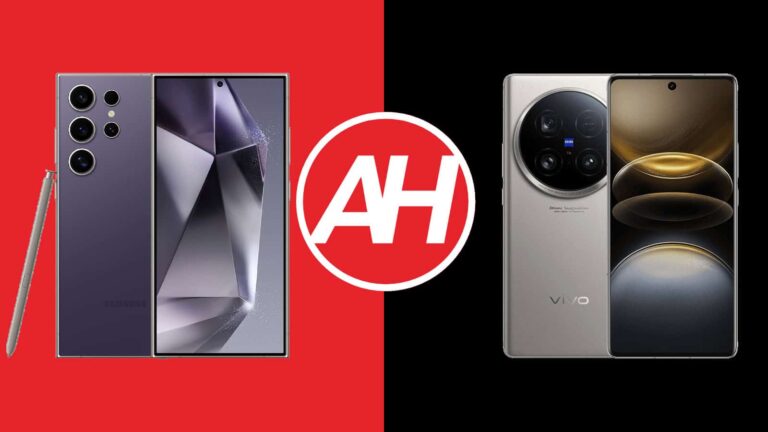
Both Samsung and Vivo released their ‘Ultra’ devices this year. Samsung’s came in January, while Vivo’s followed in May. We’re here to compare those two phones, the Samsung Galaxy S24 Ultra vs Vivo X100 Ultra. Do note that the Vivo X100 Ultra launched in China only, though. The phone does not have a global variant. The Vivo X100 Pro is basically the flagship model for global markets. We already compared that one to the Galaxy S24 Ultra, by the way.
With that in mind, we’ll check out the two ‘Ultra’ devices. Both of these phones are large and powerful, but also different in a number of ways. We’ll list their specifications, and will then move to compare their designs, displays, performance, battery life, cameras, and audio output. With that in mind, let’s get started, shall we?
Specs
Samsung Galaxy S24 Ultra vs Vivo X100 Ultra, respectively
Samsung Galaxy S24 Ultra vs Vivo X100 Ultra: Design
As you can see in the image above, the two phones look very different. The Galaxy S24 Ultra has sharp corners, while the opposite is true for the Vivo X100 Ultra. Both phones do have a centered display camera hole and very thin bezels around their displays. The Galaxy S24 Ultra includes a flat display, while the Vivo X100 Ultra has a curved display. The Vivo X100 Ultra does look narrower, that’s because it is. It’s considerably narrower than the Galaxy S24 Ultra while being slightly taller and thicker. It is also a couple of grams lighter.
The Galaxy S24 Ultra has a frame made out of titanium and a glass back. The Vivo X100 Ultra frame is made out of aluminum, while glass is included on its back. The Vivo X100 Ultra backplate curves into the frame on the sides, as does its front side. The Galaxy S24 Ultra is a lot more flat on the back, proportional to its front side. Both phones include physical buttons on the right-hand side.
The Galaxy S24 Ultra has four cameras on the back and five separate circles in the top-left corner. The Vivo X100 Ultra includes a large camera oreo on the back instead. There are three cameras in there, and that camera oreo is centered in the top portion of the phone’s back. Both phones are IP68 certified for water and dust resistance. Both of them are also very slippery, by the way. Glass is usually a recipe for slippery devices, and the same is the case here. They also feel different in the hand, but both have that premium feel to them.
Samsung Galaxy S24 Ultra vs Vivo X100 Ultra: Display
There is a 6.8-inch QHD+ (3120 x 1440) Dynamic LTPO AMOLED 2X display included on the Galaxy S24 Ultra. That display is flat, and it has an adaptive refresh rate of up to 120Hz. HDR10+ content is supported, and the phone’s display goes up to 2,600 nits. The display aspect ratio is 19.5:9, while the screen-to-body ratio is at around 88%. This display is protected by the Gorilla Glass Armor from Corning.
The Vivo X100 Ultra, on the flip side, has a 6.78-inch QHD+ (3200 x 1440) LTPO AMOLED display. This phone has a curved display. The panel can project up to 1 billion colors, and it also has an adaptive refresh rate of up to 120Hz. Dolby Vision is supported, as is HDR content. The maximum display brightness is set at 3,000 nits. The display aspect ratio here is 20:9, while the screen-to-body ratio is around 89%. There’s no info on display protection, though.
Both displays are vivid and very sharp, no problem there. They also have great viewing angles, and very good touch response as well. The blacks are deep, as they should be on AMOLED displays. The thing is, the Gorilla Armor on the Galaxy S24 Ultra does a much better job of keeping reflections at bay. It’s noticeably less reflective than displays on competitor phones, including the Vivo X100 Ultra. That much is worth noting. Both displays get more than bright enough, even in direct sunlight.
Samsung Galaxy S24 Ultra vs Vivo X100 Ultra: Performance
The Snapdragon 8 Gen 3 for Galaxy fuels the Samsung Galaxy S24 Ultra. That is basically an overclocked Snapdragon 8 Gen 3. Samsung also included 12GB of LPDDR5X RAM on the Galaxy S24 Ultra. The same goes for UFS 4.0 flash storage. The Vivo X100 Ultra is fueled by the Snapdragon 8 Gen 3. The phone offers up to 16GB of LPDDR5X RAM and UFS 4.0 flash storage too.
In regards to performance, both phones do a wonderful job. Just keep in mind that the Vivo X100 Ultra doesn’t come with global software, so you’ll need to sideload Google services if you want to use them. They are extremely smooth when it comes to regular, everyday tasks like opening apps, multitasking, consuming multimedia, and so on. Slowing them down is not an easy feat, that’s for sure. They’re basically on par in that regard.
The same level of performance does transfer to gaming too, basically. Both of these phones offer great performance even with the most demanding games out there. They can run Genshin Impact without a problem. Yes, both phones will get rather warm if you end up playing demanding games for a while, but not too warm. The performance will also remain unscathed, pretty much, and that’s a win.
Samsung Galaxy S24 Ultra vs Vivo X100 Ultra: Battery
There is a 5,000mAh battery included inside the Galaxy S24 Ultra. The Vivo X100 Ultra, on the flip side, includes a 5,500mAh battery pack. Both of these phones have outstanding battery life. Those of you who don’t do a lot of graphically demanding tasks on phones could even be able to get over the 8-hour screen-on-time mark on both phones in a single day… while not being too careful.
The battery life on both of these phones is that good, yes. They’re amongst the best smartphones for battery life when it comes to flagship devices. Your mileage will vary, of course, as this is the battery life we’re talking about. Some of you will fly under this mark, others probably above it, it all depends on a number of factors. The bottom line is that both smartphones offer great battery life, there’s no doubt about it.
When it comes to charging, the Vivo X100 Ultra takes the cake, in several ways. It offers faster wired and wireless charging, while it also comes with a charger in the box. It supports 80W wired, 30W wireless, and 5W reverse wired charging. The Galaxy S24 Ultra offers 45W wired, 15W wireless, and 4.5W reverse wireless charging. Unlike the Vivo X100 Ultra, however, this handset does not include a charger in the box.
Samsung Galaxy S24 Ultra vs Vivo X100 Ultra: Cameras
The Samsung Galaxy S24 Ultra has four rear-facing cameras. There’s a 200-megapixel main camera, a 12-megapixel ultrawide unit (120-degree FoV), a 10-megapixel telephoto camera (3x optical zoom), and a 50-megapixel periscope telephoto camera (5x optical zoom). The Vivo X100 Ultra has a 50-megapixel main camera (gimbal OIS), a 50-megapixel ultrawide camera (116-degree FoV), and a 200-megapixel periscope telephoto unit (3.7x optical zoom). ZEISS optics are a part of the Vivo X100 Ultra package, by the way.
Both of these phones capture outstanding photos. There are differences, though. They both prefer warmer colors, to a degree, and both sets of images do end up looking a bit processed. The Galaxy S24 Ultra can still push processing a bit too far at times, though. The colors are great on both most of the time, but Samsung’s phones has the tendency of pushing the saturation a bit too high at times. Other than that, the results from both are great. The Vivo X100 Ultra’s ultrawide camera does tend to provide better results more often than not, and the same goes for the periscope camera, especially at higher zoom levels.
In low light, both phones perform really well, especially when it comes to their main cameras. The Vivo X100 Ultra does tend to deal with light reflections a bit better than the Galaxy S24 Ultra. Other than that, the images from both look great. Their secondary cameras are usable in low light, for sure, but the main shooters are preferable.
Audio
There is a set of stereo speakers on both of these smartphones. The ones on the Galaxy S24 Ultra are a bit louder, though. The difference is not big, but it’s noticeable. The sound output is well-balanced on both, though.
Neither phone includes an audio jack. You can always use their Type-C ports for wired audio connections, though. If not, there’s Bluetooth 5.3 included on the Galaxy S24 Ultra, and Bluetooth 5.4 on the Vivo X100 Ultra for wireless connections.
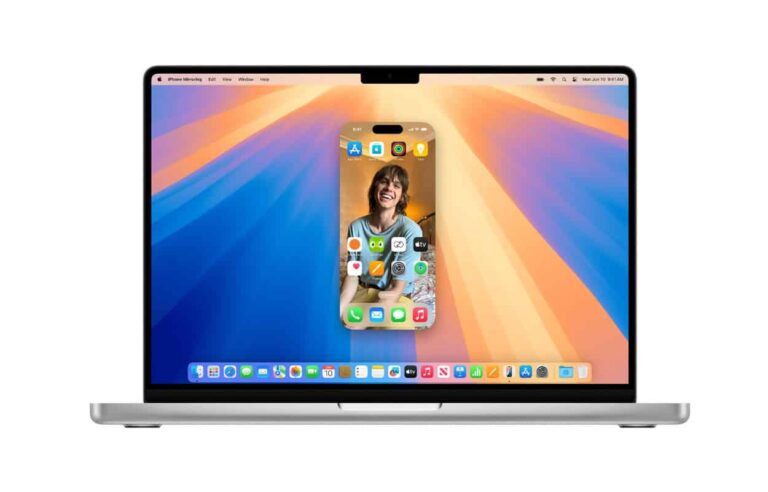
Apple showcased macOS Sequoia at WWDC 2024 earlier this month, which will be available later this year. The company’s new OS for Macs brings a ton of upgrades like Apple Intelligence, improvements to the Continuity feature, and more. It also offers the much-anticipated iPhone Mirroring feature. The new functionality isn’t yet officially live in macOS Sequoia beta 1 version. However, someone has managed to unlock iPhone Mirroring functionality and has posted a demo video of it on X.
iPhone Mirroring appears much smoother than the Phone Link feature tethering Android and Windows
X user @XeZrunner has managed to enable the iPhone Mirroring feature and use it on iOS 18 and macOS Sequoia. In the demo video, the iPhone Mirroring functionality appears to be working very smoothly. It appears to be much smoother than the Phone Link feature that ties Android devices to Windows computers.
During the demo, the X user quickly launched the feature, navigated through the UI, and exited a mirrored iOS application. The feature appears to be working instantly, without any lag or glitches.
The X user who posted the iPhone Mirroring demo video got help from another user, @thebookisclosed, to enable the feature. He mentioned that as of now there’s no easy way to enable iPhone Mirroring on the macOS Sequoia beta 1 version. There’s a possibility that the Cupertino tech giant may activate the much-awaited functionality in the upcoming beta builds.
The feature lets you control your iPhone and do more directly from your Mac
The upcoming iPhone Mirroring feature will certainly be a major upgrade to macOS’ Continuity functionality. It will allow you to control your iPhone directly from your Mac. You can control all the apps on your iPhone on your Mac’s screen with a keyboard and a mouse/trackpad.
Notably, your iPhone’s audio will directly come out through your Mac machine’s speakers. Also, you will be able to directly move files, photos, videos, and more between your Mac and iPhone easily.
The best part is that iPhone Mirroring works without you having to pick up and unlock your iPhone. We will update you as soon as Apple officially makes it available in the upcoming macOS Sequoia betas, so stay tuned.
1Password, the popular password management app, has announced a new feature called recovery codes designed to make it easier for users to recover their accounts. This new feature is part of the company’s ongoing commitment to improve the user experience.
The new recovery codes will allow users to regain access to their 1Password account even if they forget their master password or lose their Secret Key. Before recovery codes, if users forgot their master password or lost their Secret Key, they would be locked out of their account and unable to access their data. This caused frustration and stress for both users and 1Password support.
With recovery codes, users can create a unique code that can be used to regain access to their account. The code can be generated from within the 1Password app for Mac, Windows, Linux, iOS, Android, or 1Password.com, and should be stored in a safe and secure location.
Recovery codes are reusable and will remain valid after they’re used. If a user recovers their account with a recovery code, they will be asked to create a new master password and will receive a new Secret Key. The new Secret Key will be used to log in to the 1Password account on all devices.
1Password has stressed that the introduction of recovery codes does not change the security of 1Password accounts. The company claims that the recovery process is safe and requires two separate steps to complete: email verification and the recovery code. That said, Secret Keys are not going away, and recovery codes are intended to be used only if the user forgets their master password and/or loses their Secret Key.
Creating recovery codes within the 1Password app | Image credit — 1Password
Family Organizers of 1Password Families accounts will still be able to recover accounts for other family members. However, recovery codes will give family members an additional option to regain access to their accounts themselves.
According to 1Password, millions of people trust the company with their sensitive information. As such, the introduction of recovery codes is a welcome addition to provide peace of mind to its users.
Samsung could launch the Galaxy Buds 3 earbuds next month. A couple of images leaked on the internet imply Samsung may be inspired by Apple’s design philosophy. However, closer inspection suggests Samsung may have adopted a mainstream and popular design.
Does the Samsung Galaxy Buds 3 case look familiar?
The latest iteration of the in-ear, Truly Wireless (TWS) earbuds from Samsung, called the Galaxy Buds 3 should launch alongside new foldables and smartwatches soon. Rumors and leaks about the Galaxy Buds 3 have already started to arrive.
A new leak includes two images, allegedly captured from Coupang, a Korean retail website. These images reportedly suggest the Samsung Galaxy Buds 3 has already got a dedicated listing. Although the listing could be a placeholder, it contains two images of the TWS earbuds.
These images suggest Samsung may have adopted a completely new design for the Galaxy Buds 3. Instead of the prevalent “bean” design, Samsung may have opted for a rectangular design for the case, which now has a transparent lid.
The new design is quite practical as it allows users to visually confirm if the case contains the earbuds when not in use. Previous generations didn’t offer this convenience. The case now allows for a better placement of earbuds, which now slide inside their slot. Additionally, as we had previously reported, each earbud seems to have a longer stem.
Some recent rumors have claimed Samsung has changed the look and design of the earbuds. However, the latest leak suggests the company may have altered the case that holds the earbuds.
When will Samsung launch its latest in-ear TWS earbuds?
If the leaked images turn out to be accurate, the Samsung Galaxy Buds 3 and the case for these earbuds will surely attract a lot of attention. However, the design isn’t path-breaking. Several accessory makers have similar-looking products.
Samsung Galaxy Buds 3 Pro, some illustration which I found in a samsung app.
• Two colors – Black and White • Pinch Sensor for pinch gestures
— AssembleDebug (Shiv) (@AssembleDebug) June 17, 2024
The new design for the case is quite common. Apple may have first used the same. However, several companies have adopted the design, albeit with some slight design tweaks.
The leaked design is indeed practical. However, some social media users have indicated such clear lids scratch easily. It would be interesting to see how Samsung mitigates this common complaint.
So, you’re an audiophile who likes to get the best out of your audio system… but, you’re not the kind that can drop $50,000 to achieve this. It’s hard to get the best on a budget, and companies like HIFIMAN understand this. This is why the company launched the new HIFIMAN Mini Shangri-La Headphone System.
HIFIMAN is a company that specializes in high-quality audio equipment, and it’s a pretty popular brand. It recently released the SUSVARA UNVEILED. This is a set of premium open-back headphones that push the music-listening experience to the next level. They come with an incredibly thin 1nm-thick diaphragm, audibly invisible magnets, and other neat features that make them a game changer.
If you’re interested in picking up these headphones, they’ll run you back $8,000. For the level of quality you’re getting, the price tag is well justified.
HIFIMAN launches the Mini Shangri-La
In case you don’t know what a headphone system is, it’s a package that comes with both a pair of headphones and an amplifier. The amplifier ensures that the highest-quality audio is being pushed to the headphones.
It’s an electrostatic amplifier that supports both XLR and RCA single-ended input methods. On the front of the device, there’s a volume control knob and an RCA/Balance Input Selector knob. Needless to say, it’s a high-quality amplifier that will make everything sound amazing.
As for the headphones, you’re not getting the best that HIFIMAN has to offer, but you’re still getting a compelling pair. You’re still getting a high-quality pair of headphones. Just like the SUSVARA UNVEILED, these headphones come with an incredibly thin 1nm-thick diaphragm. Also, the diaphragm has a nano-particle coating that helps improve the clarity of the audio.
While it’s super thin, there’s a protection layer over the diaphragm. It’s nearly transparent to sound waves, so, it won’t be disturbed much by reflected/refracted sound waves and sound waves from outside.
These are planar headphones, so the drivers have the diaphragm sandwiched between two planes of magnets. This configuration will produce a more spacious sound than headphones with traditional cone-shaped drivers. The headphones use dual XLR cords, and they will plug into the ports on the front of the amplifier. This is something to keep in mind if you’re used to using headphones with aux cords.
Specs
Moving onto the specs, the headphones have a frequency response of 7Hz – 90kHz. That’s much wider than the standard which is about 20Hz – 20kHz. They weigh 320.2g, which is just shy of 3/4 of a pound. They’re pretty lightweight for a pair of headphones this high-quality.
Moving onto the amplifier, it weighs 5.83kg, which is nipping at the heels of 13lb. It has a bias voltage of 550V – 650V.
Price
Now, let’s talk price. HIFIMAN has some pretty pricey products on the market, and they’re not for the faint of heart. The price of the HIFIMAN Mini Shangri-La isn’t what you’ll call dirt cheap, but it’s very affordable compared to the other products that the company sells. The set sells for $2,300.
It’s a heck of a lot more affordable than its siblings. However, if you only want either the headphones or the amplifier, you can buy them separately. The headphones cost $1,100 and the amplifier costs $1,500. Click the link to put in your order.
If you buy within the first month of the launch, you’ll so get a handy headphone stand.
YouTube Music, Google’s music streaming service, seems to be getting a major upgrade with a new AI feature called “Ask for Music”. Based on a recent APK breakdown of the YouTube Music app for Android, some references to this new feature were uncovered, potentially reshaping the way users search for music.Currently, YouTube Music allows voice commands for searching. However, this new feature, as the name implies, may take it a step further. It hints at a conversational search option using natural language. Imagine asking for songs that remind you of a specific music video or requesting suggestions similar to your favorite artist—all through a simple conversation with your music app.
While this is an exciting possibility, it’s important to remember that this is just a prediction based on findings in the code. There’s no official confirmation from Google, and there’s always a possibility that this feature might not see the light of day.
The discovery includes snippets of code that suggest the presence of a conversational text input feature. The code even contains a disclaimer about the experimental nature of AI-generated responses. This further reinforces the possibility of a natural language search option.
This potential shift towards conversational search aligns with Google’s more general strategy of integrating AI and natural language processing into many of its various products and services. Such a feature could significantly enhance the user experience, making music discovery more intuitive and personalized.
In addition to this AI feature, the APK breakdown also made light of another interesting change that’s likely coming to the YouTube Music app. That is a fresh new app launch animation, similar to the one found on the YouTube app. As for when these updates will be available to everyone, it’s hard to say for sure, but we can probably expect to see these changes rolling out in the coming weeks or months.
Another day, another batch of Samsung devices received the June security update. The latest security patch is rolling out to the Galaxy A54, Galaxy A53, and Galaxy Tab A9+ in the US. The international versions of the Galaxy A53 have already picked up this release, while the other two models are still awaiting it outside the States.
Samsung’s June update available for the Galaxy A54 in the US
Launched in March 2023, the Galaxy A54 is still the most premium A series smartphone Samsung sells in the US. The company launched the Galaxy A55 earlier this year but the upgraded version didn’t arrive stateside. Nonetheless, the older model has beaten the newer one to the punch in this month’s security update race.
First reported by SammyFans, the June SMR (Security Maintenance Release) is available for the carrier-locked Galaxy A54 on Tracfone’s network. The updated firmware build number for the phone is CXF3 (last four characters). Samsung has yet to reflect this release on its official update tracker, so we can’t detail the full changelog.
However, the publication says the update brings some system stability and reliability improvements to the device, improving the user experience and performance. This is in addition to this month’s security patches from Samsung and Google. The June SMR contains fixes for 59 vulnerabilities, including one critical Galaxy flaw.
Samsung should soon roll out the June security update to carrier-locked and unlocked variants of the Galaxy A54 across all networks. The update should also make its way into other regions in the coming days. As usual, you can check for updates manually from the Settings app or wait for a notification prompting you to download it.
Galaxy A53 and Tab A9+ are also getting these security fixes
A few days ago, Samsung released the June update for international versions of the Galaxy A53 in Europe and Asia. The new security patch is now available for the US versions. Carrier-locked units are getting the update with the build number A536USQSAEXF2, SamMobile reports. Samsung has yet to start updating the factory-unlocked units.
The Galaxy Tab A9+ is also picking up this month’s security release in the US. The mid-range tablet is getting the new SMR with on Verizon’s network with firmware version X218USQU2CXE6. Samsung should soon roll out the update widely across the country before expanding it to other regions. Go to Settings > Software update > Download and install to check for updates manually.