It’s up to Samsung or Apple to revive the tablet market (Sorry Google)

0
[ad_1]

Hey, Google, we need to have a heart-to-heart. The Google Tablet is a very neat device, and it has the potential to revive the tablet market. Being able to seamlessly convert the tablet into a smart display is like something out of every tech nerd’s dream. It’s just that, in order for this idea to really bring change to the tablet market, it’d need to have a Samsung or Apple logo on it.

Now, this isn’t to turn people away from this device. In fact, it’s a really nice device. You can read more about it here. Also, if you’re looking into placing an order for the Pixel Tablet, you can click here. If you’re looking for our general coverage on tablets, then you can click here.

Samsung or Apple will need to be the ones to revive the tablet market

The tablet market is a bit of a sad sight nowadays. It’s been limping along for several years while phones were eating away at its market share. A combination of smartphones getting better (and bigger), OEMs giving tablets less-than-premium specs, and the limitations of tablet software, have done a number on the market.

The only tablets that have been keeping the market afloat are the Galaxy Tabs and the iPads. Each year, they get better specs and new features, but that’s it. Even with these titans selling tons of tablets, the market as a whole has been shrinking.

Enter Google with an idea that could revolutionize the tablet market. In all honesty, companies like Lenovo thought of this idea first. The Pixel Tablet just amassed much more hype. The Pixel Tablet can smoothly transform from a tablet to a smart display by simply docking it on the charging speaker dock.

It’s an incredible idea, but…

Already, this tablet is more covered and more anticipated than Lenovo’s solution, and it’s not even out yet. Also, it’s Google’s hardware running on Google’s software. So, what’s the problem?

Well, Google’s a popular brand, but it’s not really a trendsetter in the mobile hardware division. We’re not expecting to see many cheap knockoff Pixel devices plaguing Wish or comparable platforms. The Pixel devices, for as popular as they are, only make up about 1%-2% of the smartphone market. Other companies aren’t likely to emulate the Pixel Tablet’s mentality because it won’t make up a significant chunk of the tablet market.

Who are the trendsetters in the mobile market? Samsung and Apple. There are so many devices in the smartphone market that emulate phones from these companies. Would we have had the notched phone without the iPhone X? Would companies have snagged the “Note” moniker if it wasn’t for the success of the Galaxy Note series?

Let’s face it, so much of the smartphone industry is thanks to Samsung and Apple- for better or worse. Samsung or Apple will need to make their own version of the Pixel Tablet and make a big show of it to make the rest of the tablet market take notice.

Leading the pack

Imagine an iPad that connects to a special iDock and enters “Siri Mode”. It’ll be a one-stop shop to control all of your Apple Homekit devices. Knowing Apple, it’ll seamlessly integrate with your iPhone and Mac computer.

Weeks after that keynote, we’ll see other companies coming out with their own iterations. There’s no doubt this hypothetical iPad will sell in high volume. It’ll most likely be more successful under Apple’s wing than Samsung’s, but Sammy’s iteration will do much the same thing with its ecosystem of Galaxy devices.

Undoubtedly, these devices will make the headlines. Again, it’ll be a bigger splash if Apple does it because any break from form that Apple does will be big news.

How will this revive the tablet market?

The tablet is in the wrong place in the mobile tech market. When it was still burgeoning, it was the ostensible middle-ground between smartphones and laptops. That was back when phones were so small and computers were so big.

Nowadays, smartphones are much bigger with near-tablet-sized screens, and powerful laptops are much smaller and sleeker. This puts pressure on the tablet market from both sides. “I can watch movies and get work done on my phone and take my compact laptop everywhere I go. Why would I need a THIRD device?”

Hey, markets grow and change over time- what can ya’ do? The best thing for the tablet market to do is move. Instead of trying to occupy the shrinking space between smartphones and computers, it could settle in the vacant space between tablets and smartphones.

That could be a smart move because the trouble with tablets is that they need a functionality that phones and computers don’t have. Phones can do pretty much anything your tablet can do, and your computer is most likely much more powerful. But, neither of those devices will make good smart displays; tablets do. This adds a must-have functionality to tablets.

Maybe Google can revive the market through software

Google doesn’t have the hardware to bring the tablet back from the brink of oblivion, but it might have the software. Google holds the reins on Android, and it’s been making the platform better optimized for tablets.

It’s possible that the company could add a native faux-docked mode for tablets to Android. Basically, this mode will emulate the docked mode in the Pixel Tablet and let it act as a smart display. When the mode is activated, the microphone will remain on and you’ll be able to summon the Google Assistant when you need it.

Maybe Google could push this to older versions of Android so that people can give life to their older tablets that have been sitting on their closet shelves. Adding this functionality to Android could entice more people to buy tablets because of the extra functionality (the same could work if the script was flipped and Apple did this with iPadOS).

It’s a nifty idea, but Google would be doing this at the risk of shooting itself in the foot. Doing that will give people less reason to buy the Pixel Tablet. We’re not sure that Google wants to do that just yet.

All in all

Google influences the tech world in its own way. Its software and services have revolutionized the tech industry over the past 25 years. However, Google’s just not the popular kid at the lunch table. If other companies are going to hop on this trend and revive the tablet market, then it will just have to be started by Samsung or Apple to make it happen.


[ad_2]
Source link
This Android app used to be kosher but now it’s spying on you and must be deleted from your phone

0
[ad_1]
You’ve all heard of malicious Android apps once or… two hundred times before, but even our most security-obsessed readers might be surprised by one particularly egregious detail about the newest such title discovered by ESET researchers and ejected from the Play Store.

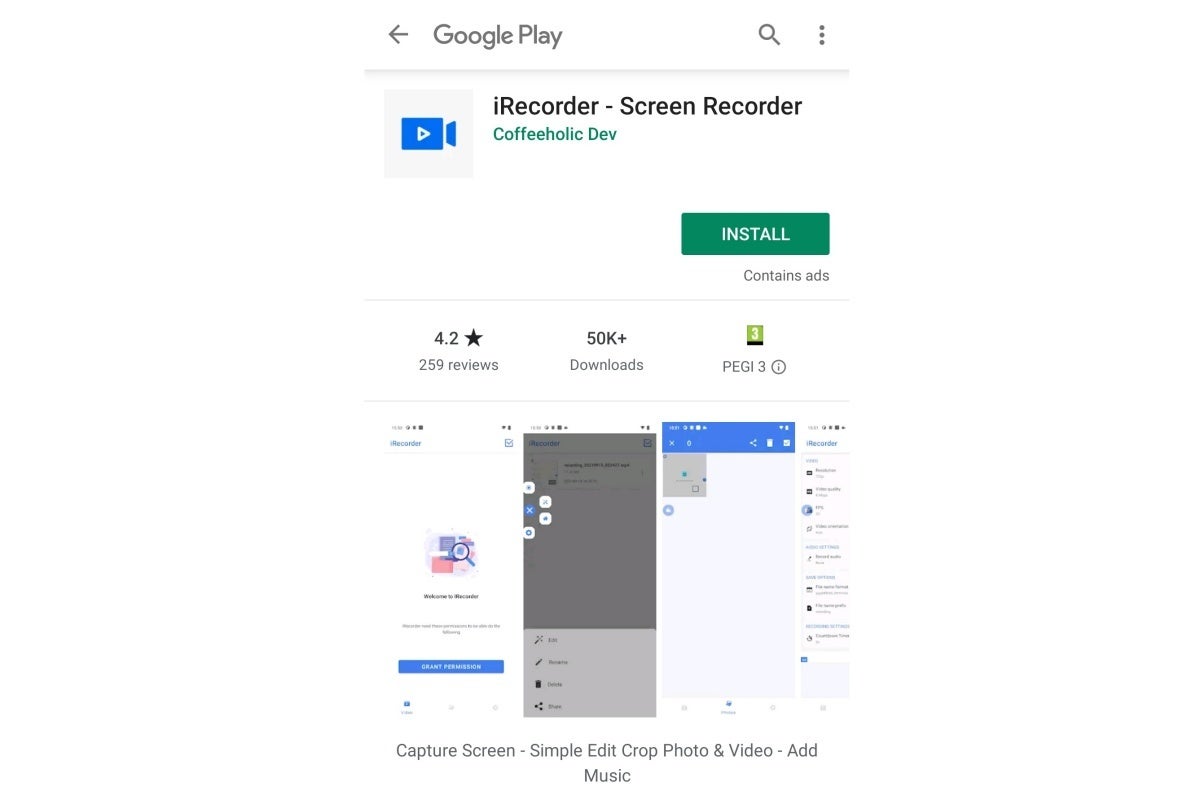
Called “iRecorder – Screen Recorder”, this was vetted and welcomed by Google back in September 2021, gaining its privacy-violating capabilities nearly a year later as part of a seemingly innocuous update. 

Because it’s highly unusual for a bad developer to show such patience and take so much time between publishing an app and injecting it with malware, this behavior easily evaded the attention of both regular users and the search giant responsible for keeping the Play Store clean and safe from security threats of all types.

As these threats go, iRecorder – Screen Recorder was loaded with one of the worst possible types, which allowed the formerly legitimate app to snoop on its users. We’re not just talking text messages or phone conversations but full-blown microphone recordings and files with “specific” extensions, suggesting the app may have been used as part of an espionage campaign.

Put simply, the app, which was initially designed to offer its users the ability to record video displayed on their phones (with permission), started unlawfully listening to people’s real-world conversations after an August 2022 update and may well continue to do so out in the wild.

That’s because, while the app is no longer available for fresh downloads from Google Play, no one can guarantee all existing users have been made aware of its malicious behavior and acted accordingly. Obviously, that’s where we come in, informing you today of what you need to do to stay away from yet another major threat to your phone’s security and your own personal privacy.

If you’re one of the over 50,000 people that have apparently installed the app (and its subsequent update), now would be the ideal time to hit that delete button and perhaps even perform a more thorough check for similar threats using a (trusted) antivirus tool.

While there’s no simple way to keep yourself protected in perpetuity, you should definitely pay close attention to all the permissions required by every single app on your mobile device and, well, continue reading PhoneArena with diligence. 


[ad_2]
Source link

Everything you need to know

0
[ad_1]

Since OpenAI unleashed ChatGPT onto the world, opinion has been split between those who believe it will radically improve the way we live and work and those who are worried about its potential for disruption, particularly on the privacy of individuals and organizations.

There have already been incidents where sensitive data has been leaked and employees have landed in hot water after entering confidential company information into the chatbot, with some countries even issuing a temporary ban on its use for data protection purposes.

So, what does ChatGPT do with your data and how can you use it securely?

Where does ChatGPT get data from?

Chat GPT is an artificial intelligence (AI) tool that is powered by machine learning (ML), which means it uses ML algorithms to understand and respond to user prompts in a conversational manner. To do this, it has been “trained” with vast quantities of information scraped from the internet, including 570 GB of data from books, Wikipedia, articles and other online content.

Holding this amount of information gives it the ability to answer questions, write essays, create and debug code, solve complex mathematical equations and even translate different languages.

However, as a natural language processing tool it works on probability, answering questions by predicting what the next word in a sentence should be based on the millions of examples it has been trained on. This means that the information it provides can be inaccurate or incomplete and as most of the data it contains was produced before 2021, it can’t provide information related to events of the last two years.

How secure is ChatGPT?

ChatGPT saves the prompts you enter and its responses to keep training its algorithms. Even if you delete your conversations, the bot can still use this data to improve its AI. This presents a risk if users enter sensitive personal or company information that would be appealing to malicious parties in the case of a breach.

Additionally, it stores other personal details when in use, such as your approximate location, IP address, payment details and device information (although most websites store this type of information for analytics purposes so this is not unique to ChatGPT).

The data collection methods deployed by OpenAI have raised concerns among some researchers, as the scraped data can include copyrighted material. In an article on The Conversation, Uri Gal, Professor in Business Information Systems at the University of Sydney, called ChatGPT “a privacy nightmare”, stating that “if you’ve ever written a blog post or product review, or commented on an article online, there’s a good chance this information was consumed by ChatGPT.”

ChatGPT and cybersecurity

There is also evidence that ChatGPT is already being used for malicious purposes. Its ability to write code means it can be used to create malware, build dark web sites and enact cyber attacks.

At a recent CS Hub advisory board meeting, members talked about noticing that ChatGPT was being deployed to engineer highly sophisticated phishing attacks, using it to improve language as poor spelling and grammar are often tell-tale signs of a phishing attempt. They also reported that it is being used to help malicious actors better understand the psychology of the intended recipients, with the aim of putting them under duress so that phishing attacks are more effective.

In March 2023, more than a thousand AI experts, including OpenAI’s co-founders Elon Musk and Sam Altman called for an immediate pause on the creation of any further, major generative AI tools for a minimum of six months, to allow time for researchers to better understand the risks they pose and how to mitigate them.


What data breaches have there been so far?

OpenAI has confirmed that a bug in the chatbot’s source code may have caused a data leak in March 2023, enabling certain users to view parts of another active user’s chat history. It may have also made available payment-related information belonging to 1.2 percent of ChatGPT Plus subscribers who were active during a specific time period.

OpenAI issued a statement saying that it believed the number of users whose data was revealed was “extremely low”, as they would have needed to open a subscription email or clicked certain functions in a specific sequence during a particular timeframe to be affected. Nevertheless, ChatGPT was taken offline for several hours while the bug was patched.

Prior to this, Samsung had three separate incidents where confidential company information was entered into the chatbot (Samsung’s source code, a transcription from a company meeting and a test sequence to identify defective chips) that led to disciplinary investigations.

The data was not leaked as far as we know, but as mentioned above, everything inputted into ChatGPT is stored to train its algorithm, so the proprietary information entered by Samsung staff members is, in theory, now available to anyone using the platform.

What does OpenAI say about the security of its data?

OpenAI says it carries out annual testing to identify security weaknesses and prevent these from being exploited by malicious actors. It also runs a ‘bug bounty program’, inviting researchers and ethical hackers to test the security of the system for vulnerabilities in exchange for cash rewards.
It is worth noting that according to OpenAI, data submitted through its API is not saved, unlike ChatGPT.

To find out exactly how secure data is within ChatGPT we went straight to the source and asked how great a risk there is of it experiencing a data breach.

ChatGPT responded by saying that it does not have direct control over the security of the systems that store and handle its data. “However, OpenAI, the organization behind ChatGPT, takes data security and privacy seriously,” it said. “They have implemented measures to protect the data and minimize the risk of a data breach.

“That being said, no system is entirely immune to potential security vulnerabilities,” it continued. “There is always a small inherent risk of a data breach or unauthorized access. However, organizations like OpenAI employ various security practices, including encryption, access controls, and regular security audits, to mitigate these risks and ensure the confidentiality and integrity of the data.”

What can users do to keep their data safe?

As with all digital applications, ChatGPT’s own advice is that “if you have concerns about the privacy or security of your interactions with ChatGPT, it’s advisable to avoid sharing any personally identifiable or sensitive information. While OpenAI aims to provide a secure environment, it’s essential to exercise caution when interacting with AI systems or any online platform.”

Other general advice is to create a strong and unique password and close the application after using it, especially on shared devices.
It is also possible to opt out of allowing ChatGPT to store data by completing an online form.

In April this year, OpenAI introduced a new feature enabling users to turn off the chat history. Any conversations started after turning on this feature are not stored to train the algorithm and do not appear in the history sidebar, with the caveat that they are still retained for 30 days before being permanently deleting.

The future of ChatGPT and cybersecurity

Jonathan Jackson, director of sales engineering APJ at BlackBerry Cybersecurity, believes that the likelihood of cyber attacks linked to ChatGPT occurring in the near future is inevitable. “There are plenty of benefits to using this kind of advanced technology and we are just scratching the surface of its potential, but we also cannot ignore the ramifications,” he wrote for CS Hub in February 2023. “As the platform matures and hackers become more experienced, it will become more difficult to defend without also using AI to level the playing field.”

He added that AI is increasingly being used to create convincing phishing messages that trick people into providing sensitive information or installing malware, while AI tools can also launch distributed denial of service (DDoS) attacks, overwhelming an organization’s systems with traffic to disrupt its operations.

“There are plenty of benefits to using this kind of advanced technology, but we also cannot ignore the ramifications.”

Calls to regulate generative AI are certainly increasing. As well as the open letter calling for a six-month moratorium on developing further projects (which now has more than 30,000 signatories), ‘godfather of AI’ Geoffrey Hinton made headlines when he stepped down from his position at Google to enable him to speak publicly about the potential dangers of the new technology.

Governments around the world are also discussing regulations. The European Union has been the first to propose a major law called the AI Act, which assigns applications of AI to different risk categories. For example, an application that uses personal data to run social scoring of the type the Chinese government deploys would pose an “unacceptable risk” and would be banned.

The ban on the use of ChatGPT in New York City schools has now been lifted, but the US government has released its “Blueprint for an AI Bill of Rights,” which advises businesses how to use AI ethically.

Meanwhile in the UK, formerly enthusiastic prime minister Rishi Sunak recently announced a change in approach to AI that will require its use to be introduced “safely and securely with guard rails in place”. Between February and April 2023, the UK’s Home Office ran an open review of the 1990 Computer Misuse Act, to propose changes that would ensure it covers AI-powered cyber attacks.

While we are only just starting to scratch the surface of what AI is capable of, cyber security professionals and governments need to get ahead of this fast-developing technology before it is too late to avert a serious attack.

Read more


[ad_2]
Source link

Sony WH-1000XM5 Headphones Discounted to $348 on Amazon

0
[ad_1]

Amazon has arguably the best pair of headphones on sale right now – the Sony WH-1000XM5. These are currently on sale for $348, saving you $51 off of their regular price. Which makes this a really sweet deal. If you’re going to be traveling this summer, you’ll want these headphones.

Sony WH-1000XM5 – Amazon

Why you should buy the Sony WH-1000XM5

The Sony WH-1000XM5 headphones are the latest and greatest noise-cancelling headphones from Sony. They offer a number of improvements over the previous generation, including better noise cancellation, a more comfortable design, and longer battery life.

One of the best things about the Sony WH-1000XM5 headphones is their noise cancellation. It is some of the best on the market, and it can block out a wide range of noise, from traffic to people talking. This makes them perfect for use in noisy environments, such as on a plane or train.

The Sony WH-1000XM5 headphones are also very comfortable to wear. They have a soft, padded headband and earcups, and they are very lightweight. This makes them perfect for long-term use.

In addition to their noise cancellation and comfort, the Sony WH-1000XM5 headphones also offer excellent sound quality. They have a wide soundstage and clear, crisp audio. This makes them perfect for listening to music, watching movies, or playing games.

The Sony WH-1000XM5 headphones also have a long battery life. They can last up to 30 hours on a single charge, which is more than enough for most people.

Overall, the Sony WH-1000XM5 headphones are an excellent choice for anyone looking for a new pair of noise-cancelling headphones. They offer excellent noise cancellation, comfort, sound quality, and battery life. If you are looking for the best noise-cancelling headphones on the market, the Sony WH-1000XM5 headphones are the way to go.

You can pick up the Sony WH-1000XM5 from Amazon today by clicking the link below.

Sony WH-1000XM5 – Amazon


[ad_2]
Source link

Here is an idea of what Google’s Project Starline is all about

0
[ad_1]

Google’s Project Starline simply aims to take video conferencing to an entirely new level. It does this in a way no other brand has, by bringing real-time 3D effects to the subject in the display. By doing this, the viewer will be able to feel as though the person they are talking with is sitting right in front of them.

Google first gave a look into this vision at their 2021 I/O event with the prototype of the technology. This prototype came with a rather complex design and a lot of cameras, microphones, and sensors to track the person in front of the display. Together, these items create a realistic 3D rendering of the person and capture the sounds they make and their movement impressively.

But, at the 2023 Google I/O event, the company showed off some refinements to Project Starline. These refinements simplify the technology and improve in certain areas to deliver a better real-time 3D experience. Folks like MKBHD and Abner Li from 9to5Google were able to use the new Project Starline, and they had a few things to share.

Major improvements coming to Google’s Project Starline and everything you need to know

With the new Project Starline, Google simplifies some things, hence making it smaller than the prototype. According to Abner Li, “The new Project Starline prototype is more like a digital whiteboard.” There is also a depth guard in the front of the screen and three cameras at the top, left, and right sides of the display.

These cameras improve the depth of images captured to give the viewer a more immersive experience. Well, it’s not all about cameras and a large whiteboard display, as this display also puts artificial intelligence to good use. Yes, artificial intelligence is put to use in the creation of a depth map, making the video taken seem realistic.

Both MKBHD and Abner Li praised the image depth from the camera technology on Google’s Project Starline. However, both parties also noted that the 3D effect and the depth came with some limitations. While being able to look at objects in the display from various angles, MKBHD made it known that the edges can get choppy.

Despite this limitation, both MKBHD and Abner Li gave thumbs up to Google for the improvements to the new Project Starline. But who is this technology meant for and how can it be put to use? Google’s Project Starline targets enterprises that want a more immersive video-calling experience between them and their clients or partners.

The new Project Starline is smaller and now more usable to a certain extent, but it still needs some refinement. Some enterprises are already putting this product to use, and it might gain popularity in the coming years. To get a visual idea of Google’s Project Starline you can check out MKBHD’s demo. 


[ad_2]
Source link

Android Malware on Google Play Store with Over 50,000 Installs

0
[ad_1]
Android Malware on Google Play

The cybersecurity researchers at ESET recently made a significant discovery, a previously unidentified remote access trojan (RAT) lurking within an Android screen recording app, available for download on the Google Play Store and already amassed tens of thousands of installations.

The ‘iRecorder – Screen Recorder’ app, initially introduced in September 2021, was potentially compromised through a malicious update in August 2022, utilizing its name to deceive users by requesting audio recording and file access permissions under the guise of a legitimate screen recording application.

While apart from this, the app has achieved more than 50,000 installations on the Google Play Store before its removal, raising the concern for users of exposure to malware infection.

After being notified, iRecorder was removed from the Google Play store due to its malicious behavior, but it can still be obtained from unofficial Android markets.

In addition to offering other applications on Google Play, the developer of iRecorder ensures that their apps are free from any malicious code or harmful elements.

Android Malware on Google Play

The malware known as AhRat, derived from the open-source Android RAT AhMyth, has extensive capabilities encompassing device tracking and more.

Here below, we have mentioned all the capabilities it offers to its operators:-

  • Location
  • Stealing call logs
  • Contacts
  • Text messages
  • Sending SMS messages
  • Taking pictures
  • Recording background audio

ESET discovered that the malicious screen recording app utilized only a portion of the RAT’s functions, focusing on capturing ambient sound and stealing files of certain extensions, suggesting potential involvement in espionage.

Moreover, ESET previously exposed a case in 2019 where AhMyth-based Android malware successfully evaded Google Play’s security checks twice by disguising itself as a radio streaming app, highlighting a recurring issue with AhMyth infiltration on the platform.

AhRat initiates communication with the C&C server upon installation by sharing essential device details while simultaneously receiving encryption keys and a configuration file in encrypted form.

Following the initial communication, AhRat establishes a regular connection with the C&C server, sending periodic pings every 15 minutes to request an updated configuration file.

AhRat is designed to execute 18 commands based on the instructions received in the configuration file from the C&C server. But, the RAT can execute the six commands only exclusively that we have mentioned below:-

  • RECORD_MIC
  • FILE_LIST
  • UPLOAD_FILE_AFTER_DATE
  • LIMIT_UPLOAD_FILE_SIZE
  • UPLOAD_FILE_TYPE
  • UPLOAD_FILE_FOLDER

However, Android 11 and subsequent versions have already incorporated proactive measures such as App hibernation to safeguard against such malicious activities.

The hibernation feature resets runtime permissions of dormant apps, preventing their intended malicious activities, and the subsequent removal of the malicious app from Google Play reinforces the importance of multi-layered protection.

Shut Down Phishing Attacks with Device Posture Security – Download Free E-Book


[ad_2]
Source link

Europe’s largest known illegal IPTV operation dismantled by police

0
[ad_1]

Europol and Dutch authorities have taken down one of the largest illegal IPTV (Internet Protocol Television) services catering to over one million users throughout Europe.

Amsterdam, May 24, 2023 – In a significant blow to the world of illegal streaming, Europol has joined forces with the Dutch Fiscal Information and Investigation Service (FIOD) to dismantle a vast illegal IPTV (Internet Protocol Television) service catering to over one million users throughout Europe.

On May 23rd, 2023, Eoropol revealed in a press release that a series of meticulously planned raids were executed across the Netherlands as part of a sweeping crackdown on illicit streaming operations. FIOD officers conducted thorough searches at multiple locations across the country, unearthing evidence that could potentially bring down this illegal enterprise.

The operation resulted in the apprehension of several individuals suspected of playing a pivotal role in facilitating the unlawful streaming of premium content. These individuals are believed to have enabled subscribers to gain access to an extensive array of over 10,000 live TV channels, accompanied by an extensive library boasting 15,000 films and TV shows.

Europol, through its European Financial and Economic Crime Centre, provided analytical support to the investigation, aiding in the identification of key targets and their illicit activities across Europe.

According to local Dutch media, FIOD also raided a data center (Globe data center) in Den Helder City for allegedly providing services to the now-seized IPTV infrastructure. A look at the Globe data center’s website shows that it has been offline and unreachable since yesterday.

A Google image that was uploaded by Global Data Center of its infrastructure back in 2021.

Illegal streaming has become a rampant issue in recent years, plaguing the entertainment industry and causing significant financial losses. These criminal networks not only undermine legitimate businesses but also deprive content creators and copyright holders of their rightful earnings.

Europol’s ongoing commitment to combating this form of organized crime highlights the need for international cooperation and coordinated efforts to address the complex challenges posed by illicit IPTV services. By dismantling this major network, Europol and the FIOD have struck a resounding blow against those profiting from piracy and protecting the interests of lawful content providers.

As investigations continue, authorities are confident that this operation will send a strong message to criminals involved in illegal streaming activities across Europe. The collaboration between Europol and national law enforcement agencies serves as a clear warning that the battle against illegal IPTV services is intensifying, leaving no safe haven for those seeking to exploit the entertainment industry.

  1. Best legal & free online streaming sites
  2. Europol Busts Crypto Fraud Call Centers
  3. Europol seizes VPNLab used by ransomware gangs
  4. Police shut down illegal video streaming app Mobdro
  5. Europol nabs SIM hacking network from across Europe

[ad_2]
Source link

Motorola Razr 40 name confirmed, ‘Lite’ naming is a no-go

0
[ad_1]

One of the most prolific tipsters in the industry has just confirmed the name of Motorola’s upcoming foldable, the Motorola Razr 40. Do note that we’re talking about the vanilla model here, not the ‘Ultra’ variant.

The Motorola Razr 40 name has been confirmed

Evan Blass went to Twitter to share the ‘Razr 40’ logo, which you can see below. That confirms the name of the device, as Motorola opted to ditch the ‘Lite’ name. It also comes just a few days after the same source confirmed the name of the more powerful model.

Motorola Razr 40 branding

The Motorola Razr 40 Ultra will be the name of the more powerful version, but not in the US. Evan Blass confirmed that it will be called the Motorola Razr+ in the US. That’s very odd, especially if the Motorola Razr 40 ends up launching in the US too.

In any case, the Motorola Razr 40 will essentially be a mid-range variant of the ‘Ultra’ model. It will have a much smaller cover display, and thus lose one of the main appeals of its more powerful sibling.

The phone’s CAD-based renders surfaced not long ago

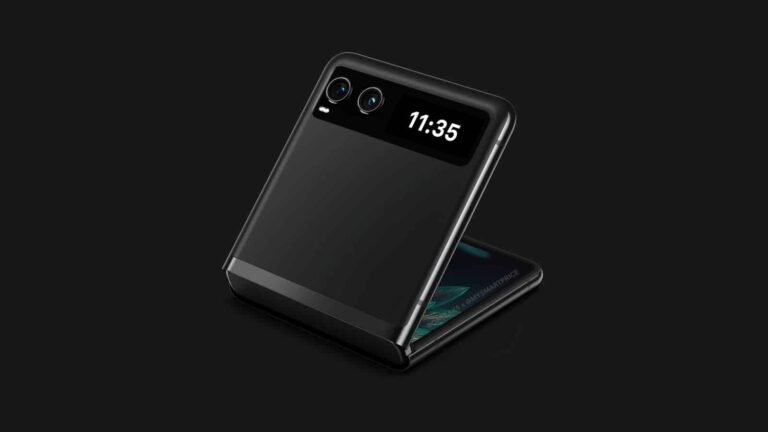
The Motorola Razr 40 did appear in CAD-based renders not long ago, in case you’d like to check out its design. Its display will be truly small, and sit next to the dual camera setup on the back.

We don’t know much about the phone’s specs at this point. We do know that it will be more affordable than the Razr 40 Ultra, and thus have inferior specs. Considering that the ‘Ultra’ model will include the Snapdragon 8+ Gen 1 SoC, the Razr 40 will likely use a Snapdragon 7 series chip.

No info leaked on that, but the Snapdragon 7 Gen 2 is a possibility. On the flip side, Motorola may opt for a MediaTek processor instead, we just don’t know which one. We’ll have to wait and see.

Both of these smartphones will become official on June 1. The company has officially confirmed that the global launch event will take place on that date.


[ad_2]
Source link

Verizon warns subscribers about smishing attacks

0
[ad_1]

Verizon has issued warnings about fraudulent text messages that try to scam you, also called smishing attacks. The nation’s largest wireless provider has urged its customers to pay close attention to messages coming from unknown sources. It has also shared some red flags to watch out for whenever you receive suspicious messages.

Verizon shares tips to identify a potential smishing attack

Smishing or SMS-based phishing is one of the most common forms of fraud. Similar to email phishing, where scammers send emails that look like coming from a reputed organization to trick unsuspecting recipients into giving away sensitive information such as their full name, address, social security number, and banking details, smishing attacks use SMS text messages. These attacks can only victimize people who respond. If you don’t respond to such emails or text messages, attackers cannot harm you. But how to identify a potential smishing attack? Here are some tips from Verizon.

These messages are usually random with no relevance to you or anything you have done recently. Attackers may say that “you’ve won a contest, a prize, free money, or purport that you have an issue with a package”. If you haven’t participated in any contest or haven’t placed an online order recently, it’s certainly a smishing text. Even if you have undertaken any such activity, do not respond in a hurry. Carefully check the source of the message and verify if it’s legitimate. Attackers try to play with your mind by asking you to take immediate action. If a message seems urgent, it’s likely a scam.

Scammers also often impersonate your bank or a government agency to trick you to act fast. They may say that your credit card has been blocked or charged some amount recently, and ask you to provide further information to unblock or reverse the transaction. Always remember that your bank will never ask for sensitive information such as your banking password or PIN. Also, check for any grammatical or spelling errors in such messages. “Real text messages from legitimate businesses will use proper grammar, punctuation, and spelling,” Verizon noted (via).

Look for suspicious links and email addresses

More often than not, phishing messages contain email addresses or links that redirect you to websites run by attackers. These emails and links usually look weird with long text or random numbers. Even if they look relevant to your bank or a government agency, they contain some red flags. A quick search on the internet would give you the official website of your bank. “If the text message contains a suspicious-looking link, it is a text scam,” Verizon said. “Do not click on the link or follow prompts from these fake text messages.”

Some attackers also pretend to be someone you know, like a friend or colleague, and say they are in urgent need of some money, adding that it’s their new number. If you receive such messages, first call the person on the number that’s already saved in your phonebook. You’ll immediately know the truth and can act accordingly. Always make sure to avoid giving away money or sensitive information about yourself to people you don’t know. If you have been scammed, immediately contact your bank or credit card company to stop the transaction.


[ad_2]
Source link
How to block or unfriend someone on Facebook

0
[ad_1]

If you’re using Facebook, you probably stumbled upon someone who started to annoy you. Well, if you’re done being annoyed, and you want to take care of the situation, we have good news. We’ll show you how to block or unfriend that person on Facebook, or perhaps both.

If someone annoys you on Facebook, you can unfriend, unfollow, or block them

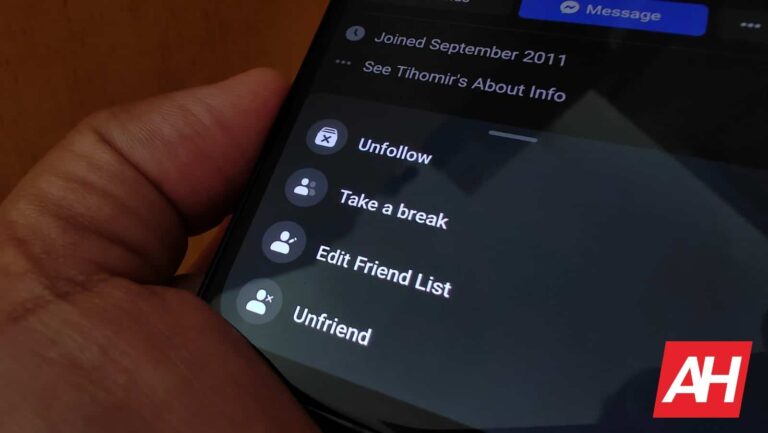
Now, if the person in question is your ‘friend’. In other words, if he / she is on your friends list, you can choose to unfriend that person, or at the very least unfollow. If you choose the unfriend option, he / she will be removed from your list, and will be demoted to the status of any stranger you know on Facebook.

If, on the other hand, you choose to unfollow that person, their feed won’t be popping up for your any longer. That person will stay on your friends list, though, and will be able to see what you post, and your activity.

The third option here is the ‘block’ option, and it’s the most aggressive of them all. That is the best idea if you don’t want to have any contact with someone. It is the last line of defense, if you will.

That being said, let’s see how you can do all this, very easily. We’ll start with a mobile tutorial, but we’ll also show you how to do it on a desktop.

How to block or unfriend someone on Facebook (mobile app)

The first thing you’ll need to do is open your Facebook app, of course. From there, either go to your profile, and manually find one of your friends, or use the search bar (magnifier icon in the top-right corner, image below) to find that person.

Facebook unfriend block mobile image 1

Once you locate the person, open their profile. From there, you can either select the ‘Friends’ option, or tap the three dots on the right.

Facebook unfriend block mobile image 2

If you tap the ‘Friends’ option, you’ll be able to ‘Unfollow’ or ‘Unfriend’ that person. Simply choose one of the two options that are shown to you in the drop-down menu.

Facebook unfriend block mobile image 3

Alternatively, if you chose the three dots option, from there you can block the person. Simply tap the ‘Block’ option, as shown in the image below.

Facebook unfriend block mobile image 4

How to block or unfriend someone on Facebook (desktop)

The procedure is pretty much the same on desktops, once you open the Facebook website. It does look a bit different, though, of course. From the main page, use the search bar in the top-left corner to find the person you’d like to unfriend / unfollow / block.

Facebook unfriend block desktop image 1

Once you do, you’ll once again see the ‘Friends’ and three dots options, though they’re on the right side now. The procedure is the same as on mobile. If you tap the ‘Friends’ option, you’ll be able to unfriend or unfollow a person, if you choose the three dots option, you’ll be able to block that person.

Facebook unfriend block desktop image 2

Tapping the ‘Friends’ option will open a drop-down menu with ‘Unfollow’ and ‘Unfriend’ options, as shown below.

Facebook unfriend block desktop image 3

Clicking the three dots icon will open a drop-down menu with a number of options, and the bottom one is the ‘Block’ option. Click that if you’d like to block that particular person. That’s basically it.

Facebook unfriend block desktop image 4


[ad_2]
Source link