As turbulent as things are with Twitter Blue and its perks, we can’t say that the platform is not adding more features to the subscription service. Not too long ago, Twitter increased the character limit to a whopping 10,000 per tweet. Now, according to a new report, Twitter may eventually let you add pictures in the middle of your long tweets.
Twitter has been increasing the current limit for tweets over the past several years, but it really exploded in just the past year. After Elon Musk took over, the character limit jumped up from 280 to 4,000 characters. After that, it increased again to 10,000 characters. Why write a hot take when you can write a full article?
Not only that, but Twitter also allows Blue users to use bold and italic fonts for their tweets. This all lets people add a lot more personality to their tweets rather than having to cut them short. While all the drama is still going on with the blue check mark, this is at least a little bit of good news.
Twitter may let you add pictures in the middle of your long tweets
This information comes to us from Jane Manchun Wong on Twitter. The tweet has a screenshot of a tweet actively being written. In it, we see a couple of images being pasted directly into the tweet with text in between them.
Twitter is working on the ability to include images in the middle of the long tweet pic.twitter.com/9tji6erocn
So, your tweets will probably resemble actual blog posts rather than short thoughts. Looking at the interface itself, it almost appears to have been taken from a computer rather than a smartphone. We’ll have to wait and see if that’s the case. If so, then this feature may be available to desktop users before mobile users.
On the bottom right-hand corner of the top image, we see the edit icon, which means that you will also be able to edit your pictures just like with regular tweets.
Right now, there’s no telling when or if this feature will ever make it to the public. Twitter is currently operating with a heavily diminished crew and with a ton of drama overhead. We will just have to wait and see what happens
MacOS is generally regarded as a more secure operating system when compared to Windows, thanks in part due to Apple’s stringent control over installing third-party apps and other safety measures. However, a new report from Cyble Research & Intelligence Labs suggests otherwise, as threat actors are now selling a new malware called ‘Atomic’ or ‘AMOS’ through private telegram channels for a monthly subscription of $1,000.
The report describes Atomic as a sophisticated malware packaged in a DMG file containing a 64-bit Go-based program. And for the price, subscribers also get a set of comprehensive tools to steal information from the victim. These tools include a ready-to-use web panel for managing victims, a MetaMask brute-forcer, a cryptocurrency checker, a DMG installer, and the ability to receive stolen logs on Telegram.
How does the malware work?
Once installed and executed, the malware displays a fake password prompt on the victim’s Mac to obtain the system password and gain privileges on the machine. Then it extracts the Keychain password and proceeds to steal information from cryptocurrency wallets, wallet extensions, web browsers, system information, and files stored on the Desktop. After gathering all the information, the malware zips the stolen data and sends it to the threat actor’s command and control server.
Moreover, to make matters worse, many antivirus engines did not flag Atomic as malware, emphasizing the need for improved detection methods for macOS malware, and threat actors are also updating the malware regularly to evade detection.
How to stay protected?
To keep your Mac protected from malware, it is essential to take some necessary precautions, including not downloading apps or software from third-party app stores, using strong passwords and 2FA, enabling biometric security features such as TouchID, not opening suspicious links in emails, keeping devices up to date, and using good antivirus software. As macOS gains more popularity, it’s now more important than ever for users to stay vigilant.
Thirteen people have been arrested for allegedly stealing millions of dollars from low-income Southern California residents, according to the Los Angeles Police Department.
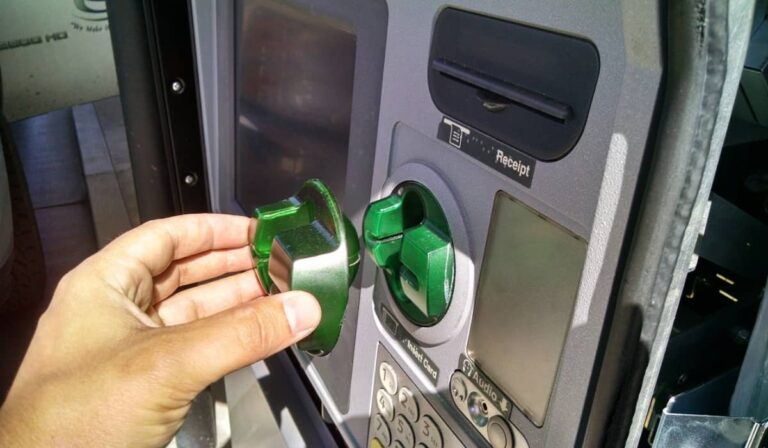
The suspects are accused of using card skimmers and ATMs to drain electronic benefit transfer (EBT) accounts, which are used to pay for food through the Supplemental Nutrition Assistance Program (SNAP).
The police department received a community tip on April 25 about fraud and identity theft suspects residing at a Van Nuys motel on the 4700 block of Sepulveda Boulevard. Following a search warrant, authorities recovered skimming devices, card readers, a large number of false identification cards and documents, and $36,062 in cash.
Investigators believe that the suspects may be part of a Romanian syndicate known to “target persons experiencing economic hardship for their EBT cards.” The group allegedly stole millions of dollars every month from Californians with EBT accounts.
According to LAPD’s press release, the investigation is ongoing. However, this is not the first time such a crime has been committed in the area. Back in March 2023, 15 suspected Romanian nationals were also arrested for stealing over $38 million from low-income SoCal families.
The suspects stole funds disbursed through CalWORKs and CalFresh programs using cloned EBT cards from skimming devices at ATMs.
Forescout Vedere Labs recently highlighted the neglected BGP security aspect – software implementation vulnerabilities.
FRRouting’s BGP message parsing vulnerabilities discovered by Forescout Vedere Labs could enable attackers to trigger a DoS state on susceptible BGP peers.
Major networking vendors depend on software suites that implement BGP, which are widely used online.
What is BGP?
The internet’s primary routing protocol is BGP, and large data centers frequently use BGP for internal traffic routing, while BGP extensions like MP-BGP are extensively implemented for MPLS L3 VPNs.
Organizations should avoid relying solely on their Internet Service Providers (ISPs) to ensure BGP security. It appears that attackers can still exploit easily accessible vulnerabilities in current BGP implementations.
By enabling the exchange of routing and reachability information, BGP facilitates the interaction of autonomous systems (ASes), which are sets of leased IP addresses allocated to organizations by registrars for a specific period.
A BGP failure may make an AS unreachable, as others cannot route packets. A threat actor may abuse a BGP setting to reroute network traffic in an unintentional direction.
Vulnerabilities
An analysis was conducted by security analysts using both manual analysis methods and fuzzing techniques to assess the following seven popular BGP implementations:-
FRRouting (Open-source)
BIRD (Open-source)
OpenBGPd (Open-source)
Mikrotik RouterOS (Closed-source)
Juniper JunOS (Closed-source)
Cisco IOS (Closed-source)
Arista EOS (Closed-source)
Analysts discovered three previously unknown vulnerabilities in Free Range Routing (FRRouting) version 8.4, released November 7th, 2022.
Here below, we have mentioned the complete flaw profile of the detected vulnerabilities:-
Description: Out-of-bounds read when processing a malformed BGP OPEN message with an Extended Optional Parameters Length option. This is a different issue from CVE-2022-40302.
Description: Out-of-bounds read when processing a malformed BGP OPEN message that abruptly ends with the option length octet (or the option length word, in case of OPEN with extended option lengths message).
CVSSv3.1: 6.5
Potential Impact: DoS
In 2016, FRRouting was created by developers from multiple commercial organizations by forking Quagga, another open-source project. FRRouting is now employed by major vendors, including nVidia Cumulus, and utilized by large organizations like:-
PayPal
Yahoo
Dutch National Police
While apart from this, Amazon supports DENT, and Microsoft supports SONiC, which is employed in some routers from Juniper.
In the case of repeated sending of malformed packets, the DoS condition can last indefinitely. Almost 1,000 of the 330,000 internet-enabled hosts with BGP enabled to respond to uninvited BGP OPEN messages.
It should be noted that most of the BGP hosts reside in the following countries:-
China (close to 100,000)
The US (50,000)
The UK (16,000)
A new open-source tool has been released (https://github.com/Forescout/bgp_boofuzzer/) by cybersecurity researchers for organizations to assess the security of their internally used BGP suites. Further, this tool can be used to discover new vulnerabilities in BGP implementations by cybersecurity researchers.
There are several scripts available with the tool to demonstrate how it can be used for testing the vulnerabilities found and testing the concept cases for:-
BGP OPEN
UPDATE
ROTE REFRESH
NOTIFICATION messages
Recommendation
Patching network infrastructure devices frequently is the most effective recommendation to minimize the risks associated with vulnerable BGP implementations like the ones discovered in FRRouting.
Maintaining an updated asset inventory that monitors the networking devices and software versions running on them is crucial to achieving this objective.
Twitter has restored free access to its API for some public institutions. The company says verified government and publicly-owned services that use the tool for critical purposes such as weather alerts, transport updates, and emergency notifications will get free access to it. “One of the most important use cases for the Twitter API has always been public utility,” the social network said in a tweet announcing this policy change. It blocked free API access for all in early April.
Twitter restores free API access for some public institutions
Twitter has undergone numerous changes since Elon Musk took over the company in October last year. Mont notably, the social network removed legacy verified checkmarks and blocked free access to its API. Both of these changes took effect last month, though the firm has been preparing for it for a long time. It abruptly blocked several third-party Twitter clients in mid-January citing API rules. The company said developers would need to pay for API access.
The paid version of Twitter API was supposed to arrive in February but was delayed until late March. The firm eventually launched three tiers, including a Free tier. However, the new free version offers very little. It is limited to “write-only use cases and testing the Twitter API”. It allows a maximum of 1,500 tweets per month and one app ID. The $100 per month “Basic” tier, meanwhile, is ideal for “hobbyists or prototypes,” Twitter said. It also comes with fixed caps on tweets.
Finally, for “businesses and scaled commercial projects,” Twitter offers an “Enterprise” tier of its API with varying monthly subscription plans. Depending on the individual use case, it can cost tens of thousands of dollars. A week or so after launching the paid version, the company blocked access to the existing free version of its API. Unsurprisingly, the cost of the Enterprise tier was too much for some developers, forcing them to shut down their projects. The Free and Basic tiers, meanwhile, didn’t offer enough resources to keep them alive.
While Twitter won’t backtrack on this decision, it has shown leniency for public institutions. Services that use its API for communicating emergency information and other critical purposes would get back free access. But for everyone else, it’s a choice between paying the company or stopping using its full API suite. Microsoft has already refused to pay and removed Twitter from its social media tool for advertisers.
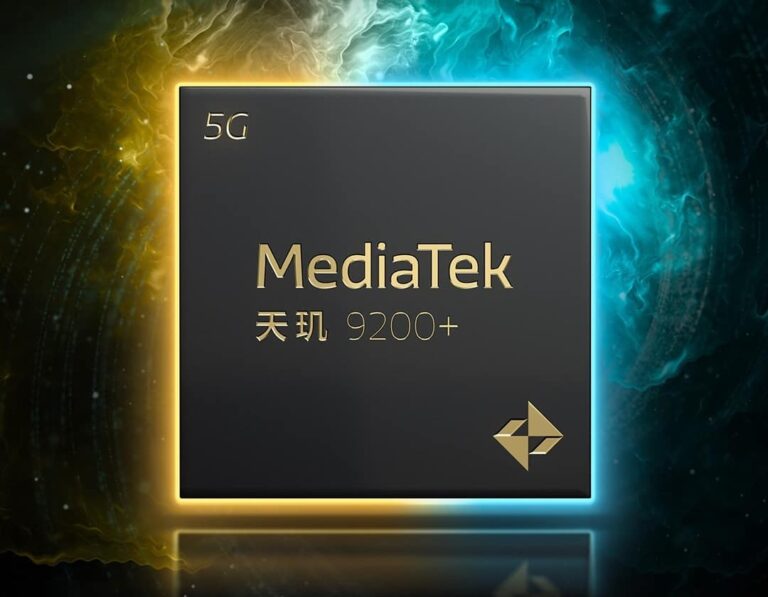
MediaTek is all set to launch a new flagship smartphone chipset next week. The Dimensity 9200+ will debut on May 10 as an overclocked version of last year’s Dimensity 9200, filling in the gap until the company comes up with its next-gen solution Dimensity 9300 later this year. Ahead of its unveiling, an alleged Geekbench score sheet of the new chipset has surfaced online revealing that it will be the most powerful processor for Android. It comfortably outperformed the current leader, Qualcomm’s Snapdragon 8 Gen 2 launched in November last year.
The Dimensity 9200+ scored 2,121 points in the single-core test and 5,655 points in the multi-core test on Geekbench 6. As GSMArena puts it, these scores are “considerably more” than what the Snapdragon 8 Gen 2 has achieved so far. The latter’s highest single-core and multi-core score’s on Geekbench are 1,992 and 5,641, respectively. It achieved those scores with ASUS’ upcoming gaming smartphone ROG Phone 7 Ultimate. The device had the performance X Mode turned on, which pushes the CPU to its limit to ensure smooth gaming performance.
The new MediaTek chipset, on the other hand, managed to beat the latest Qualcomm processor in standard mode with no performance boost at the CPU level. The Geekbench 6 score sheet of the Dimensity 9200+ is from a Vivo smartphone. It is probably the Vivo X90s or the Vivo X90s Pro. There are rumors of the Chinese firm working on a couple of new models in the X90 series with the upcoming MediaTek processor. ASUS may also launch a Dimensity 9200+ variant of the ROG Phone 7 Ultimate.
Dimensity 9200+ rumored specs
As said earlier, the Dimensity 9200+ will be a minor upgrade over last year’s Dimensity 9200. However, unlike in the past, MediaTek appears to be raising the CPU frequency across the board instead of just making the prime CPU core faster. The Cortex-X3 prime core reportedly operates at 3.35GHz on the new chipset, up from 3.05GHz. Likewise, the three Cortex-A715 performance cores get a frequency boost from 2.85GHz to 3.0GHz. The clock speed of the four Cortex-A510 efficiency cores is not known (1.8GHz on the Dimensity 9200).
Based on this Geekbench run, the Dimensity 9200+ is all set to reign the Android processor space for at least a few months as there’s no competition in the market. Rumors are that Qualcomm won’t launch a Snapdragon 8+ Gen 2 this year. It will go straight to the Gen 3 solution, which may arrive in late October 2023 with a clock speed of up to 3.7GHz. MediaTek will also launch the Dimensity 9300 around the same time. It remains to be seen which chip behemoth comes out on top.
T-Mobile recently confirmed another hack, the second this year and ninth since 2018, revealing customer data and account PINs.
While T-Mobile confirmed a recent system detection that revealed a threat actor had accessed a small number of accounts, which compromised limited information.
836 customers were affected by the intrusion, which commenced on February 24 and continued till March 30.
Once T-Mobile discovered the breach on March 27, they reset customers’ account PINs to swap SIM cards and authorize critical account changes.
Types of Data Involve
Here below, we have mentioned the types of data involve:-
Full name
Contact information
Account number
Associated phone numbers
T-Mobile account PIN
Social security number
Government ID
Date of birth
Balance due
Email addresses
Internal codes
Billing addresses
What Happened?
T-Mobile’s security measures worked as intended in March 2023, alerting them to unauthorized activity.
During late February through March 2023, a threat actor gained access to restricted data from a few T-Mobile accounts, as revealed by their security system.
This year’s second T-Mobile hack is the ninth security breach since 2018, and in January, the misuse of T-Mobile’s application programming enabled threat actors to access 37 million customers’ data.
What Is T-Mobile Doing?
Despite having several safeguards to prevent unauthorized access, T-Mobile acknowledges the need to enhance its security measures continually.
They take such incidents seriously, apologize for the breach, and are working towards improving the security of customers’ information.
T-Mobile reset their customers’ T-Mobile Account PIN to safeguard their accounts. Additionally, they provide free identity theft detection services and credit monitoring for two years through Transunion’s myTrueIdentity.
Moreover, T-Mobile conducts a thorough investigation to understand unauthorized activity and improve its safeguards to prevent such incidents from happening again.
Recommendation
Here below, we have mentioned all the recommendations offered by T-Mobile:-
Review your account information as soon as possible to ensure everything is correct.
Make sure to update your PIN with an updated one, and if you need help updating your PIN, call 18009378997 or go to T-Mobile.com or log into T-Mobile.com.
Monitoring the activity on the account is an important part of staying vigilant.
Take advantage of your free credit reports by monitoring them regularly.
Don’t forget to review your security settings for your email, financial account, and other accounts regularly.
Use T-Mobile’s security features like Account Takeover Protection, number transfer PINs, two-step verification, free scam protection with Scam Shield, SIM Protection, a security dashboard, and more.
Twitter has gone through probably one of the most turbulent years since the platform’s conception, and it’s not getting better. There’s a new Twitter bug that’s randomly logging people out of their accounts, according to Downdetector.
Twitter is no stranger to bugs and outages. In fact, no social media platform is immune to these types of things. In Twitter’s case, this sort of calamity is not what the company needs at this point, as Elon’s Crusade continues.
A Twitter bug is logging people out of their accounts
This seems to be a bit random, as most of the people affected are using Twitter for the desktop. So, this might be mostly specific to that platform. An Android headlines user was affected by this bug on the Twitter website; however, their account was accessible from the app.
People are, unfortunately, being logged out of their accounts for no apparent reason. What makes the situation worse is that they’re having trouble logging back in. When trying to access the Twitter log in page, these unfortunate users will keep being redirected to the sign-in page. After a while, they usually will just be sent to the Twitter homepage.
This is an extremely frustrating issue to have. At this point, Twitter has yet to acknowledge this issue, but we hope that the company does soon. In any case, if you are having trouble logging into your Twitter account, then you may be stuck using your phone until it’s over.
Fortunately, issues like these tend to only last a few hours. So some of you may just want to sit tight and wait for the functionality to return. You may want to check back every so often and try logging into your Twitter account.
If Twitter is slow to act on this, it may be understandable seeing as the company is dealing with yet another bug on the platform. This bug seems to arbitrarily reassign the verification check mark to legacy accounts after taking them away not too long ago. This is temporary, so if your check mark was returned, it will very well disappear again.
In today’s digital era, mobile phones have become a vital part of our daily lives. Let’s face it, our mobile phones are our lifelines. We use them to stay entertained, informed, and connected. However, with great power comes great responsibility. Hence, it is important to protect your mobile phone from accidental damages, loss, or theft, with its ever-increasing usage. That’s where mobile phone insurance comes into play – it’s like a superhero cape for your mobile phone!
Mobile Phone Insurance: What’s it?
Mobile insurance is a policy which provides you with a safety net to fall back on in case your mobile gets lost, damaged, or stolen. It is the ultimate form of protection that you must have as it secures your phone against unforeseen events which could otherwise leave you helpless. With mobile phone insurance, you can rest assured that your phone will be protected against potential risks. This implies that you do not have to worry about the high maintenance or replacement costs. Also, we can’t neglect the fact that accidents happen and are unpredictable. One slip of the hand, one spilled drink, one accident, and your phone could be damaged.
Moreover, mobile phone insurance plans provide hassle-free and convenient ways to have your phone replaced or repaired without having to roll-out any significant out-of-pocket expenses. This will assure you that you do not have to undergo the trouble of looking for a reliable repair service or paying for the replacement costs.
So, if you wish to safeguard your mobile phone against the potential risks, consider purchasing mobile phone insurance today to enjoy uninterrupted and worry-free usage of your device. With easy claim processes, swift repair services or replacements, you can get back to using your phone in no time in case of an unforeseen event. It gets even better since you won’t have to break your savings to pay for costly repairs or replacements.
Key Features of Mobile Insurance Policies
Here are the salient features of mobile phone insurance policies:
They provide coverage for both, new and old phones.
Smartphones and the phones with basic features are covered under this insurance policy,
The insured sum is linked to the cost price of the mobile phone.
Several insurance plans allow cashless repair services.
The tenure of the insurance policy may range from a span of 6 to 12 months.
What’s Covered Under Mobile Insurance
Mobile phone insurance policies typically cover a huge variety of risks and offer several features which can secure your phone to keep you rest assured. Here are some of the features that mobile phone insurance plans offer:
This feature covers any type of accidental damage that may occur to your mobile phone, such as water damage, cracked screen, or any other physical damage.
This feature provides financial coverage against the replacement costs of your phone in case it gets stolen or even lost. It may also ensure coverage against any unauthorised data usage or calls.
If you do not make any insurance claims during your policy tenure, certain mobile phone insurance plans may offer a no claim bonus. This generally lowers your premium for the succeeding policy tenure.
Mobile phone insurance plans often have a hassle-free claim settlement process. This ensures that you get your phone replaced or repaired without any delay.
Mobile insurance policies provide comprehensive security against a wide range of risks that your phone is generally exposed to. These include water damage, accidental damage, theft, loss due to natural calamities such as fire, and more.
Mobile phone insurance policies also provide certain additional protection which you can opt for by paying an extra premium. Some of them are as follows:
Transit Insurance: This provides coverage to the mobile phone when it is in transit. Worldwide Coverage: This offers coverage against damages which your phone may suffer from, even when you are outside the geographical borders of India.
What’s Not Covered Under Mobile Insurance
A mobile phone insurance cover almost every possible risks that may pose to the mobile phones, except the following:
Any kind of mysterious loss of the mobile phone
Damages caused to the mobile phone because of climatic changes
Theft of the mobile phone when it was left unused for a long time
Pre-existing defects on the mobile phone
Deliberate harm or damage caused to the mobile phone
Damages suffered by the mobile phone when it was being used by someone other than the owner
Any kind of an experimental or overloaded mobile phone
Companies Which Offer Mobile Insurance in India
Here are a few companies in India which offer mobile phone insurance policies:
How to Buy Mobile Insurance
If you wish to buy a mobile phone insurance plan, all you have to do is choose the insurance provider, visit their website, fill up a form, and pay the premiums. Alternatively, you can physically visit their offline branch and apply for an insurance policy.
Here are a few documents that you may require to submit to your respective insurer to buy a policy:
Application form seeking insurance policy coverage
Phone’s invoice
Phone’s IMEI number
Your identity proof
How to Make a Claim
Here’s how you can make a claim under the mobile phone insurance cover:
Notify your respective insurance provider about your loss by calling on their helpline number or sending them an email and registering your claim.
Submit your claim form by entering the necessary information.
File an FIR at your local police station in case your phone gets stolen since it will be vital for you to make a theft claim.
Click the images of the damages suffered by your phone as a proof to provide to your respective insurer to facilitate their investigation procedure.
Depending on their investigation and other necessary information provided, the executives will approve of your claim.
In case your mobile phone requires repair, your insurer will pay the expenses directly to your respective mobile service centre. However, the service provider must be listed in the authorised service centre by your insurance provider. If that is not the case, you will have to make the payment of the repair costs directly and get it reimbursed by your insurer.
If your phone gets lost or stolen, your insurer will pay you the insured sum as a claim.
Here are a few documents that you may require to submit to your respective insurer to make your claim:
Policy bond
Signed and filled claim form
Copy of the police FIR in case of your phone’s loss or theft
Phone’s invoice
Phone’s IMEI number
Your identity proof
Extended Warranty vs Mobile Insurance
Sometimes we feel that it is a waste to invest in a mobile phone insurance policy when you can purchase an extended warranty. Well, these two are totally different from each other and here’s how:
Conclusion
Mobile phone insurance policy is a must-have in your pocket. Whether you are swimming with the sharks, climbing mountains, or just fulfilling your everyday business, accidents may happen. It is not a hidden fact that when they do, the repair or replacement process can get exhausting – physically and financially. That’s when mobile insurance policies provide you with the safety net you deserve. With a plethora of options available, catering to every lifestyle and budget, you can secure your precious phone against the unforeseen events. Don’t let water damage or a cracked screen ruin your day. Embrace the power of phone insurance and continue living your best life. Don’t let a second pass by, sign up, and become a phone insurance hero today!
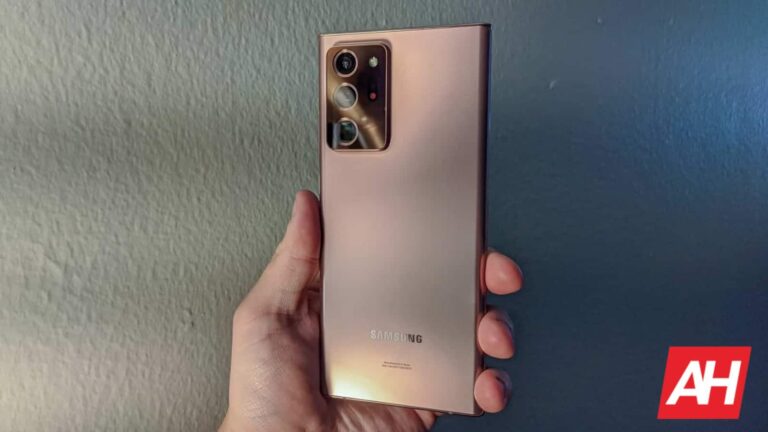
Samsung‘s April update is widely available for the Galaxy Note 20 series in the US. Both carrier-locked and unlocked units of the 2020 Note phones are receiving the latest security patch on all networks across the country. The new update also brings the Image Clipper feature.
The Galaxy Note 20 and Galaxy Note 20 Ultra were among the first Samsung devices to pick up the April SMR (Security Maintenance Release) in the US. The Korean firm began the rollout in the first week of April, but initially only covered factory-unlocked units. The update came with the firmware build number N98*U1UES4HWC9 and didn’t bring any additional goodies.
Later in the month, Samsung released the April SMR for the carrier-locked variants of the Galaxy Note 20 and Galaxy Note 20 Ultra in the US. Along with the latest security patch, users with a carrier-locked unit also received the Image Clipper feature. The updated firmware version for those devices was N98*USQU4HWD1. Over the past few days, the company has pushed this update widely across all networks.
At the same time, Samsung also rolled out a second April update to unlocked variants of the Galaxy Note 20 and Galaxy Note 20 Ultra in the US, finally introducing Image Clipper to them. The latest update came with the firmware build number N98*U1UEU4HWD1. This update is also now available widely. If you haven’t received it yet, go to Settings > Software update and tap on Download and install to check for updates manually. If you still don’t see any updates, wait a couple more days and check again.
Galaxy Note 20 series gets Samsung’s Image Clipper feature in the US
Image Clipper is a relatively new Gallery feature for Galaxy devices. Samsung introduced this feature with the Galaxy S23 series earlier this year. It lets you crop out subjects from photos directly from the image viewer. Simply press and hold onto a subject to crop it out. You can then save it as a separate image or paste it elsewhere.
Samsung recently started pushing Image Clipper to older models. It has already seeded the feature to several devices, including a few mid-range models. It’s now available for users with a Galaxy Note 20 or Galaxy Note 20 Ultra in the US. Note that Samsung recently released the May security patch as well. The latest SMR is available for the Galaxy S23 series in some markets. The Galaxy Note 20 series will also receive the new patch. We will let you know when the rollout begins.