The popular communication software business 3CX has admitted a supply-chain attack, potentially affecting its customers too. As the attackers trojanized the legit app version, deleting the 3CX Desktop App remains the only working fix for now. The exact impact of this incident on other firms currently remains unclear; however, investigations are underway.
Recently, 3CX disclosed a severe cyberattack that risks the security of its customers. 3CX admitted the presence of malware in its software, following a supply-chain attack, and urged the customers to simply uninstall the app until the matter receives a fix.
3CX is a popular PBX provider serving a huge customer base globally. Its support for Windows and Linux systems alike makes it feasible for various businesses to integrate 3CX in CRMs.
A community alert from the firm’s CEO, Nick Galea, on 3CX forums revealed that the threat actors potentially infected the 3CX desktop app with a malware, affecting the Windows Electron client. As the firm investigated the matter, it advised the customers to use the Progressive Web App (PWA) client instead which remained immune to this attack.
Diving deep into what happened
While it initially seemed like an abrupt disclosure following a sudden attack, SentinelOne elaborated that they could detect the threat even early. According to their post, they decided to investigate the matter after the SentinelOne app started blocking malicious threats with the 3CX desktop app. Some users even shared their complaints on 3CX forums following these alerts. Yet 3CX officials didn’t acknowledge the matter.
As the incident gained traction and the investigations progressed more, it turned out that the threat actors potentially exploited an already-known Windows vulnerability to infect the 3CX app. Analyzing the matter revealed the presence of a malicious DLL in the app, which downloaded further malware, like infostealers, on the target device.
Sophos, in its own post, also explained the incident, hinting at the potential abuse of ffmpeg.dll for the DLL sideloading attack, The researchers also attribute the attack to the Lazarus Group. Whereas CrowdStrike, in its own analysis, mentioned LABYRINTH CHOLLIMA as the threat actor behind the attack.
Ironically, the said Windows vulnerability, despite numerous exploits and a working fix available for a decade, still threatens numerous systems. That’s because, as Bleeping Computer elaborated, the patch for this bug remains available as an “opt-in” feature only, requiring manual configuration. Thus, the probability of blanket immunity to this vulnerability exploit remains very low.
What Next?
For now, Galea advises 3CX users to abandon the desktop app for the PWA client until the matter gets resolved. Meanwhile, 3CX has hired Mandiant for investigating the matter.
CISA has published the first results of its pre-ransomware notifications that were introduced at the start of 2023. And they appear to be working.
CISA (Cybersecurity and Infrastructure Security Agency) has published the first results of its pre-ransomware notifications that were introduced at the start of 2023.
Even though this initiative is relatively young, CISA says it has notified over 60 entities across the energy, healthcare, water/wastewater, education, and other sectors about potential pre-ransomware intrusions, and we’ve confirmed that many of them identified and remediated the intrusion before encryption or data loss occurred.
In order to develop the pre-ransomware notifications, CISA established the Joint Cyber Defense Collaborative (JCDC) to “unify cyber defenders from organizations worldwide”. The team proactively gathers, analyzes, and shares actionable cyber risk information.
The success of the operation relies on a few key factors:
Sharing intelligence by the cybersecurity research community, infrastructure providers, and cyber threat intelligence companies about potential early-stage ransomware activity.
Getting that information to the victim organization and providing specific guidance about containing the threat.
The time cybercriminals take from the initial security breach to the full-fledged ransomware attack.
Basically, the more information organizations give about early-stage ransomware activity, the better the information the JCDC can provide. This information also helps to keep lists like the known to be exploited vulnerabilities catalog up to date and helps create ransomware vulnerability warnings which inform organizations that a vulnerability used by ransomware threat actors is present on their network.
But how do pre-ransomware notifications work in real life?
Let’s take the fake IRS mail we reported about last week as an example. My colleagues found an email being sent out with the title of “IRS Tax Forms W-9” which appears to have been sent from “IRS Online Center”. In reality, the attachment contains a malicious macro. Enabling the content of the attachment will result in Emotet being downloaded onto the system.
The JCDC can in turn share this information with potential victims. “Have you seen this mail? Did anyone open the attachment? Did they use the “Enable Content” button? Here is what you can do to prevent your systems from getting encrypted. These are the tactics, techniques, and procedures (TTPs) and Indicators of Compromise (IOCs) you need to look for. And this call-to-action can be pretty specific because they know that any potential victims should be looking for Emotet.
For many non-profit organizations that can’t afford their own security team or an external Managed Detection and Response (MDR) service, this is very helpful and, as CISA concludes, has proven its usefulness. While the pre-ransomware notifications service is aimed at US organizations, JCDC works with international Computer Emergency Readiness Team (CERT) partners to enable a timely notification when it concerns a company outside the US.
The more information we share, the better the information JCDC can provide gets. Any organization or individual with information about early-stage ransomware activity is urged to contact Report@cisa.dhs.gov. If your organization is interested in participating in these collaborative efforts to stop ransomware, please visit cisa.gov/JCDC-faqs or email cisa.jcdc@cisa.dhs.gov.
Every US ransomware incident should be reported to the US government. You can find information on reporting at stopransomware.gov.
Detect intrusions. Make it harder for intruders to operate inside your organization by segmenting networks and assigning access rights prudently. Use EDR or MDR to detect unusual activity before an attack occurs.
Stop malicious encryption. Deploy Endpoint Detection and Response software like Malwarebytes EDR that uses multiple different detection techniques to identify ransomware, and ransomware rollback to restore damaged system files.
Create offsite, offline backups. Keep backups offsite and offline, beyond the reach of attackers. Test them regularly to make sure you can restore essential business functions swiftly.
Don’t get attacked twice. Once you’ve isolated the outbreak and stopped the first attack, you must remove every trace of the attackers, their malware, their tools, and their methods of entry, to avoid being attacked again.
Malwarebytes removes all remnants of ransomware and prevents you from getting reinfected. Want to learn more about how we can help protect your business? Get a free trial below.
Samsung is hard at work on making its Fold series foldable smartphones thinner and lighter. The company has developed a new type of hinge that allows the device to shut without a gap when folded. It also helps reduce the weight of the fold and eliminated the display crease. We now have some numbers that tell you how the upcoming Galaxy Z Fold 5 stacks up against last year’s Galaxy Z Fold 4 in terms of weight and thickness.
According to a new report coming out of Samsung’s homeland South Korea, the Galaxy Z Fold 5 will weigh about 250 grams. The company hasn’t quite achieved it just yet, with the current prototype unit weighing in at 254 grams.
But, work is underway to cut some more weight before the product enters the final production stage. Even if Samsung fails to reduce the weight any further, the new foldable will be nine grams lighter than the 2022 model (263 grams).
It may not be a massive weight reduction, but it’s pretty big in the grand scheme of things. The Galaxy Z Fold 5 is a huge smartphone with two screens, big batteries, and several moving components inside.
There’s little scope to bring the weight below 250 grams. However, Samsung has still found a way to make the device significantly thinner without compromising on waterproofing or anything else.
The Galaxy Z Fold 5 will reportedly be just 13.4 mm thick when folded. In comparison, the Galaxy Z Fold 4 is unevenly thick and measures 14.2-15.8 mm when folded, with the hinge area being thicker.
That’s a 2.4 mm reduction in thickness in the hinge area this year. When unfolded, last year’s foldable measured 6.3 mm thick. We expect that to remain unchanged with the upcoming model.
The Galaxy Z Fold 5 will address another complaint with Samsung foldables
Weight and thickness weren’t the only complaints of Samsung’s foldable users. They have also been demanding the company work on removing or at least reducing the display crease. And the firm is addressing all of these complaints this year. The new “waterdrop” hinge in the Galaxy Z Fold 5 will allow the display to fold in the shape of a water droplet, eliminating the crease.
Overall, the Galaxy Z Fold 5 will bring several subtle improvements to Samsung’s Fold lineup this year. The company’s push for a thin and light foldable means there will not be a built-in slot for the S Pen.
It is said to be working on a new S Pen that fits inside the thin foldable while also giving you a feeling of a real pen when writing. Next year’s Galaxy Z Fold 6 may bring it. Samsung’s fifth-gen foldables will debut in the second half of 2023.
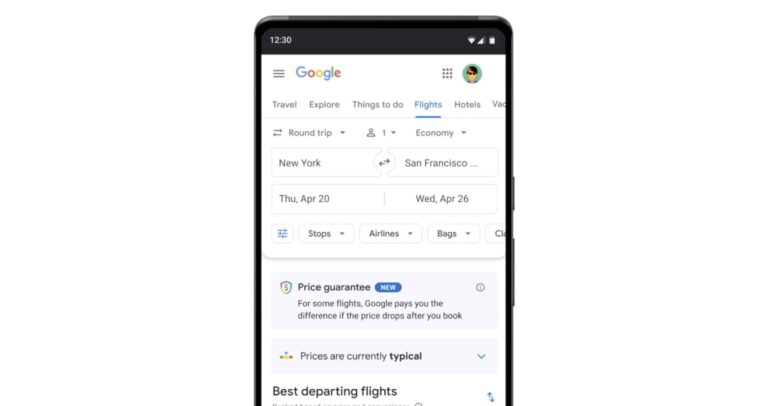
If you’re someone who frequently books flights, you know how frustrating it can be to book a flight only to find out later that the price has dropped significantly. But what if you could get a refund for those flights that you booked through Google Flights? Google is currently testing out its new price guarantee program, which aims to do just that.
Now, when searching for flights on Google, you would notice a small shield icon with a dollar sign next to certain flights. Therefore, if you book one of these flights, Google will monitor the price every day until the departure date, and if the price drops, Google will refund you the difference via Google Pay. While other travel sites like Orbitz also offer partial refunds under certain circumstances, Google’s program is unique because it continuously monitors flights and provides automatic refunds.
However, the program is currently only available for flights departing from the US, and users must have a US billing address and phone number to be eligible. Additionally, the maximum refund amount is $500 per year, and Google will not reimburse differences that are less than $5.
“Now, we’re going a step further with a new pilot program for price guarantees in the U.S. If you see a flight with the price guarantee badge, it means we’re confident that the price you see today won’t get any lower before takeoff,” says Google.
Exploring hotels on Google
In addition to the price guarantee program, Google has also launched a new feature that allows users to explore hotels in an area through a “swipeable story format.” With this format, users can swipe through full-screen images of hotels, similar to how they would view stories on Instagram and quickly access reviews and other information. When users are ready to book, they can easily do so by tapping a link that takes them directly to the hotel’s website. Furthermore, Google Maps will now allow users to search for attractions and view pricing information, as well as purchase tickets for these attractions directly from the listing.
It seems like it was ages ago when WhatsApp was facing intense criticism about its lack of security features. That, however, isn’t something that can really be said in today’s reality, where WhatsApp is one of the most feature-rich messaging apps on the market.
While end-to-end encryption and sweet features such as spam prevention are awesome, there are always ways to step up the game further. So how about the ability to lock specific chats? Options like this are highly coveted, especially to those of us who use their phones for work.
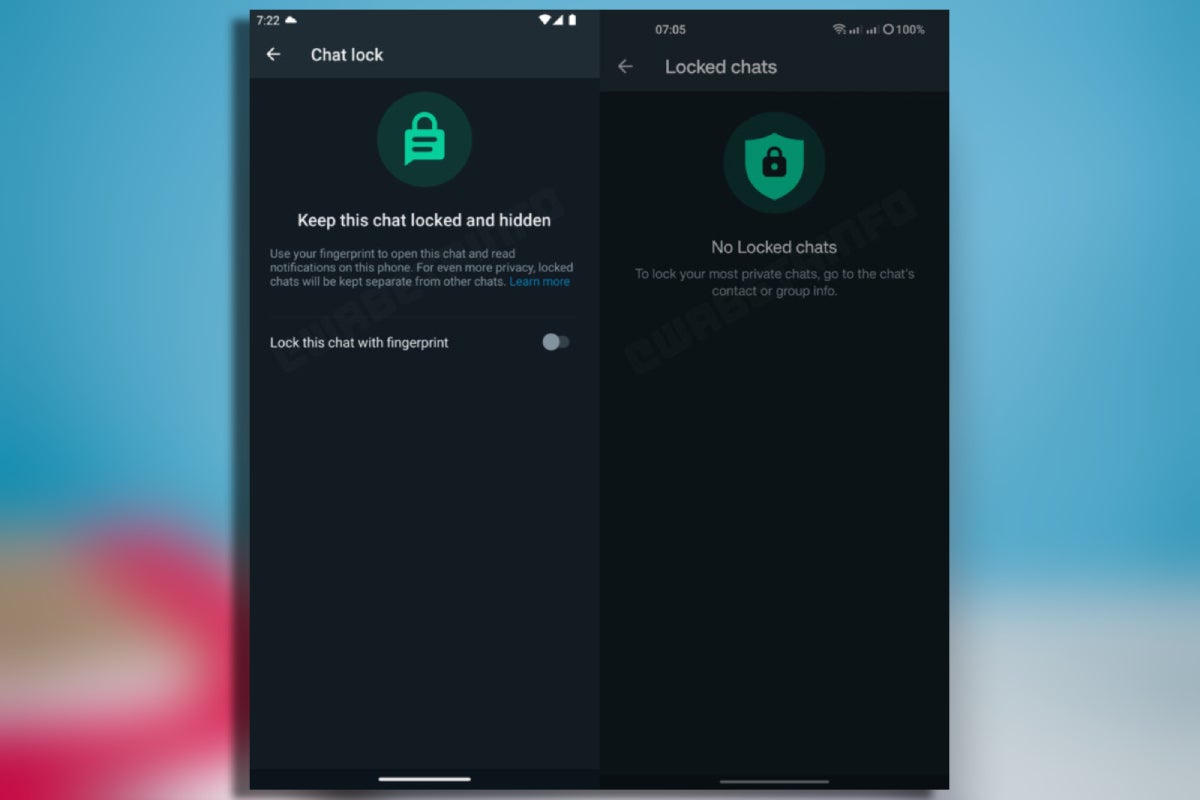
Well, WABetaInfo — the blog dedicated to uncovering the hidden features of the WhatsApp beta program — has managed to unearth exactly this type of feature. It seems to be still in development, but traces of it are found in the WhatsApp beta release for Android, version 2.23.8.2.
Some example screenshots, as provided by WABetaInfo.
The feature is seemingly designed to enhance user privacy, as it will allow users to lock individual and specific chats with a passcode or on-device biometrics. When locked, chats won’t display previews and any media on them won’t be automatically downloaded.
After a locked chat has been set up, only persons, who are able to verify through the chosen security measure, can gain access to their contents. Chats of this type will be kept in a separate category too, for an extra bit of clarity.
Naturally, this doesn’t mean that all WhatsApp conversations will be impacted by such a choice. Users can enable the feature on a by-chat basis, ensuring that only those chats, which contain sensitive information, are to remain behind an extra security layer.
As of now, we have no word on when this feature will be rolled out officially by WhatsApp, but it appears to be in development at the moment. If you are interested in being among the first users to try it out, then make sure to sign up for the WhatsApp beta program.
In today’s digital age, having a physical identity is not enough. It is equally important to have a digital identity. In fact, having a digital persona is not only important, but inevitable. It represents a business’s behavior, goals, values, and characteristics that are displayed online. If you don’t construct it according to a strategy, it will establish itself, potentially revealing flaws and controversies that you would like to keep hidden.
Digital Persona and Digital Identity
The digital persona is shaped by online activities, social media presence, and digital fingerprint. The specific “digital” aspect of the persona is called Digital identity. Although the terms are similar, it is important to distinguish between them from the beginning.
Definition: Digital persona is the digital representation of someone’s personal information that is intentionally created by the user or collected without the user’s knowledge.
Digital identity is something that is in the virtual dimension and does not directly interact with people, but interacts only with machines. Digital persona, on the other hand, is what people use to make sense of interactions in virtual space. In other words, digital identity is the technical aspect of a person’s online presence, while digital persona is the behavioral and social aspect of their online presence.
People interact with digital persona
Computers interact with digital identity.
One digital persona can have multiple digital identities.
One digital identity can be operated by multiple people.
Although it may sound like a topic more suited for philosophy, such constructs can easily be applied in business settings. This is because most computer security systems operate under the principle:
One digital persona should be associated with a single digital identity.
Here is an example: An online merchant is working with two landing pages and promoting them with Facebook Ads. One of the pages violatedone of the Meta Platform rules, while the other was clean. However, the entire Meta Platform account was suspended. The merchant’s next step was to create a new account to continue working with the clean page. Unfortunately, the security system recognized that the same digital identity was being used: the merchant was accessing the account from the same computer and IP address. Therefore, the system did not allow the merchant to proceed because the digital persona was connected with the compromised digital identity.
Building a Positive Digital Representation
As you see, digital persona and digital identity are closely connected. Computer systems make decisions on behalf of real people or businesses represented online based on their digital characteristics. Online security systems or recommendation algorithms can set limitations on one’s actions based on their digital fingerprint, and that’s why it is important to know what your online representation consists of.
In today’s world, many activities are carried out online, such as online shopping, banking, and socializing. A digital persona helps individuals and organizations to establish their online presence and credibility. It is essential for businesses to have an online presence and a positive digital persona to attract customers and investors.
Building a positive digital persona requires individuals and organizations to be mindful of their online activities. It is important to create a consistent and positive image across all platforms. Individuals should be cautious of what they post online, as it can have a significant impact on their digital persona. It is also important to engage in positive online activities and maintain a positive relationship with online communities.
Digital Persona level
To build a positive digital persona, businesses should prioritize their online presence and engage with their online audience.
Professional website. It should showcase the products or services, and provide useful information to potential customers. The website should be visually appealing and easy to navigate. Creating high-quality, relevant, and engaging content is also very important to attracting and retaining visitors to your website.
Active presence on social media platforms. Businesses can establish themselves as credible and trustworthy by regularly posting updates, sharing relevant content, and responding to customer inquiries. This can help build a loyal following and attract new customers.
Feedback management. By acknowledging feedback, addressing concerns, and implementing changes based on customer suggestions, businesses can show their customers that they are listening and committed to providing the best possible experience. This can help enhance their reputation and build trust with their customers.
Public Relations. Being represented in online publications can be an effective tool for businesses to build a positive digital persona. Businesses can establish themselves as credible and trustworthy by managing their reputation and communicating effectively with their audience. Public relations can help businesses promote their products or services positively and informally, build relationships with customers and other stakeholders and establish themselves as thought leaders in their industry.
Overall, businesses should be proactive in their online presence and engage with their online audience to build a positive digital persona. By creating a professional website, maintaining an active presence on social media, and responding to customer feedback, businesses can establish themselves as credible and trustworthy, and attract loyal customers.
Digital identity level
It’s pretty obvious that being generally nice online can help build a positive online image. However, it’s more complicated to understand what lies beneath the surface. On the digital identity level, it’s important to present oneself favorably not only for the people you communicate with, but also for computer systems such as search engines, security systems, and recommendation algorithms. Your digital identity is a reflection of your digital persona, so everything you do to gain the trust of real people should also be done to gain credibility from computer systems.
SEO Optimization. Search engine optimization can help businesses improve their online visibility and attract more traffic to their website. Before creating content for the website, it’s important to research relevant keywords for your target audience. Once you have identified your target keywords, incorporate them into your website’s meta tags, headlines, and content. Use descriptive, keyword-rich titles and descriptions to help search engines understand your page content. With the increasing number of users accessing the internet on their mobile devices, it’s important to ensure that your website is optimized for mobile devices.
Optimizing Social Media Recommendations. Being featured on the “For You” page of social media platforms like TikTok and Instagram can be a great way to gain visibility and attract new followers. To achieve this, besides creating high-quality content that resonates with your audience, you can use popular hashtags, respond to comments and messages promptly and authentically, post consistently (at least once a day or a few times a week), collaborate with other creators, and leverage paid advertising.
Reputation management. It is a “black hat” technique, but it also can be helpful in case you will not abuse it too much. And you can be sure that everybody does it even if it is not ethical. Reviews and ratings are very important for some businesses, so you must get the first ones. Otherwise you will be listed below your competitors and will not get the customers, who can leave a review. So it is kind of a vicious circle for a starter. The solution is to create some new digital identities and use them to kickstart the reviewing process. Of course it is better to engage digital personas in the process, but sometimes you have to be a little bit naughty.
Link building. Building links from reputable, high-quality websites can help improve your website’s authority and increase its visibility in search results. Consider guest posting on other websites or reaching out to industry influencers for backlink opportunities.
Geotargeting. Working with new markets in a global world can be challenging. You need to be on the same page as people living in different parts of the world. This can become a real problem when it comes to social media management or advertising. You not only need to translate advertising and make it relatable to the local audience, but also publish it properly so that people will see it. In this case, IP-spoofing services and anti-detection browsers can be useful.
Marketing Research. When advertising platforms select ads to show to a specific audience, they consider many criteria, including device type, computer operating system, etc. To better understand what ads your potential customers see, viewing them through their eyes can be useful. You can create a unique digital identity for each category of your customers, simulate their online behavior using a cookie robot, and observe the ads they view. A cookie robot is a tool that guides your digital identity through websites, collecting cookies along the way to make advertising platforms believe that your digital persona is interested in specific content.
Websites and online platforms often use various methods such as IP address tracking, device fingerprinting, and user behavior analysis to recognize digital identities. Additionally, they may employ anti-fraud algorithms and machine-learning models to detect unusual patterns and flag suspicious behavior. Here are some tools you can use to check, change and even create a new digital identity:
VPN and Proxy
A proxy server acts as an intermediary between a user and a website, forwarding requests and responses between them. On the other hand, a VPN encrypts a user’s internet traffic and routes it through a secure remote server.Both methods mask the user’s IP address and provide anonymity and privacy.
In case you need to create a trustworthy digital identity, you need a proper proxy. Residential proxy is the most appropriate. It is a type of proxy server that uses IP addresses provided by Internet Service Providers (ISPs) rather than data centers. This makes them less likely to be detected and blocked by websites that are trying to prevent access from proxy servers. Residential proxies can be used for a variety of purposes, such as web scraping, data mining, and online automation. They are often more expensive than data center proxies.
Antidetect Browser
Antidetect browser is a web browser designed to protect the user’s online privacy and anonymity. It uses various techniques to prevent websites from tracking the user’s browsing activity, such as changing the browser’s fingerprint, blocking cookies, and using a proxy server to hide the user’s IP address. It is often used by individuals who want to browse the internet without being tracked by advertisers, governments, or other organizations.
If you need to create a new digital identity for online advertising, you will typically need an antidetect browser. The quality of this software is crucial, as an artificial-looking digital fingerprint provided by the browser can result in account banning. Antidetect browsers, such asOcto Browser, use real computer fingerprints and allow for the management of multiple digital identities from a single machine. It is also convenient that you can use all the created identities with the team, giving everyone involved safe access to work with them.
Digital Fingerprint Checkers
There are plenty of sites that can help you to check what your digital fingerprint looks like: for example, amiunique or browserleaks Here, you can check all the data that your browser shares with the sites you visit. If you need to create a new digital identity, you can use these sites to check if your methods worked well.
Conclusion
A digital persona is a crucial aspect of an organization’s online presence. Building a positive digital persona requires businesses to be mindful of their online activities and take measures to protect their online identity. While challenges come with a digital persona, the benefits outweigh the risks. As technology continues to advance, it is important for organizations to be aware of the potential risks and take measures to protect their digital persona. By doing so, they can establish their online presence, build credibility, and protect their reputation.
There are 5 cyberthreats for channel partners to focus on in 2023.
The channel, comprising managed service providers (MSPs), Systems Integrators (SIs), value-added resellers (VARs), and more, plays a vital role in providing cybersecurity for companies around the globe today. But as malware evolves and cyberattacks become more common, keeping up with the top threats to the channel can be difficult.
With a plethora of cyberthreats out there, which ones should channel partners focus on in 2023?
Malwarebytes addresses this question in the 2023 State of Malware Report, identifying the five most potentially damaging malware threats that MSPs, SIs, VARs, including their clients, should prioritize.
Key channel threats in the 2023 State of Malware Report
One example of threats the channel should prepare for is the email-borne Emotet Trojan, a notorious threat that continues to plague businesses. The report also highlights the growing issue of ransomware attacks, 39% of which target service providers according to Kaseya’s 2022 MSP Benchmark Survey.
A particular focus is on the ransomware group LockBit, which was responsible for the majority of ransomware attacks in 2022. In February 2023 alone, the group published 126 victims on its leak page. LockBit affects companies of all sizes, from hospitals to small and large businesses.
Our report serves as a valuable resource for channel partners, helping them optimize defense strategies and take both proactive and reactive measures in the fight against the most damaging malware threats of the year. By using the insights from the report, the channel can better protect their own organizations as well as their customers’.
The role of channel partners in cybersecurity
The channel is pivotal to helping their clients adapt to the ever-changing threat landscape and avoid falling victim to devastating cyberattacks. As channel partners make their way into 2023, they can stay ahead of the curve by keeping these tips in mind:
Prioritize the top five malware threats identified in the Malwarebytes report and implement targeted defense strategies to protect clients against these risks.
Read our Threat Intelligence blog to keep informed about the latest cyberthreats, such as the activities of ransomware groups like LockBit, to ensure your clients are prepared for emerging risks.
Educate your clients about the evolving threat landscape and help them develop a culture of security awareness within their organizations.
Continuously evaluate and optimize your security offerings to ensure they meet the needs of your clients and protect against the latest threats.
Channel partners are uniquely positioned to guide companies through the complex cybersecurity landscape. As trusted advisors, they play a crucial role in educating businesses about the latest threats, providing tailored security solutions, and ensuring that their clients—and themselves—can continue to operate securely and efficiently. Read the full report below to learn more.
Despite all the backlash and criticism over the years, Samsung could still be mulling over launching an Exynos version of the Galaxy S24 series next year. According to a sketchy rumor coming out of South Korea, the in-development Exynos 2400 will power the 2024 Galaxy flagships in some markets. The company reportedly wants to increase the market share of its Exynos chips.
An Exynos-powered Galaxy S24 could still be in the pipeline
Samsung’s new Galaxy S23 flagships are powered by an overclocked “for Galaxy” version of Qualcomm’s Snapdragon 8 Gen 2 processor globally. This is the first time since 2015 that the Galaxy S series has come in just one processor variant. Between 2016 (Galaxy S7) and 2022 (Galaxy S22), the Korean firm sold its flagships with Exynos processors in some markets and Snapdragon in others.
However, Exynos chipsets continuously underperformed competing Snapdragon solutions. This led to widespread criticism of Samsung as the same Galaxy flagship was offering better performance in some markets than others. The company eventually gave in this year and decided to go all-in with Snapdragon for the Galaxy S23 series. It used a special version of the latest Qualcomm chipset. The new Galaxies already offer much-improved power and thermal performance over an Exynos-powered Galaxy S22.
Samsung is expected to continue this partnership with Qualcomm next year as well. A “for Galaxy” version of the Snapdragon 8 Gen 3 should power the Galaxy S24 series globally. The company is developing custom processors for its smartphones but those solutions will not be ready before 2025. Rumors so far have suggested the same too. However, the Korean media is now reporting that Samsung will use the Exynos 2400 inside the Galaxy S24 phones in some markets. The plan is to increase the share of Exynos processors in the market.
We have doubts about the accuracy of this information, though. That’s because Qualcomm CEO Cristiano Amon referred to the company’s partnership with Samsung as a “multi-year” deal. That should mean Snapdragon exclusivity should remain for at least one more year. As such, we advise you to take this report with caution until we have some conclusive evidence supporting the claim.
The Galaxy S23 FE could use a two-year-old Exynos processor
Samsung’s plan to increase the market share of Exynos chipsets could result in another Exynos-powered flagship. We are talking about the Galaxy S23 FE, which sits as an affordable flagship in the company’s smartphone portfolio. The Korean media recently reported that the new FE phone will be powered by the Exynos 2200, the same processors found inside the Galaxy S22 series in some markets (possibly with some optimizations). Samsung is going with a two-year-old chipset because it didn’t launch an Exynos 2300, while the Exynos 2400 won’t be ready in time for the Galaxy S23 FE.
While Samsung may have business incentives to stick with its in-house processors, the decision may not go down well with its fans. It has won over a few hearts by going all-in with Snapdragon for the Galaxy S23 series this year. The company may hurt its fans’ sentiments if it launches an Exynos 2400-powered Galaxy S24 next year. It could eventually end up losing business in the smartphone market while prioritizing the semiconductor business. Time will tell what Samsung decides.
The recent months haven’t been kind to big tech firm workers. Tech giants resorting to laying off workers to tackle economic difficulties has emerged as a significant trend. However, Apple managed to distinguish itself by avoiding layoffs. Until now! It appears the Cupertino-based company has initiated staff reduction within its retail teams.
Apple might resort to downsizing to overcome economic hurdles
Big tech firms, counted among the largest in the world, have laid off tens of thousands of their workforce, intending to cut costs. According to a report from Bloomberg (via SamMobile), Apple will also be downsizing its retail teams. While the report does not reveal the exact number of employees affected by the move, it is likely to be minimal.
The report also suggests that Apple is framing the layoff as a means of streamlining operations instead of calling them cost-cutting measures. Most of the job cuts affect the building maintenance and upkeep division that service the company’s retail outlets.
Compared to other tech giants, Apple layoffs are presumably less substantial. Speaking of other firms, Amazon let go of 27,000 employees, while Meta (formerly Facebook) has laid off 21,000 people. Similarly, Microsoft and Google cut 10,000 and 12,000 jobs, respectively.
Although Apple might not have laid off a huge chunk of its workforce, it is unclear whether the company will continue with periodic layoffs in smaller numbers in the coming months. Even if that’s the case, Apple is no longer among the few big tech players capable of navigating the current economic crisis without cutting jobs.
Samsung cuts 3% of jobs from chip division in the US
Samsung has also been forced to make some hard choices. The company recently let go of 3% of its staff from its US-based chip division. Considering the economic challenges for this business unit, it’s likely that the company might cut more jobs in the future. This could particularly happen in the semiconductor department.
According to sources close to the matter, Samsung DSA informed all affected workers about the job cuts, attributing them to “uncertain economic conditions.” Out of the total 1,200 workers in the division, the company laid off 30 individuals.
Samsung isn’t the only semiconductor firm that has let go of its employees. Intel, for instance, posted sales of $14 billion and an operating loss of $700 million in the last quarter of 2022. The numbers marked the worst business performance in almost five decades. In order to mitigate this decline, the company started laying off thousands of employees in the first quarter of 2023.
Facebook is betting a lot on gaming, but for the time being it’s not even close to YouTube and Twitch when it comes to this kind of entertainment. To entice Messenger users to engage in gaming more, Facebook launched a new shared experience that allows them to play games during video calls.
The new feature doesn’t serve any other purpose than cultivating connections with friends and family by engaging in conversations and gameplay at the same time. Implementing this shared experience is not an easy feat though, so there are only 14 free-to-play games available in Messenger video calls for the moment.
On the bright side, you don’t have to install anything. Just tap on the game you want to play with your friend and the game should boot up in a jiffy. Games include a mix of new titles like Card Wars and Exploding Kittens, as well as older popular games like Mini Golf FRVR and Words With Friends.
The large majority of the games can be played with just two people, but some support a different number of players, so you’ll want to check that out before jumping into any of these. Playing games during Messenger video calls is possible on both Android and iOS, as well as web.
Messenger users can now access the games by starting a video call on the app and tapping the group mode button in the center. Then, simply tap on the “Play” icon and browse through the games library until you find something that fancies you.
Keep in mind that you might need to accept some permissions from the game you chose before you can actually play it. Accept everything if you want to play, or decline and don’t play it. Finally, if you plan to use the new feature on the web, Facebook says that you’ll get the best experience on a Chrome browser.