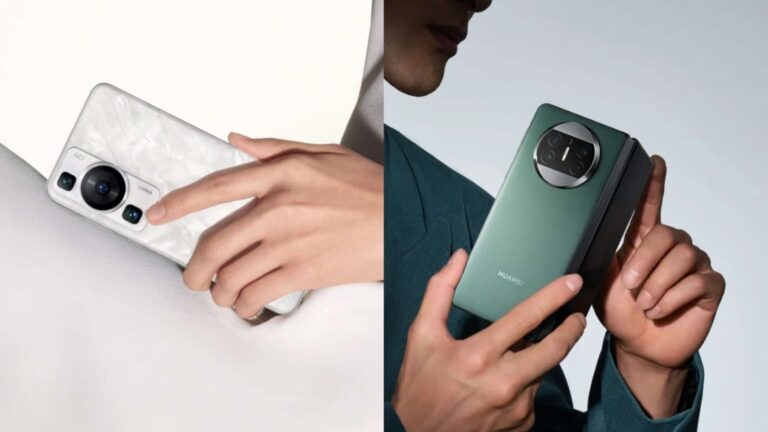
As many of you know by now, Huawei announced its new flagship offerings yesterday. The Huawei Mate X3 foldable smartphone got announced, alongside three Huawei P60 series devices, and the Huawei Watch Ultimate. Some other devices got presented, but these are the ones that stole the show. Well, Huawei has confirmed that global variants of the Mate X3 and P60 series will be coming on May 9.
Global versions of Huawei Mate X3 & P60 series will launch on May 9
Do note that the company reached out to us to confirm it, we haven’t seen it on Huawei’s social media network channels just yet. The company said that the event will take place in Munich, Germany, though we still don’t know at what time exactly. That confirmation will likely come later on.
Just to be clear, the company said that “overseas versions” of “a number of new products” that launched in China, will be announced during this event. It did not name devices specifically, so do note that.
The Huawei Watch Ultimate was already announced for global markets, at the same time as the event in China yesterday. We already know it will go on sale on March 28, and that it will be quite pricey.
The Huawei Mate X3 has a lot to offer from the design standpoint
More people are probably interested in Huawei’s flagship smartphones, though. The Huawei Mate X3 managed to shock us yesterday, as it was announced as the thinnest book-style foldable, and also one of the lightest large foldables in the market. Well, probably the lightest one.
That’s only scratching the surface, though, as the phone truly does have a lot to offer. The Huawei P60 series is also rather interesting. Huawei opted for a somewhat odd naming scheme these days, by introducing the ‘Art’ model as the highest-end P60 device.
It remains to be seen if all three P60 devices will launch in Europe, or just one or two. The Mate X3 will be coming, almost certainly, so get ready for that.
Twitter made two big announcements today. Firstly, its premium subscription service Twitter Blue is now available globally. Anyone can pay the company to unlock some extra features and add a blue tick next to their handle. Second, the social network is removing legacy verified checkmarks starting on April 1. Accounts that were verified before Elon Musk took over the company will lose their blue checkmarks unless they subscribe to Twitter Blue.
Both of these changes have been a long-time coming. By a long time, we mean since Twitter changed ownership in late October 2022. Elon Musk made it clear that the company will scrap the existing account verification system and will instead sell the blue tick as part of Twitter Blue, which he sees as a big revenue stream. “The way in which they were given out was corrupt and nonsensical,” the billionaire said about the legacy checkmarks said in December. He repeated the “corrupt” remark last month too.
The first part of the plan was to make Twitter Blue available for everyone before removing the legacy blue ticks. The firm has rapidly expanded the subscription system in recent months, finally bringing it to Android in January this year. Today, the service has gone global. “Twitter Blue is now available globally! Sign up today to get your blue checkmark, prioritized ranking in conversations, half ads, long Tweets, Bookmark Folders, custom navigation, Edit Tweet, Undo Tweet, and more,” Twitter Blue tweeted Thursday afternoon.
Twitter will start removing legacy blue checkmarks on April Fool’s Day
With the subscription service available globally, Twitter has announced the second part of the plan as well. Starting this April Fool’s Day, it will no longer honor the coveted checkmark that users earned after meeting several criteria established by the company. Instead, it is forcing them to buy a Twitter Blue subscription to keep the blue tick. “On April 1st, we will begin winding down our legacy verified program and removing legacy verified checkmarks. To keep your blue checkmark on Twitter, individuals can sign up for Twitter Blue,” Twitter Verified tweeted just hours later.
Twitter Blue costs $8 a month ($11 a month if you subscribe through the Android or iOS app). It gives you everything that the company mentioned in the tweet above. You need to verify your identity with a phone number for the blue tick, though. For governmental and organizational accounts, Twitter has introduced a new grey checkmark. Heads of state, ministers, national-level cabinet members, official spokespersons, company headquarters, regional and country-level institutional accounts, and multilateral individuals are among those eligible for grey checkmarks.
OnePlus has confirmed that it will launch two new ‘Nord’ devices on April 4. We already know what products, actually. OnePlus is to blame for that, as it already kind of listed both of them on its website.
OnePlus is planning to launch two ‘Nord’ devices on April 4
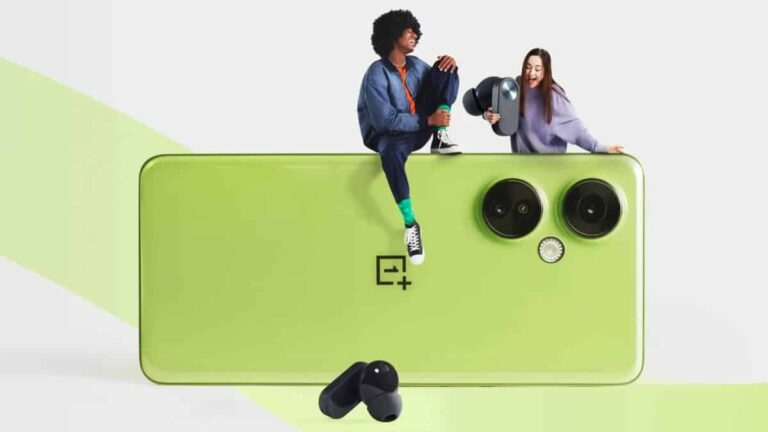
The devices in question are the OnePlus Nord CE 3 Lite and the OnePlus Buds 2. OnePlus has already published pictures of both of those devices on its website. The company, however, did not share any other details. We knew about the CE 3 Lite since earlier this month, but the Buds 2 were not confirmed, until now.
These will launch in India, at least at first. They will also be quite affordable, these are ‘Nord’ devices after all. The OnePlus Nord CE 3 Lite will be available in a Pastel Lime color, while the earbuds will sell in Black and White colors. You can check out both devices in the gallery below.
The phone will have two camera islands on the back, hosting three cameras, it would seem. The OnePlus Buds 2, on the other hand, will look basically like the first-gen model. We do expect some improvements on the inside, though, of course.
The phone will include a 120Hz display, 67W charging & a 108MP camera
The company did not share any spec info regarding these products, but the OnePlus Nord CE 3 Lite specs did surface recently. The device will feature a 6.7-inch fullHD+ LCD display, it seems. It will feature a 120Hz refresh rate, by the way.
A 5,000mAh battery was also mentioned, and 67W fast wired charging will be supported. The Snapdragon 695 will fuel the device, while you’ll be able to choose between 6GB and 8GB RAM flavors. Those two models will ship with 128GB and 256GB of internal storage, respectively. Also, the storage will be expandable.
A 108-megapixel main camera will sit on the back. It will be backed by two 2-megapixel units. We still don’t have the details on those. A single 16-megapixel camera will sit on the front.
Android 13 will come pre-installed on the phone, along with OxygenOS 13. You can also expect two SIM card slots to be available. We don’t have the OnePlus Buds 2 details yet.
Today, Amazon has the iRobot Roomba i4+ on sale today for $399. That’s going to save you $250 off of the regular price. That is also the cheapest the Roomba i4+ has ever been. Making this a really great time to pick one up.
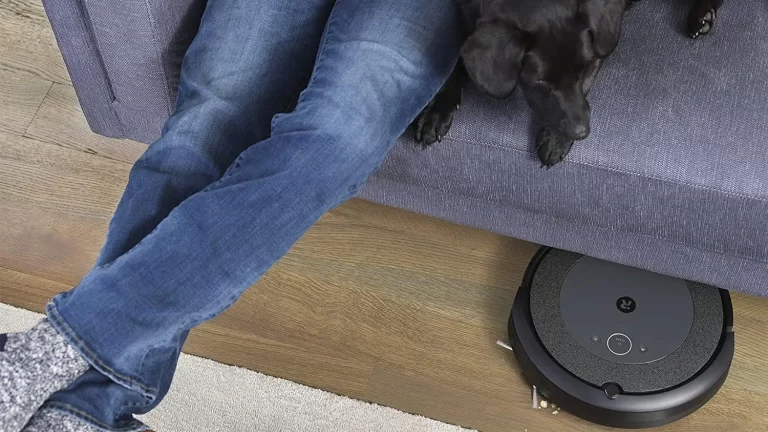
That’s a pretty solid price for the Roomba i4+. iRobot claims that the Roomba i4+ is perfect for those that have pets. THat’s because it does not use a single bristle brush. And instead uses the multi-surface rubber brushes that are able to flex to adjust to different floor types. So why is this good for pets? It doesn’t get pet hair tangled in the brush. Which is a really big deal honestly.
Other than that, the Roomba i4+ also has all of the features that you’d expect from iRobot. That includes voice commands with Google Assistant and Alexa. There’s also schedules available, so you can have your Roomba clean at specific times, on specific days. iRobot claims that it has about 10x the power-lifting suction power when compared to the Roomba 600 series.
This is the plus model, which means that it also comes with the auto-empty dock. So when the iRobot Roomba i4+ docks, it will go ahead and empty the dustbin. Which is very convenient and it can also hold about 60 days worth of debris before it needs to be emptied.
Whether you’re relaxing at home or out enjoying life, the Roomba i4 plus EVO robot vacuum takes care of stubborn dirt and messes with a Premium 3-Stage Cleaning System and 10x the Power-Lifting Suction. Compared to the Roomba 600 series cleaning system. The Roomba i4 plus EVO takes vacuuming off your mind with personalized cleaning suggestions powered by the unique intelligence of iRobot OS. Learns your habits and your routines.
You can pick up the iRobot Roomba i4+ robot vacuum from Amazon today by clicking here.
The Google Pixel Tablet is set to launch later this year, and we’re all looking forward to it. So far, we know a little bit about how it’s going to look, but we don’t know too much about how it’s going to function. Well, thanks to a leak from 9To5Google, we know a little bit about the Hub Mode for the Pixel Tablet.
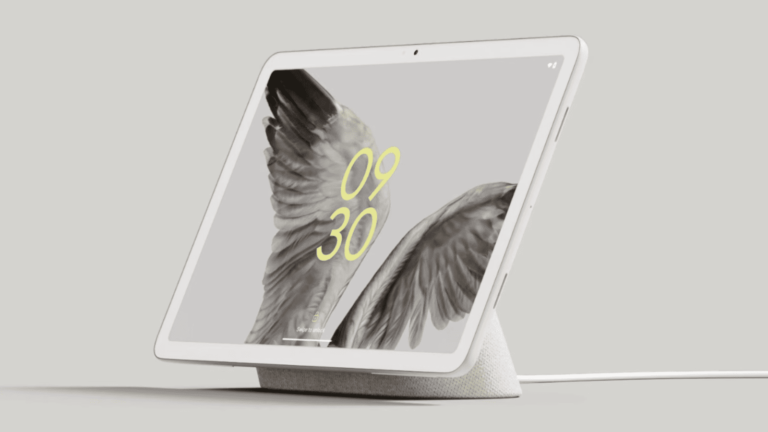
Rumor has it that there will be two docks available when the Pixel Tablet launches. One of them will only power the device while the other one will act as a speaker as well. Both of them will put the tablet into Hub Mode. This is when you’ll be using the tablet as a smart display.
Thanks to Snoopy Tech, we have some leaked images of the dock. We’re not sure which variant of the dock we’re seeing, but there’s a chance that it’s the one only for powering it. It looks just like what we’ve seen in the promotional images. It’s predominantly pill-shaped with a fabric material on the outside. On the front of the dock, we see the four connector pins that will hold the tablet.
On the back, we see the Google logo along with the power port. There’s also a Google logo on the bottom. If this model only powers the tablet, then the one with the built-in speaker might be a bit bigger. We’ll just have to wait and see.
Here’s how Hub Mode could look on the Pixel Tablet
This was discovered from an APK deep dive by 9T05Google, so you’ll want to take this with a grain of salt. There are some strings hidden in the Google Home app right now that hint at some of the possible functionality of the Hub Mode. For starters, one string states that when docked, the voice match feature will only apply to the admin. All of the other people will be treated as guests.
The other strings in the app read:
<string name=”tky_device_toggle_subtitle_filters”>On Pixel Tablets, filters only apply in Hub Mode. %1$s</string>
<string name=”tky_filters_subtitle_calls”>The calls setting doesn\u2019t apply to Pixel Tablets. %1$s</string> <string name=”tky_filters_subtitle_news”>The news setting doesn\u2019t apply to Pixel Tablets. %1$s</string> <string name=”tky_filters_subtitle_podcasts”>The podcasts setting doesn\u2019t apply to Pixel Tablets. %1$s</string> <string name=”tky_filters_subtitle_websites”>The websites setting doesn\u2019t apply to Pixel Tablets. %1$s</string>
Amazon’s Spring Cleaning Sale is a great time to stock up on all the cleaning supplies you need to get your home ready for spring. With a wide variety of products on sale, you’re sure to find everything you need at a great price.
In this sale, you can save on all sorts of everyday essentials, including paper towels, trash bags, freezer bags, dish soap, adult toilet wipes, scrub sponges and so much more. And the majority of these are 20% or more off of their regular price. So definitely a good time to stock up.
These are mostly Amazon Basics and other Amazon Brands that are on sale. But you can get a 50-pack of 30-gallon trash bags for just $10.30. As far as tall kitchen trash bags go, there are a few options, including a pack of 90 for just $14.16.
If you’re in need of some toilet paper, the Presto mega rolls are here. You’ll get 24 rolls for just $23.76. It’s basically four packs of 6 here. Which is going to give you 96 rolls of regular toilet paper. Definitely a steal here.
When it comes to dish soap, the Amazon Basics Dish Soap is available for $11.98. This price increase four 30 fl oz bottles of dish soap. Speaking of dish soap, Presto also has dishwasher pacs on sale for $13.89. You’ll get 70 pacs for that price, and this is the triple-action detergent pacs. So you don’t even need to rinse your dishes before you put them into the dishwasher. Which is really good.
These are just a few of the very many everyday essentials that are currently on sale over at Amazon. Head on over using the link below and stock up your pantry and cabinets with these everyday essentials. You’re going to need them anyways, so might as well buy them now while they are cheap.
TikTok CEO Shou Chew testified before Congress on Thursday amid growing concerns over the app‘s future in the US. Lawmakers grilled Chew for more than five hours but the concerns largely remained unanswered. The TikTok executive repeated statements from his written testimony saying that the video-based social media platform or its Chinese parent company ByteDance doesn’t have any backdoors for China’s CCP (Chinese Communist Party) led government, and it did little to satisfy the lawmakers.
TikTok CEO failed to satisfy the US lawmakers at his first Congressional hearing
Calling for a nationwide ban on TikTok, House Energy and Commerce Committee chair and representative Cathy Rodgers said that “ByteDance is beholden to the CCP, and ByteDance and TikTok are one and the same”. She made the remarks in her opening statements during the Congressional hearing yesterday. She suggested that CCP could gain access to the personal data of American TikTok users through ByteDance. In response, TikTok CEO, who stated in his written testimony that “ByteDance is not an agent of China,” pointed to Project Texas.
Project Texas is TikTok’s plan to keep data of US users within the US. It has teamed up with Texas-based software company Oracle to safeguard the data in the latter’s servers. The data would be inaccessible to anyone outside the US. Expected to be completed later this year, TikTok officials say this would do more to protect American users than an outright ban for the app. However, the plan has been in the works for over a year now and nothing has materialized. Unsurprisingly, lawmakers are losing patience and trust in the company.
During the hearing, committee members were all skeptical of TikTok’s plan to address America’s national security concerns. Rodgers branded it a “marketing scheme,” while Representative Frank Pallone said, “Project Texas is simply not acceptable”. Representative Angie Craig also echoed these sentiments saying that the plan “doesn’t pass the smell test”. These disagreements continued throughout the nearly six-hour showdown. Chew also frustrated lawmakers by declining to answer several “rapid-fire” questions with a Yes or No.
When asked whether ByteDance was a Chinese company, he said that it’s a “global” firm with a Chinese founder. Similarly, he refused to directly answer whether ByteDance employees had spied on American journalists, something the company admitted doing a few months back. “I don’t think ‘spying’ is the right way to describe it,” Chew said. “This is ultimately an internal investigation”. Of course, this statement sparked sharp criticism. TikTok quickly took to Twitter to point out that Chew firmly said “no” when asked if it spied on behalf of the CCP.
Chew pointed to recent updates when asked about teen safety
The TikTok CEO similarly dodged many other complex questions from Congress members, including one about the inner workings of ByteDance and its China-based employees, Engadget reports. He was also pressed with questions about teen safety. He was asked about the platform’s moderation practices and potentially harmful “challenges” that go viral on the platform.
Chew pointed to various changes and updates TikTok has pushed recently. He talked about the dedicated STEM (science, technology, engineering, and math) feed, screen time limit, and more. The TikTok CEO also mentioned the platform’s newly-added algorithm reset button. Users can make the app forget everything it has learned about them and start afresh, should they feel unsafe with the content they currently see in the algorithmic feed.
However, none of this was enough to address the lawmakers’ national security concerns. Some have called for a sale of TikTok in the US, though Chinese officials have opposed the idea. Chew, meanwhile, said: “We will need to look at this because Project Texas is designed to move forward here in the United States and we are not discussing this”. As things stand, TikTok’s future is uncertain even after the hours-long grilling of its CEO by lawmakers. We’ll have to wait and see what’s next.
The Galaxy S23 Ultra Moon photo controversy is still fresh in people’s minds and another Samsung camera feature is in the headlines for the wrong reasons. A Galaxy user recently discovered that Samsung’s photo remaster feature is adding teeth to pictures of a seven-month-old baby. The device in question here is, unfortunately, the Galaxy S23 Ultra once again. But the remaster feature may give you similarly unsettling results on other Galaxy models as well.
Photo remastering is a Galaxy feature available in Samsung‘s Gallery app. It lets you “remaster” photos to remove shadows, reflections, and other unwanted artifacts to give you a better picture. It’s an optional feature that uses AI (artificial intelligence) to enhance the photo. You can find it in the More menu when viewing a photo in the Gallery app. Samsung offers a “Before/After” slider to quickly check what has been removed or enhanced so you can decide whether to keep the remastered photo or discard it.
Overall, it’s a nice feature to have. But Twitter user @earcity has had a nightmarish experience with Samsung’s photo remaster feature. They tried to fix a photo of their seven-month-old daughter using the Galaxy S23 Ultra. Sure, it erased snot from the baby’s face. But the AI decided to replace the baby’s tongue with a row of fully-grown teeth. It even changed the eyes. As you can see in the embedded tweet below, the overall result is quite unsettling.
Samsung probably needs to look into its photo remaster AI
While there haven’t been any other reports of Samsung’s photo remaster feature giving such unsettling results, it wasn’t a one-off case for this user. They reached out to The Verge telling that the Galaxy S23 Ultra did the same with another of their daughter. They found the AI unnecessarily “remastering” the teeth of a three-year-old boy as well, though the final image isn’t that bad this time around.
But the bottom line is that Samsung’s AI tech powering this feature may need some reworking. Sure, the publication couldn’t replicate the disturbing results even after applying the feature to “half a dozen photos of babies” on a Galaxy S22. But that doesn’t mean the feature isn’t glitchy. It can’t be an excuse that photo remastering is optional and isn’t enabled by default. The technology behind it is turning pictures of babies into disturbing images and that isn’t okay. It remains to be seen what Samsung has to say about this.
Exploring further and wow! Sammy’s remaster “tool” really has a very intense love/hate relationship with childrens teeth or lack thereof. In this case my 3yr old sons teeth weren’t good enough ⚒️🧨💥 This AI is obsessed with funky smiles 🤣#Remastering@SamsungMobilepic.twitter.com/SiME6XKYom
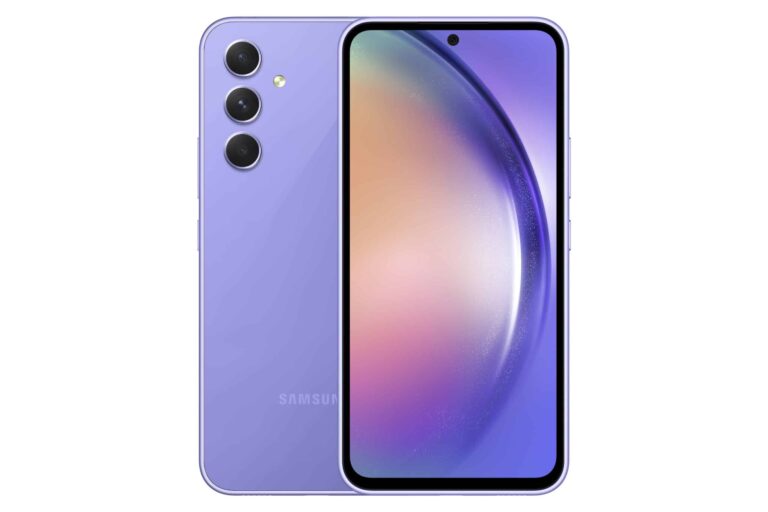
Buyers of Samsung‘s brand-new premium mid-range smartphone Galaxy A54 5G will have a major software update waiting for them out of the box. The company is pushing camera improvements to the phone even before it reaches consumers globally. The device is slated to arrive in the US in April.
Galaxy A54 5G gets its first update days after the official launch
Samsung launched the Galaxy A54 5G in several markets in Europe and Asia last week. The device arrived alongside the Galaxy A34 5G as the company’s best two mid-range options this year, in that order. Now, as early buyers start receiving their orders, the Korean firm has released an update for the new handset.
As of this writing, the update is rolling out in Europe with the firmware build number A546BXXU1AWC4. First reported by GalaxyClub, the OTA package weighs around 228MB. The official changelog mentions improvements for the camera but doesn’t go into detail. It’s unclear what improvements Samsung is pushing to a phone that has been impressing reviewers with its factory-built camera performance. The Galaxy A54 5G boasts a 50MP primary camera with Optical Image Stabilization, Video Digital Image Stabilization, Nightography, and 4K video recording.
Apart from the undetailed camera improvements, this update doesn’t bring anything notable to the Galaxy A54 5G. Not even a new security patch. The device remains on the February Security Maintenance Release, which it shipped out of the box. Since it’s eligible for monthly security updates, Samsung will likely push regular patches starting in April. The Galaxy A54 5G will get four major Android OS upgrades (until Android 17) and five years of security patches. As usual, we will keep you in the loop with those releases.
Samsung’s new mid-range hero debuts in the US next week
As said earlier, the Galaxy A54 5G will arrive in the US in April. Samsung will start taking pre-orders for the phone stateside on March 30. General sales will commence on April 6. The handset is priced at $449.99 for the 6GB RAM and 128GB storage variant. It’s unclear if the company will release the 8GB+256GB variant in the US. We will let you know as soon as we have more information.
Meanwhile, Galaxy A54 5G buyers in the US will likely get an update out of the box too. If you pick up this phone, you can check for new updates from the Settings app. Go to the Software update menu and tap on Download and install to check for updates manually.
In this article, we’ll compare the Xiaomi 13 Pro vs OPPO Find X6 Pro, two powerhouse smartphones from China. The global variant of the Xiaomi 13 Pro launched not so long ago, while the OPPO Find X6 Pro launched only in China thus far, quite recently. Having that in mind, do note that we’ve tested the Find X6 Pro with software made for the Chinese market. We’re not sure if the global variant will become available. It was a good experience once we placed Google services on it, so… comparing these two phones surely does make sense.
The two phones do have some similarities in the spec department, and even in the design department, at least from the front. There are a lot of differences here too, so… comparing them ought to be interesting. We’ll first list their specifications, and will then move to compare the devices across a number of categories. Those categories include design, display, performance, battery, cameras, and audio. So, let’s get started!
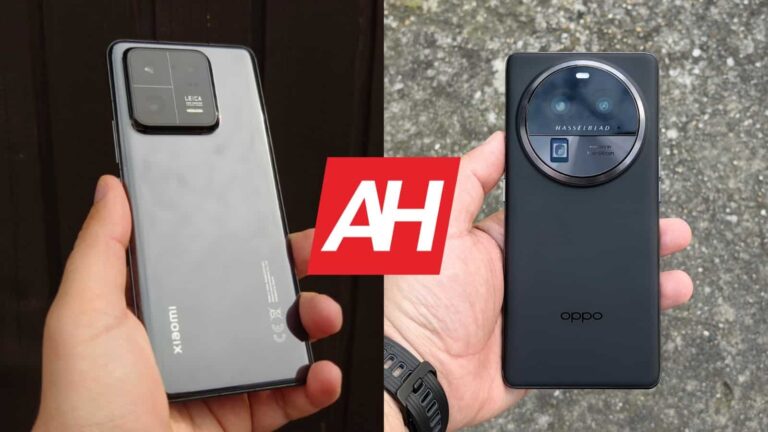
The global version of the Xiaomi 13 Pro combines a ceramic backplate with an aluminum frame. The OPPO Find X6 Pro comes in a variant with both glass on the back, and glass combined with vegan leather (vegan leather bottom, glass top). It also has a frame made out of aluminum. In fact, holding the ceramic Xiaomi 13 Pro and a glass-made Find X6 Pro in the hand feels somewhat similar, even though the Xiaomi 13 Pro feels smaller in the hand. Both of these phones are large, though, don’t get me wrong. The Xiaomi 13 Pro is a bit narrower, shorter, and thinner, so… the feeling is different.
Despite the fact it is smaller overall, the Xiaomi 13 Pro is heavier than the Find X6 Pro, due to the ceramic on its back. It weighs 229 grams, compared to 216-218 grams of the OPPO Find X6 Pro. The two phones look quite similar from the front. They both include curved displays with thin bezels, and a centered display camera hole. On top of that, they have curved corners, and the curvature is similar.
Once we flip the two phones around, well, that’s when you’ll see major differences. The Xiaomi 13 Pro has a squarish camera island in the top-left corner. The OPPO Find X6 Pro, on the other hand, has a circular camera island that is centered at the top. OPPO’s camera island is definitely larger, and it also protrudes more on the back. Both devices feel immensely premium in the hand, though both are also quite slippery, with the exception of the vegan leather Find X6 Pro model, which offers a bit more grip.
Xiaomi 13 Pro vs OPPO Find X6 Pro: Display
The Xiaomi 13 Pro features a 6.73-inch QHD+ (3200 x 1440) LTPO AMOLED display. That display has an adaptive refresh rate of up to 120Hz, and supports Dolby Vision. HDR10+ content is also supported, and the display goes up to 1,900 nits at its peak. This panel is protected by the Gorilla Glass Victus, and it’s curved.
The OPPO Find X6 Pro, on the flip side, has a 6.82-inch QHD+ (3168 x 1440) LTPO3 AMOLED panel. That display can project up to 1 billion colors, and it has an adaptive refresh rate of up to 120Hz. Dolby Vision is supported, and so is HDR10+ content. This display gets immensely bright at 2,500 nits of peak brightness, and is currently the brightest in the market. It is curved, and protected by the Gorilla Glass Victus 2.
Both of these displays are phenomenal, some of the best in the market. They are vivid, sharp, and have excellent viewing angles. They’re very smooth, and have good touch response. The Find X6 Pro’s panel does have an advantage in the brightness department, which will certainly help out in the sun. But the Xiaomi 13 Pro’s display is also immensely bright, one of the brightest out there. In fact, it has the third brightest display in any smartphone. So, you really can’t go wrong here, both phones have phenomenal displays.
Xiaomi 13 Pro vs OPPO Find X6 Pro: Performance
The Snapdragon 8 Gen 2 is the processor of choice for both companies, for a good reason. This is currently the best processor available to smartphone OEMs, basically. Both phones utilize LPDDR5X RAM and UFS 4.0 flash storage, except the 128GB Xiaomi 13 Pro. The Xiaomi 13 Pro has up to 12GB of RAM, while the OPPO Find X6 Pro comes with up to 16GB of RAM on the inside.
Does this translate to great performance on both phones? Well, yes, it does. They both complete regular, everyday tasks with ease. Even gaming is not an issue for either device, not even when we’re talking about the most demanding games out there. Do note that the Find X6 Pro comes with a software build made for China, though, at least at the moment. So if you decide to import it, be ready to sideload Google services (which is easy to do), and deal with some differences in that software implementation. Let’s hope OPPO will push out a variant for the global market.
During our usage, we really didn’t spot anything alarming when it comes to performance. Neither phone got too hot, nor did the heat cause any issues during gaming. Both phones have been running as smoothly as possible, in line with the most powerful smartphones available in the market.
Xiaomi 13 Pro vs OPPO Find X6 Pro: Battery
The Xiaomi 13 Pro comes with a 4,820mAh battery, while the OPPO Find X6 Pro includes a 5,000mAh battery on the inside. You’ll be glad to know that both phones do offer really, really good battery life. The Snapdragon 8 Gen 2 is really good when it comes to power consumption, and both phones are well-optimized, it seems. The battery life on the two phones is actually comparable, at least it was for us.
We were able to reach the 8-hour screen-on-time mark rather consistently on both phones, with a bit of juice left in the tank. That was actually not light usage by any means, but gaming was not included, except for testing purposes. Your mileage may vary, though, of course. Each of us use phones in different ways, with different apps, and with different signal strengths, so… the results could be entirely different for you.
When charging is concerned, both phones are outstanding. The Xiaomi 13 Pro supports 120W wired, 50W wireless, and 10W reverse wireless charging. The OPPO Find X6 Pro supports 100W wired, 50W wireless, and 10W reverse wireless charging. Both smartphones do come with charging adapters which can provide the fastest charging possible.
Xiaomi 13 Pro vs OPPO Find X6 Pro: Cameras
The Xiaomi 13 Pro comes with a 50-megapixel main camera (1-inch sensor), a 50-megapixel ultrawide unit (115-degree FoV), and a 50-megapixel telephoto camera (3.2x optical zoom). The OPPO Find X6 Pro includes a 50-megapixel main camera (1-inch camera sensor), a 50-megapixel ultrawide unit (110-degree FoV), and a 50-megapixel periscope telephoto camera (2.8x optical zoom, 100x digital zoom). The Xiaomi 13 Pro includes Leica lenses, while the OPPO Find X6 Pro has Hasselblad’s color tuning and expertise.
Both of these phones have outstanding camera hardware, needless to say. Both phones also prefer to take a bit moodier shots with a stronger contrast, which is especially apparent in low light. Results from both smartphones are outstanding, and the only issue we’ve noticed on both during the review has to do with HDR balancing. That can be easily solved via an update, to allow both phones to be more consistent in HDR conditions.
Images from both end up looking really detailed, and the colors are excellent on both, it’s all a matter of preference. Both also have different shooting modes you can choose from. The results from the Xiaomi 13 Pro will have that Leica style on them, and Leica filters are included. Hasselblad included some of its own styles on the OPPO Find X6 Pro, in addition to the XPAN mode.
Both ultrawide cameras do a great job and keep up with the main camera in terms of color science, to the best of their abilities, though it’s not a perfect blend, of course. The portrait shots on the Xiaomi 13 Pro look outstanding, and the OPPO Find X6 Pro is not far behind in that regard. What the Xiaomi 13 Pro lacks is a periscope camera, which the Find X6 Pro has, and it’s great for zoomed-in shots. It’s even usable in low light to a certain degree. The video recording is good on both phones, but both of them are more oriented towards image-taking. These two are great smartphone cameras, simply great.
Audio
Both smartphones include stereo speakers, which are actually quite good. They’re more than loud enough, and quite detailed at the same time. The balancing is a bit different, but I wouldn’t say one is better than the other, they’re just a bit different when it comes to bass output, and overall balancing across the spectrum.
Neither phone includes an audio jack. There is a Type-C port at the bottom of each phone, so you can use it for wired connections. If you prefer to use wireless headphones, you’ll be glad to know that both phones offer Bluetooth 5.3 support.