The US debt collection agency Financial Business and Consumer Solutions (FBCS) has filed a data breach notification, listing the the total number of people affected as 3,226,631.
FBCS is a nationally licensed, third-party collection agency that collects commercial and consumer debts, with most of its activity involving the recovery of consumer debts on behalf of creditors. According to the official statement provided by FBCS, the exposed data includes:
Full names
Social security numbers
Birth dates
Account information
Drivers license or other state ID numbers
In some cases, it also includes medical claims information, provider information, and clinical information (including diagnosis/conditions, medications, and other treatment information), and/or health insurance information.
FBCS has sent data breach notifications to those affected, detailing what data was compromised and offering 12 months of free credit monitoring.
Protecting yourself after a data breach
There are some actions you can take if you are, or suspect you may have been, the victim of a data breach.
Check the vendor’s advice. Every breach is different, so check with the vendor to find out what’s happened, and follow any specific advice they offer.
Change your password. You can make a stolen password useless to thieves by changing it. Choose a strong password that you don’t use for anything else. Better yet, let a password manager choose one for you.
Enable two-factor authentication (2FA). If you can, use a FIDO2-compliant hardware key, laptop or phone as your second factor. Some forms of two-factor authentication (2FA) can be phished just as easily as a password. 2FA that relies on a FIDO2 device can’t be phished.
Watch out for fake vendors. The thieves may contact you posing as the vendor. Check the vendor website to see if they are contacting victims, and verify the identity of anyone who contacts you using a different communication channel.
Take your time. Phishing attacks often impersonate people or brands you know, and use themes that require urgent attention, such as missed deliveries, account suspensions, and security alerts.
Consider not storing your card details. It’s definitely more convenient to get sites to remember your card details for you, but we highly recommend not storing that information on websites.
Set up identity monitoring.Identity monitoring alerts you if your personal information is found being traded illegally online, and helps you recover after.
Scan for your exposed personal data
You can check what personal information of yours has been exposed online with our Digital Footprint portal. Just enter your email address (it’s best to submit the one you most frequently use) to our free Digital Footprint scan and we’ll give you a report.
We don’t just report on threats – we help safeguard your entire digital identity
Cybersecurity risks should never spread beyond a headline. Protect your—and your family’s—personal information by using identity protection.
Yet another company seems to be working on 300W charging for smartphones. The company in question is Realme, as the company’s Head of Marketing for Realme Global, Francis Wong, confirmed.
Yet another company is working on 300W charging for Smartphones, Realme
By presenting 300W charging tech, Realme will join the likes of Xiaomi‘s Redmi, who already demoed its 300W charging. Redmi’s 300W charging managed to fully charge a phone in under five minutes.
Having said that, Realme already offers 240W charging, which is immensely fast on its own. The Realme GT Neo 5 supports 240W charging, and it can charge fully in under 10 minutes. Needless to say, that’s truly impressive.
Realme doesn’t seem to think that’s enough, though, although many would disagree. The company wants to push the ante even further up. We’re expecting to see similar results to what Redmi demoed.
Redmi did demo 300W charging already, but it still doesn’t offer a phone that supports it
Do note that Redmi still doesn’t have a phone that charges at 300W, though. It did not release it. So, there’s still time for Realme to do it first. It remains to be seen what will happen.
What is unfortunate is that Francis Wong didn’t go into specifics during the interview. It would be great to know a bit more about heating during such charging, the company’s plan to prevent that, and also to safeguard battery life in the long term.
Chances are Realme will demo its 300W charging tech in the near future, though. There’s a reason Francis Wong mentioned it during this interview. It could debut inside the Realme GT Neo 6. The Realme GT Neo 5 arrived back in February, so we’re still over half a year away from its successor if Realme ends up sticking to its release cycle.
Another week has flown by! Let’s catch up on the news that went under the radar in our newest edition of “News You Probably Missed and Shouldn’t Have!” As usual, we’ll be delving into some truly captivating stories from another whirlwind week, and some not. So, whether you’re a news junkie or just looking for a quick update, this roundup has something for everyone. Let’s jump right in!
T-Mobile surprises couple with a 4x higher bill out of the blue
Imagine you’re planning a delicious week of meals, and then BAM! Your phone carrier charges a bill more than a spaceship full of data. That’s what happened to one couple in the US. T-Mobile charged them a mysterious $357 for a month of phone usage, four times as much as their average monthly bill. When disputed, the carrier said, “Oops, go fight with your bank.” And the bank asked them to wait…90 days? The couple must be hoping their fridge doesn’t declare war before they get their money back.
Apple downgraded the iPad Air’s GPU from 10 cores to 9 cores
Remember how Apple bragged about the new iPad Air having a 10-core GPU? Turns out it was just a typo, or maybe a deliberate exaggeration to look cool. The company has quietly changed it to 9 cores. It’s like the iPad Air forgot its gym membership and got a little flabby. Nobody at Apple is explaining why, but rumor has it the iPad Pro is feeling jealous and wants all the best toys. Awkward!
The NSA’s guide to keeping your phone and yourself safe
Smartphones can be hotbeds for spying. The NSA is here to tell you how to babysit your phone like it’s a toddler running loose with classified documents. Don’t talk about sensitive things near your phone, it might eavesdrop! Forget about using public Wi-Fi—that’s like letting your phone wander off with a stranger at the playground. Keep it on a leash (or a strong password), don’t let it talk to strangers (unknown networks), and be super suspicious of everything it downloads. Basically, treat your phone like it’s a secret agent in training.
Acer launches new Chromebooks that don’t excite anyone
Acer just unveiled some new Chromebooks built for business, but they’re about as exciting as watching paint dry. They’re surely tougher than a toddler’s toy, can last a workday on a charge, and come with built-in AI that might help you with meetings (or at least judge your presentation outfit). The problem? They’re missing that special something to make Windows users jealous. It’s like Acer built a perfectly fine work truck, but forgot the flux capacitor to make it fly.
Opera browser lets you add emojis to your tabs
Opera, the browser, heard you like emojis. It has put emojis in your tabs…and on your tabs. Get ready to jazz up your browsing experience (or go totally wild with emoji overload). Now you can assign a little smiley, a party popper, or any other emoji from their library to tabs. Want to spot that research paper on penguins instantly? BAM! Emoji it. Need to find that hilarious cat video again? There you go! Just don’t blame Opewra if your brain explodes from trying to remember which fire-breathing dragon tab has that important document you need.
Apple asked TRSMC to move its chip factories out of Taiwan
Apple wants TSMC to put its chip factories on a boat and move them far away. Turns out, that’s not really an option. Of course, not. The iPhone maker fears that a Chinese invasion of Taiwan would hamper the global supply of iPhones. After all, our phones are the first thing we need during a war. Not really, but it sure feels like that nowadays. But hey, TSMC has contingency plans to prevent China from using its chip factories.
Netflix ends support for second and third-gen Apple TVs
Netflix is giving the boot to some old Apple TVs! Yes, we know, Apple never made a TV and it’s tough to make that sentence sound correct. But those boxy things with a remote controller that you can connect to a monitor and turn it into a full-fledged TV are called Apple TVs too. Netflix just ended support for the second and third-gen models. Soon, your grandpa will no longer be able to rock out to his favorite show on his old, boxy Apple TV that looks like it belongs in a museum.
Google Maps will guide you to a public bathroom in NYC
New York City Mayor Eric Adams has declared war on… well, not having a place to go! His new initiative, creatively named “Ur in Luck,” aims to make finding a public bathroom in the city a breeze. Now you can just whip out your phone and let Google Maps guide you to the nearest restroom like a shining beacon of relief. So go forth and explore the Big Apple, one public bathroom break at a time! You can thank Mayor Adams for your newfound peace of mind (and bladder).
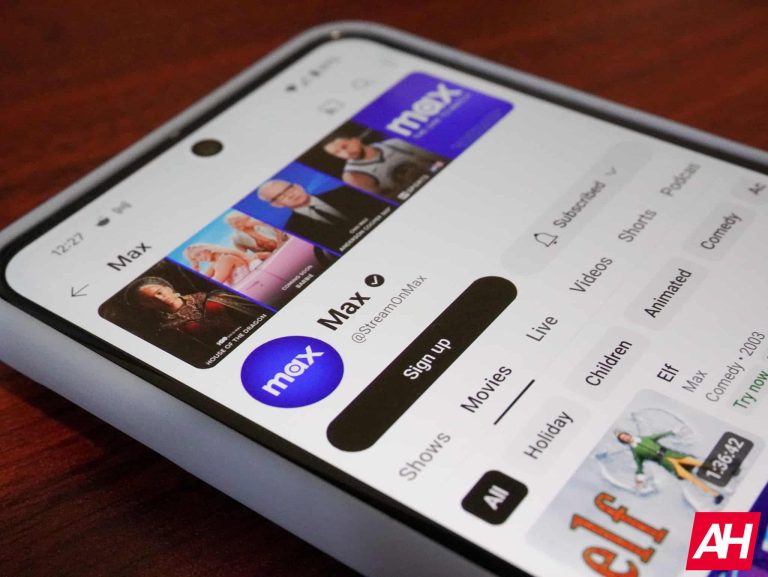
Max rolls out a price hike, adds up to $20 to the yearly plan
Brace yourself, Max subscribers! Just like that friend who keeps borrowing money but never pays you back, Max hit you with another price hike. This time, they bumped up the cost of their ad-free plans by a whole dollar. So long, $16, hello $17! If you are the Ultimate subscriber, it’s $21 a month now. The firm even tacked on an extra $10 or $20 to the yearly plan. At least the ad-supported plan is staying the same price…for now.
Shortwave rolls out Inbox Splits to split your…umm, inbox
Feeling overwhelmed by your ever-growing Gmail graveyard? Shortwave is here to be your inbox undertaker… with a twist! It’s rolling out “Inbox Splits,” which lets you chop your giant inbox into bite-sized chunks. It’s like having separate inboxes for important emails, shopping notifications, and those endless cat video chains from Aunt Edna, all neatly organized under one roof. So ditch the stress and split your way to inbox zen!
Google acquires Cameyo to run Windows apps on Chromebooks
ChromeOS just got a sidekick! Google bought a company called Cameyo, and now Chromebooks can ditch the capes and awkward virtual machine disguises. Cameyo lets them run those old, dusty Windows programs without needing Windows itself. So, the next time you see a Chromebook, remember that it’s got a secret weapon: the power to run Windows apps without the Windows drama. Before throwing down big bucks, Google dipped its toes in the magic app delivery waters with a partnership with Cameyo. It took the firm for a test drive before tying the knot.
Galaxy S10 gets an outdated security update
Samsung can’t seem to let go of the Galaxy S10. A year after pulling the plug on it, the company continues to push updates to the device. It just released a new security patch, but is it really new? Samsung is actually giving the phone security software that’s older than a toddler’s birthday cake. The Galaxy S10 is receiving the April 2023 release. It’s like getting a security patch upgrade that’s already outdated by the time you download it.
Humane warns AI Pin users about a fire safety risk with the Charge Case
Uh oh, the AI Pin by Humane seems to be heating things up a bit… literally! There’s a fire safety risk with the Charge Case accessory, so if you’re rocking one, ditch it pronto. The battery cells in some cases are a little too enthusiastic about their job and could spark a fire. Humane says it has stopped working with the supplier who made these faulty batteries and is looking for a new one. The AI Pin itself, the magnetic battery booster, and the charging pad are all safe to use. But that fancy charging case? Best to keep it far away from anything flammable, just in case it decides to become a mini-flamethrower.
Apple no longer covers hairline cracks on iPhone screens under warranty
Got a hairline crack on your iPhone or Apple Watch screen? Buckle up, because it just got a whole lot more expensive to fix. Apple recently changed its warranty policy, and now those tiny cracks won’t be covered under the standard warranty. Previously, if you accidentally bumped your phone and a tiny crack appeared, Apple would be like, “Relax, we got you.” Now, it’s more like, “Uh oh, that’ll be under ‘accidental damage,’ buddy. Gonna cost ya.” So, if you’re prone to dropping your phone like it’s a hot potato, investing in a case might be a wise decision.
Samsung Galaxy phones will let you double-tap the back to see time
Samsung’s got a new trick up its sleeve for the Galaxy phones. It’s not exactly groundbreaking, but it might be a little quirky and convenient. Here’s the deal: you’ll be able to see the time by double-tapping the back of your phone. There’s a bit of a head-scratcher though. You can already see the time when you lift the phone from the table, which you’d have to do anyway to double-tap the back. Anyway, it’s nice to have options.
Google Messages will support text messaging to 911
Calling 911 may not always be an option in emergencies. Thankfully, Google is upping the safety game on Android phones with Google Messages. Here’s the scoop: Google Messages will soon allow texting emergency services (911) using Rich Communication Services (RCS). This is a big deal because RCS offers features like read receipts, typing indicators, location sharing, photos, videos, and more. This could significantly improve response times and effectiveness in situations where calling 911 might be difficult.
Rivian EVs will support Pixel phones as digital keys
Rivian’s got a new feature that lets some Pixel users ditch the clunky key fob situation. With a tap on your phone, you can unlock and start your Rivian EV, like magic. Need to lend your car to a buddy? No problem, just share the digital key with them. It’s basically like a car-sharing service but between you and your closest friends (or that neighbor who always needs a cup of sugar…and a ride). There’s a catch: only “select” Pixel phones will be compatible at first. Newer models with certain features (like ultrawideband) will probably be needed for this trick to work.
Meta adds Communities to Messenger
Meta’s throwing a party, and guess what? Facebook isn’t invited! Well, not exactly. It’s letting Messenger break free a bit with standalone group chats. You can now form massive chat groups that live entirely within Messenger, ditching the need for a connected Facebook group. Meta calls this feature Communities. If you’re tired of Facebook drama hijacking your chats, this is your chance to break free and chat with your crew in peace. But don’t get too excited about privacy. It’s still Meta.
Microsoft laid off 1,000 employees across HoloLens and Azure
Microsoft decided to play a surprise round of “Real or Not Real,” and some folks at HoloLens and Azure found themselves on the not-so-fun side of the game—guess their jobs weren’t as “cutting edge” or “real” as the HoloLens itself. The company laid off around 1,000 employees across the two businesses. But hey, at least they’ll have more free time to explore the Metaverse…hopefully, Microsoft gave them a HoloLens 2.
YouTube Shorts adds AI to generate backgrounds
YouTube is letting loose the robo-editors on Shorts! It’s testing new AI features for the short videos, letting creators generate awesome backgrounds in a jiffy and making their Shorts snazzier than ever. You tell the computer you want a space battle behind you, and poof! Aliens and spaceships. Basically, YouTube is like, “Hey, creators, why work hard when robots can do it for you?” AI is really reshaping creativity.
DuckDuckGo introduces AI Chat
DuckDuckGo, the privacy-focused search engine, isn’t happy just being the search king of incognito tabs anymore. It’s diving headfirst into the world of AI chatbots with its new feature, AI Chat. But unlike other chatbots, DuckDuckGo isn’t building its own brain. Instead, it will work like a fancy AI matchmaker, letting you chat with various existing chatbots including ChatGPT. DuckDuckGo promises your conversations with these chatbots are completely private. Think of it as chatting with a bunch of super secretive AI bartenders – you get the conversation, but they never remember your face (or your search history).
Google seems to be working on an exciting upgrade for its Find My Device app, as revealed in a deep dive of its code. Hints within the app suggest the integration of ultra-wideband (UWB) technology and augmented reality (AR), potentially revolutionizing the way users locate lost items.
The discovery of references to UWB and AR in the Find My Device app was made by AssembleDebug and Android Authority while analyzing the code within the latest version of the app. These references included lines of code mentioning “precision finding” with UWB and “libraries” supporting the technology. While specific details remain limited, the findings point towards a significant upgrade to the app’s functionality.
One of the most intriguing possibilities is the integration of AR with UWB. This could allow users to use their smartphone’s camera to locate lost items, with AR overlays providing precise directions to guide them towards their missing devices. This would be a major advancement over the current system, which relies on approximate location data and sound alerts.
Interestingly, this potential feature seems to draw inspiration from Samsung’s existing AR-based direction UI for its Galaxy SmartTag 2. However, unlike Samsung’s implementation, which requires a UWB-capable Galaxy phone, Google’s approach appears to be more inclusive, potentially enabling a wider range of devices to benefit from this technology.
The integration of AR and UWB is still in development, so it’s unlikely to be released anytime soon. However, beyond AR and UWB, the Find My Device app is also set to receive other enhancements, including improved user security and a “Remote Lock” feature. These additions are expected to further solidify the app’s position as an essential tool for Android users.
While the exact details of these updates are yet to be confirmed, the findings offer a compelling look at what could be in store for the Find My Device app. With these potential upgrades, finding a lost phone or device could become a much more seamless and intuitive experience.
Is the innovative Runes protocol on Bitcoin a cybersecurity concern waiting to happen? Cybersecurity experts at Resonance Security warn of potential phishing risk within its URL metadata functionality.
A recent analysis by cybersecurity firm Resonance Security warns of potential dangers within the exciting new Runes protocol. As the talk around Bitcoin amplifies, blockchain developers worldwide are exploring innovative ways to expand the cryptocurrency’s functionality.
Among the latest developments capturing the attention of the tech community are the Ordinals and Runes protocols, both introduced by developer Casey Rodarmor. While Ordinals has been noted for inscribing data such as images or videos onto Bitcoin’s blockchain, Runes introduces a method for creating fungible tokens, potentially transforming how digital assets are managed on the platform.
Runes operates by embedding specific metadata into the Bitcoin blockchain, including URLs, which can link to additional content or information. This feature, while seemingly beneficial, poses significant cybersecurity risks including URLs within token metadata that can be exploited by malicious actors to direct users to malicious websites, potentially leading to phishing attacks, malware distribution, and other security breaches.
As per Resonance Security’s technical blog post, the protocol’s reliance on the Unspent Transaction Output (UTXO) model for the creation and transfer of tokens integrates seamlessly with Bitcoin’s existing structure.
However, the inclusion of URLs in this process introduces a vulnerability not in the protocol itself, but in how it could be misused. For example, a seemingly benign token could carry a URL that, when clicked, redirects a user to a phishing site where sensitive information could be stolen.
This potential for misuse is not just a theoretical concern but a plausible scenario that could affect unsuspecting users. The blockchain’s firm nature means that once a malicious URL is embedded into a token’s metadata, it remains there indefinitely, posing a long-term risk for anyone interacting with it.
While the Runes protocol marks a significant step forward in the versatility and functionality of the Bitcoin blockchain, it also highlights the ongoing need for robust cybersecurity measures in the blockchain ecosystem.
Users, developers, and cybersecurity professionals must remain alert, constantly evaluating new technologies for potential vulnerabilities and threats. Adopting a security-focused mindset is essential in navigating and safeguarding the growing nature of blockchain technology.
As blockchain technology continues to evolve, the community must prioritize security to protect against the misuse of innovative features like those introduced by the Runes protocol. By staying informed and proactive, the tech community can help ensure a secure and resilient digital future.
UPDATE (May 28, 2024): The Huawei Watch Fit 3 has started receiving a new update, a new version of HarmonyOS 4.2. You can read more about it at the very end of the article.
The Huawei Watch Fit 3 is the company’s new smartwatch focused on fitness. This smartwatch managed to raise a lot of dust when it started leaking out, for a good reason. It resembles the Apple Watch a lot. There’s no tiptoeing around it, and Huawei was probably well-aware of what it was doing. That’s not necessarily a bad thing. Huawei already offers a great number of smartwatches with round displays, some of which are outstanding. So why not offer something with a square display to its users, and if this is the best way to go about it design-wise, users won’t complain. In fact, this smartwatch could appeal to Android users who like the design of the Apple Watch. Perhaps that’s what Huawei was aiming for, at least partially.
Just to be perfectly clear, it’s also compatible with iOS, but it works much better with Android, as do all other non-Apple Watch smartwatches. With that being said, the Huawei Watch Fit 3 is here, I’ve been using it for a while now, and this is our review of it. Spoiler alert, it’s a compelling product, that’s for sure. It may not be for everyone, but it sure is worth considering. Let’s get to it, shall we?
Table of contents
Huawei Watch Fit 3 Review: Hardware / Design
The Huawei Watch Fit 3 has a square display and a square body. Huawei doesn’t really release smart wearables with that shape all that often, the company prefers to offer smartwatches with a round face. We’ve already mentioned that the Watch Fit 3 resembles the Apple Watch in the introduction, there’s no denying it. The experience using the Huawei Watch Fit 3 is entirely different, though, mainly because of its software. More on that later.
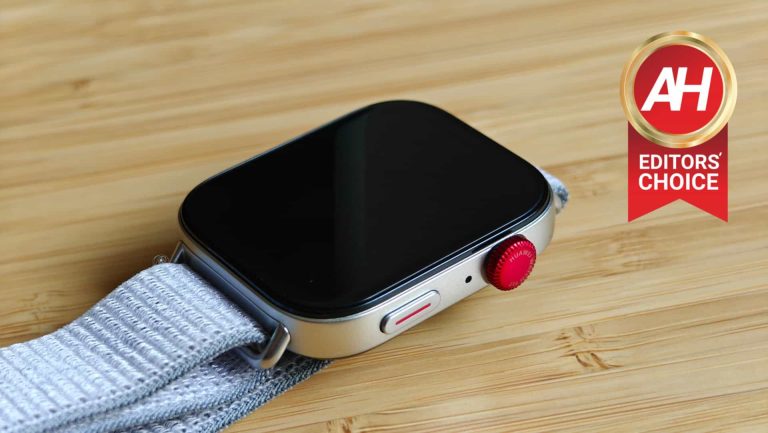
The Huawei Watch Fit 3 is made out of aluminum and resembles Apple’s offering
This smartwatch comes with a body made out of aluminum. At the bottom, a heart rate sensor is placed, and you’ll also notice one button on each side, near the connection points for the watch band. That’s because the Huawei Watch Fit 3 uses proprietary connectors for watch bands, unfortunately. That may be odd for some of you, as Huawei smartwatches usually have standard watch bands on them. Well, this is more of a cross between a fitness tracker and a smartwatch, and it goes the route of its predecessor, the Huawei Watch Fit 2.
It has a speaker and two physical buttons
On the left-hand side sits a speaker, while a microphone is located on the right with two buttons. The top button doubles as a rotating crown, and the bottom one is customizable. By default, it’s set to open sports modes, for quick access. The buttons are plenty clicky, and feel like quality implementations, like they did on previous Huawei smartwatches. I don’t expect issues with them. What you may find a bit odd when it comes to this watch is the fact its bezels are not uniform, but we’ll talk more about that in the display section, actually.
It’s actually very light and comes in several different versions
The Huawei Watch Fit 3 is only 9.9mm thick, and it weighs only 26 grams. It’s actually the thinnest and lightest square-face smartwatch the company launched. I didn’t feel it on my wrist at all, though do keep in mind I’m used to heavier smartwatches, so… that’s not exactly surprising. It was immensely comfortable to wear, at all times, that includes sleeping. As you can see in the provided images, we’ve received the model with a Gray Nylon Strap, which is also quite comfortable, though it’s not my first preference for a watch strap. I tend to shower with my watches, so I do prefer silicon watch bands. There’s nothing wrong with this one, though, it’s perfectly fine if you prefer something like that.
Huawei will offer you a chance to buy different watch bands on the side, of course. Overall, the build quality of the watch is really good. It is light, but it feels like a solid piece of tech. I don’t really have a major complaint when it comes to this design, other than the extreme resemblance to a watch from the competition.
What’s in the box?
The Huawei Watch Fit 3’s retail packaging includes the watch itself, with pre-installed watch band. You’ll also find a magnetic charging connector on the inside, which has a USB-A connection. Other than that, only paperwork is located in this rather compact retail box. That’s it.
Huawei Watch Fit 3 Review: Display
The Huawei Watch Fit 3 includes a 1.82-inch AMOLED display with 2.5D curved glass on top of it. The screen-to-body ratio here is 77.4%, and the watch is offering a 10% increase in display area compared to its predecessor. This panel goes up to 1,500 nits of brightness max, which is not too shabby. This display is plenty sharp, let me just get that out of the way. The display is also really nice, though I’ve used better, of course. It’s not bad by any means though, and it does get reasonably bright when it needs to. The viewing angles are also good, as is its touch response.
The bezels are not uniform, but that’s not a big problem
The first thing I noticed when I powered on the display was the bezels around it. Not because they’re particularly thick or anything like that, but because they’re not uniform. We’ve all gotten used to seeing uniform bezels on wearables, at least most of them, so that was definitely something that jump in front of my eyes. The top and bottom bezels are a bit thicker than the side ones. That’s not a big deal at all, though, as the bezels in general are not thick. Other than the first impression, I stopped noticing the difference really fast, almost instantly. The edges of the display are not sharp either, thanks to that 2.5D glass, so it’s really satisfying to use/swipe from the sides. It’s a good display overall, that’s for sure.
Huawei Watch Fit 3 Review: Performance
Right off the bat, the performance on this watch is great. That’s something we’re used to at this point when it comes to Huawei smartwatches. We’re not really sure what chip Huawei used. It could be the Kirin A1 again, a chip that Huawei tends to use in its wearables, but we don’t know for sure. You’re getting 4GB of storage on the inside. If you’re not planning on playing music straight from the watch, that won’t be much of a limitation, but it’s considerably less than on some more premium Huawei smartwatches.
The device did a great job in the performance department
The performance of the watch was very smooth. One thing that I did notice is that button presses were a bit slower to register than on some other Huawei wearables I’ve used in the last year or so, but that could be due to software. Huawei could still iron things out in that regard, as it’s possible yet another update is planned before the watch ends up in the hands of consumers. I also noticed that some notifications vibrated the watch on two separate occasions, but that happened only twice during my use, and once again, this is likely a tiny bug that will get ironed out. That was the case on some previous wearables from the company.
Other than what I’ve mentioned, I’ve had a great time using the device. The UI keeps on getting better and better when it comes to Huawei smartwatches, and that’s nice to see. We’ll talk more about HarmonyOS, which comes pre-installed on the device, later on.
Huawei Watch Fit 3 Review: Battery
This smartwatch has a 400mAh battery on the inside. Huawei says that you can get 7 days worth of battery life under ‘typical usage’ and 10 days of “maximum battery life” under certain conditions. Conditions for both are indicated by Huawei on the official website. The same goes for the estimate of a 4-day battery life with AOD enabled. This would be great as it is, but Huawei has a tendency of underestimating the battery life of its wearables, and the same happened here, at least from what I’ve experienced.
The battery life was even better than Huawei suggested
After 10 days of use, with usage more intense than what Huawei indicated, I still stood at around 22-23% of battery charge left. Most people will end up charging this thing after two weeks, I reckon, unless you’re pushing it really hard. I could have, of course, killed the battery sooner if I wanted to, but there was no need. If I disabled some aspects of the watch, like continuous heart rate tracking or auto SpO₂ measurement, for example, the battery life would be even better. There are a ton of such settings considering all the features that the watch offers, and I reckon most of you will disable some of them, because you won’t need them. I usually do it for my personal use, but I was in the testing phase, so… this watch certainly delivered in terms of battery life.
This device offers magnetic charging via pogo pins
In terms of charging, Huawei said that it takes 10 minutes of charging in order for the watch to provide a full day’s worth of battery life. That’s easily true, easily. The watch charges via an included charging cable, which has pogo pins on one end, which magnetize to the bottom of the watch. So the charging is not truly wireless, as it is on some other watches from the company, but that’s not really a problem. You may have to clean those pogo pin connectors from time to time, depending on your usage.
Huawei Watch Fit 3 Review: Software
The Huawei Watch Fit 3 comes with HarmonyOS pre-installed, of course. Over the years, Huawei kept improving HarmonyOS, and it’s actually an OS that fits smartwatches beautifully. If you’ve used any of Huawei’s more modern watches, you’ll be right at home here. There are a bunch of watch faces to choose from on the watch and tons more to grab from the Huawei Health app. Many of them are actually free, so you’ll have a lot of choices. The variety is wide, and some of them even signalize when you have unread messages, and so on. Many watch faces are focused on health info, which may seem the right fit for the Huawei Watch Fit 3.
HarmonyOS has improved a lot over time, it’s very compelling at this point
HarmonyOS worked beautifully, I didn’t notice any lag. Your notifications are accessible via a simple swipe up, while the opposite brings down quick toggles. To the left, you’ll find a vertical list of widgets, while to the right you’ll be able to scroll between your customizable widgets (horizontally). You can stack up a bunch of pages of them, if you need to do that. Even if you haven’t used a Huawei smartwatch, such a setup will seem familiar, as a number of other smartwatch OS’ use something similar.
The notifications work great, though in a specific way
In terms of functionality, this HarmonyOS build offers everything you may need. The notifications are prompt and easily readable. You can also reply to them via quick replies, emoticons, and so on. One thing to note when it comes to notifications is that your actions on the watch won’t mirror to your notification shade on the phone the watch is connected to. So if you dismiss all your notifications, they’ll still be there on the phone. That is my preferred way of handling things, otherwise I forget to address the notifications that have arrived. If you’re used to mirroring on both sides, well, this is not a device for you.
This watch allows for app installations, but that’s not the focus here
All the standard apps come pre-installed. They range from a compass and a stopwatch, to a flashlight shortcut and a music player. Speaking of apps, don’t expect to get access to apps for well-known apps here. There are some apps included in Huawei’s app store, but not many. I never had the habit of using third-party apps on my smartwatches, but this is definitely worth noting. Many of you probably need access to some apps directly on the watch, and this is out of the question here (for many services). Your music player, be it YouTube Music, Spotify, or whatever else, will register nicely on this watch (via the integrated player), though, for example. So there’s no need to worry about that sort of thing.
HarmonyOS is one of the best options out there, as far as smartwatch OS’ go
There’s not really much to complain about. HarmonyOS worked beautifully on this watch. Just remember that installing apps directly on the watch is possible, but chances are you won’t find many you’re looking for. If you don’t really care about that, HarmonyOS is a great option and one of my favorite (if not my favorite) smartwatch OS. Huawei will also be bringing HarmonyOS to its global smartphones (it’s already running on the company’s phones in China), that move is expected to happen next year, though it remains to be seen when exactly.
Huawei Watch Fit 3 Review: Health/Fitness
The name of this smartwatch suggests it’s focused on fitness, and thus health in general. And yes, that is the case, but it’s the case with other Huawei smartwatches from the past years too. Huawei usually places plenty of sensors in its smartwatches and offers tons of health and fitness features as part of the package. The same is the case here. There is an optical heart rate sensor placed at the bottom of the watch, while an ambient light sensor is also included. On top of that, you’ll also find a 9-axis IMU sensor, which includes an Accelerometer, Gyroscope, and Magnetometer sensors. The watch is also 5 ATM rated, so you can technically go diving with it to a certain level (50 meters).
You have over 100 sports modes at your disposal
The watch offers over 100 sports modes that you can use. So chances are you’ll find your workout whatever it may be. We could not test all of those sports modes, of course, not even close. I did, however, delve into indoor and outdoor walks, a short run, a bicycle ride, and some weight lifting on the side. I was more than happy with the watch’s delivery. Yes, it does have GPS built-in, and it did a nice job keeping up with my bike ride. Do note that I didn’t wear another watch on my wrist in order to directly compare. I did, however, notice that the results are close to what my usual watch, the Huawei Watch GT 4, shows.
I didn’t experience any disconnects while health tracking (or in general, to be accurate). That is always good to know. The heart rate tracker has been quite accurate. Huawei is offering ‘multi-channel signal enhancement algorithm’ for hear trate tracking. It is boosted by AI in order to offer more accurate heart rate readings. I’m sure this had something to do with it, but the results were actually spot on.
Sleep tracking was very, very good
What about sleep tracking? Well, first and foremost, thanks to TruSleep 4.0, you’ll be getting more information than ever before. You’re getting sleep stages info, sleep quality, and sleep health, along with additional information, of course. The watch even supports nap detection now. It can also detect breathing interruptions and much more. I found that sleep tracking was quite accurate, actually. That was one of my complaints in the past when it comes to Huawei smartwatches. Lately, however, the company improved in that regard, quite a bit. I’m not sure about naps, as I don’t take them, but it did a great job of tracking my night’s sleep.
Huawei Watch Fit 3 Review: Audio
I don’t really like talking about the audio aspects of smartwatches for obvious reasons. Some of you are always interested in this aspect, though. That’s why we always include it. Yes, there is a speaker on the Huawei Watch Fit 3. Yes you can use the watch for voice calls thanks to a built-in microphone. Should you do that? Well, probably not. The speaker is not bad considering what it is, you can only expect so much from a smartwatch speaker. Generally speaking, though, of course, it’s not good. The people I talked to knew that something was off about the sound too. I sounded “distant” and the experience was not the best. Granted, the situation improved when I was in a quiet environment. Still, you’d be better off using your smartphone or headphones/earphones to conduct voice calls.
Huawei Watch Fit 3: Should you buy it?
Should you buy the Huawei Watch Fit 3? Well, I’ll tell you one thing, it’s an easy watch to recommend. The price is not bad at all considering what the watch has to offer. It offers a really good display, which is also quite touch-responsive. The battery life is excellent, while the fitness/health aspect is commendable as well. There’s not much you can criticize the Huawei Watch Fit 3 for, to be quite honest.
If you like the Apple Watch design, but you’re an Android user, this is easily the best alternative you can get for your Android smartphone. It’s a great smartwatch, and it actually performed even better than I expected it to. It’s easily rivaling even the best offerings from Huawei. The same goes for various other offerings outside of Huawei’s ecosystem. I’m still more of a round smartwatch kind of user, but if you like square ones, this is one of the best ones out there. As I said at the beginning of this section, it’s an easy recommendation.
You should buy the Huawei Watch Fit 3 if you:
…like the design of the Apple Watch, but are an Android user …want a watch with top performance, but don’t want to pay the premium …prefer square smartwatches …do a lot of exercise and want a fitness-focused watch …plan to do light diving
You shouldn’t buy the Huawei Watch Fit 3 if you:
…like using your standard watch bands …like round smartwatches
…
Updated May 28, 2024:
The Huawei Watch Fit 3 is now receiving HarmonyOS 4.2 version 4.2.0.150(C00M00). This update actually seems to be identical to the version 4.2.0.139(C00M00) that landed earlier this month. WEll, at least in terms of the changelog. Improved system stability and enhanced display layouts are both mentioned. That’s pretty much it, no additional details ended up being mentioned here. The update weighs 62.93MB, so even the download file is not that big. You can now grab this update via the Huawei Health app, or grab it directly from your watch, which will also utilize Huawei Health, though. Do note that the update is rolling out in stages, though.
Check Point warns users of a zero-day vulnerability in its Network Security Gateway that the threat actors are actively exploiting. This vulnerability exposes certain information on Internet-connected Gateways with VPN.
Check Point Confirmed Active Exploitation Of Network Security Gateway Zero-Day
According to its recent post, Check Point has warned Network Security Gateway products’ users of a serious vulnerability under attack. As explained, the vulnerability – precisely, a zero-day – typically impacts Network Security Gateway products, allowing an adversary to read certain information on Internet-connected Gateways.
Specifically, the vulnerability, identified as CVE-2024-24919, impacts any Security Gateway in either of the following two conditions.
The product has IPSec VPN Blade enabled in Remote Access VPN Community.
The product has Mobile Access Software Blade enabled.
Initially, Check Point’s team detected the exploitation attempts with remote access setups and old VPN local accounts with unrecommended password-only authentication. Consequently, Check Point alerted the users while releasing an easy fix to prevent the exploits.
However, investigating the matter further made them identify the root cause behind the exploits and develop an appropriate patch. According to Check Point’s support article, the firm deployed a hotfix for this vulnerability, with subsequent updates released for all eligible products (CloudGuard Network, Quantum Maestro, Quantum Scalable Chassis, Quantum Security Gateways, Quantum Spark Appliances). This hotfix blocks local accounts from authenticating via passwords to access Remote Access VPN, particularly those with the password-only setup.
According to the details shared via a separate FAQ page for this zero-day, Check Point’s analysis shows that the first exploitation attempts of CVE-2024-24919 date back to April 30, 2024. This vulnerability has received a high-severity rating with a CVSS score of 8.6.
Users Must Patch The Eligible Devices With The Hotfix
Users running the following Security Gateways can deploy the Hotfix to secure their systems.
Whereas for the users running older or end-of-life versions, Check Point recommends upgrading to a version supporting the Hotfix, or disabling the Remote Access and Mobile Access functionalities on their devices to prevent exploits.
Back in February, we reported on malicious ads related to utility bills (electricity, gas) that direct victims to call centers where scammers will collect their identity and try to extort money from them.
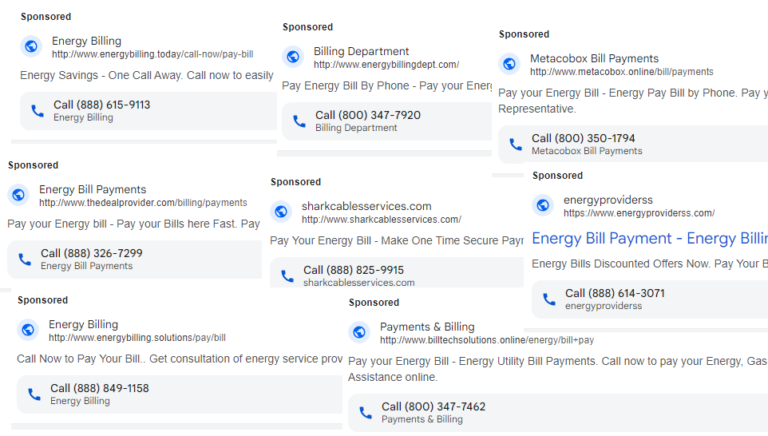
A few months later, we checked and were able to find as many Google ads as before, following very much the same pattern. In addition, we can see that miscreants are trying to legitimize their operations by creating fake U.S.-based entities.
Utility-based ads targeting mobile phones
It only took us 15 minutes to find about a dozen fraudulent ads on Google related to utility bills. This campaign is targeting mobile devices only, as far as we can tell, and U.S. residents. All the ads seen below belong to different advertisers based in Pakistan.
Some of those advertiser accounts have a fairly large footprint with several hundred ads.
Most often, the ad is not associated with a landing page (although a URL is displayed); instead clicking on the ad will bring up the phone number and prompt you to dial. Having said that, the domains used belong to the scammers and are often fairly new.
We also saw several ads that at first appear somewhat legitimate. They are registered to advertisers based in the US and their websites look almost authentic. But when you start checking the details, you realize some things don’t add up, such as an address that leads to an apartment complex.
Consumer protection
The Federal Trade Commission (FTC) has an article about utility scams, however the technique mentioned there is about scammers calling victims, rather than the other way around. For good reason many people won’t answer the phone when it shows an unknown number as it is likely yet another telemarketer. Certainly, there are victims that will answer the phone but the scam is much more effective when you are the one to initiate the call.
We have reported the fraudulent advertiser accounts to Google while we are also adding related domains to our blocklist. Remember to be extremely vigilant before calling anyone, especially if that number came from an advertisement. If in doubt, go directly to your utility company’s website using a computer and then look for a form or phone number that you can verify before dialing.
TCL is more known for being a TV company, but it’s expanded its business over the past couple of years and provided us with some compelling mobile devices. It has a line of tablets called the TCL Tab series. Well, TCL partnered with Verizon to bring the TCL Tab 10 NXTPAPER 5G for a low price.
Talking about the numbers, this tablet doesn’t cost much. Buying it outright will only cost you $240. However, you can also get this tablet on a contract for only $6.66/month. The contract is for 36 months, so that’s something to keep in mind. Sadly, there’s no option for a 24-month contract.
Since this is a 5G device, you’ll be paying for the data connectivity. Your tablet will be connected wherever you go. So, if you’re a person who works on the go constantly, and you don’t want to be tethered to Wi-Fi, then this will be a great choice for you.
Get the TCL Tab 10 NXTPAPER 5G from Verizon at a low price
So, what does this tablet have to offer? The TCL Tab 10 NXTPAPER 5G isn’t the most powerful or fully-featured tablet on the market, but it does have some nice features up its sleeve.
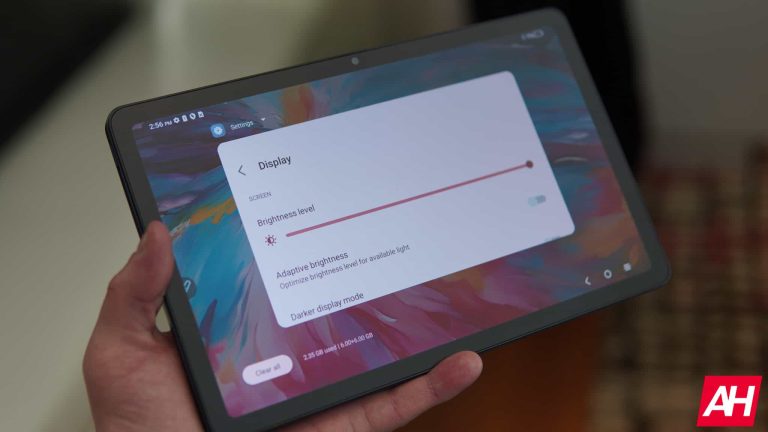
For starters, there’s the display. TCL has its proprietary NXTPAPER display technology. This is the technology that makes it feel like you’re using a piece of paper. Firstly, it’s glare-free, so you will be able to enjoy more of your content when in a bright environment. Secondly, the screen greatly reduces the harmful blue light that’s emitted by most screens. This is better for your eyes.
That screen has a resolution of 2000 x 1200, so it’s just above 1080p resolution. It’s not the most pixel-dense, but it’s still nice. One thing that makes it nicer is the 90Hz refresh rate.
Powering it, there’s an unnamed MediaTek processor, but it’s paired with 6GB of RAM and 128GB of storage. Those are typical mid-range specs. Also, it has microSD card expansion up to 1TB.
Other specs include a 6,000mAh battery, an 8MP camera, and Android 14 out of the box. So, if you want a decent 5G-connected tablet for a good price, you should check this out.
US federal agencies are tightening regulatory scrutiny on tech biggies, particularly their roles in shaping the AI industry. The FTC recently launched an antitrust investigation into Microsoft over its deal with Inflection AI. The investigation is part of an agreement with the DOJ, which will examine the conduct of Nvidia, the biggest maker of AI chips. The FTC will also investigate OpenAI, the firm behind the ChatGPT AI chatbot. Microsoft is OpenAI’s largest investor.
FTC and DOJ divide responsibility to scrutinize Nvidia, Microsoft, and OpenAI
Nvidia, Microsoft, and OpenAI are currently seen as the three biggest stakeholders in the AI industry. The former makes the most advanced GPUs for AI devices and systems. The unprecedented rise in generative AI applications over the past two years has helped it almost triple its sales in no time. The company’s stock price also soared more than 200 percent, with its market capitalization exceeding $3 trillion for the first time, surpassing Apple.
Nvidia’s dominance in the AI chips market has got industry players worried. The company allegedly locks customers into using its chips through software tools, thus stifling competition. Its distribution strategy is also an area of concern for some. The United States Department of Justice (DOJ) will look into all of this. If the agency finds Nvidia abusing its dominance to gain an unfair advantage over its competitors, it may file an antitrust lawsuit against the company.
Microsoft is another tech biggie with the power to potentially shape the AI industry to its benefit. Like Nvidia, it also entered the AI fray early, investing a whopping $13 billion in OpenAI, a portion of which came before ChatGPT‘s launch. The Windows maker has also struck deals with other AI companies. In March, it hired almost all of Inflection AI’s employees, including the two co-founders, and paid the company $650 million to license its AI technologies.
The FTC is studying this deal to determine whether Microsoft deliberately structured it this way to avoid potential antitrust inquiry. Instead of acquiring the firm, the company only hired its employees and signed a tech licensing deal. Inflection AI says it is still a completely independent company. However, the FTC isn’t buying anything and is seeking relevant documents to ascertain if Microsoft has gained control over the AI startup while dodging regulatory review.
The FTC will also investigate OpenAI
Microsoft owns 49 percent of OpenAI, whose ChatGPT powers several AI tools. American regulators are worried that Microsoft may be able to influence OpenAI’s technologies and developments. The FTC will investigate this partnership over potential antitrust violations. These investigations don’t necessarily mean the two regulatory agencies will file cases against the three companies. However, the FTC and DOJ did something similar in 2019 and proceeded to sue Google, Apple, Amazon, and Meta, so you never know.