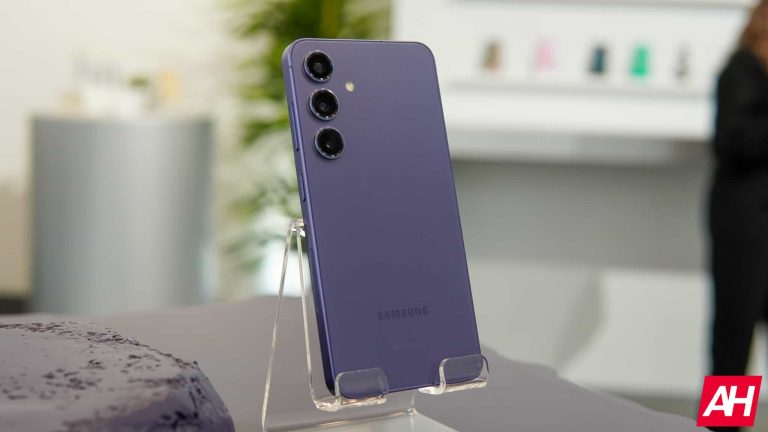
The Galaxy S25 is said to feature a different design and a larger display
According to what was said, the Galaxy S25 will arrive with “considerable changes in the overall design”. We’re not really sure what those design changes are, but we can apparently expect a different design to greet us.
That is not all that surprising as Samsung has been sticking to the same design for a while now. Something fresh is definitely not out of the question, and the Galaxy S25 is tipped to deliver that change.
Now, the vanilla model will also include a larger display. The source claims that the device will feature a 6.36-inch display. The Galaxy S25 comes with a 6.2-inch panel, so we’re looking at a display size increase here
It will have the same display size as the Xiaomi 14, allegedly
The Xiaomi 14, for example, has a 6.36-inch panel, which is coupled nicely with very thin bezels. Still, that device is not exactly small, so… the Galaxy S25 will also be larger than the Galaxy S24 if it gets that display increase.
As many of you know by now, the iPhone 16 is also expected to get a display increase. The device is tipped to include a 6.3-inch panel. The iPhone 15, for those of you out of the loop, has a 6.1-inch panel.
It seems like the Galaxy S25 series will bring some notable changes next year. We’re still far away from their arrival, though, so take this information with a grain of salt. The devices are not expected to arrive until the first quarter of next year. They’ll most likely arrive in January.
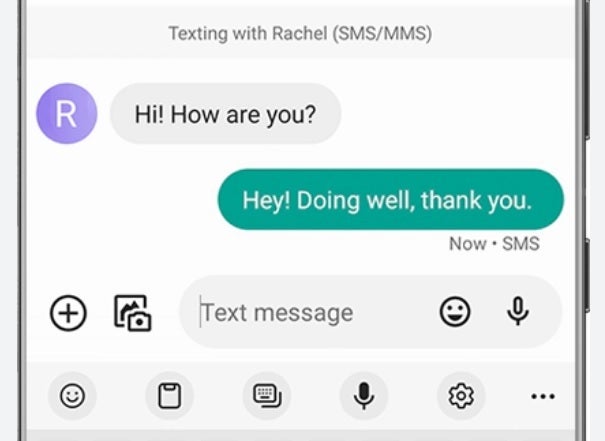
Rich Communication Services (RCS) allows Android users messaging to other Android users over the RCS platform to enjoy many of the fabulous features that Apple offers to those chatting with iMessage. Those features include end-to-end encryption, read receipts, typing indicators, high-quality image sharing, the ability to type longer messages, and more. Later this year, Apple will add RCS support to the iPhone allowing iPhone users chatting with an Android user to enjoy the aforementioned features.
According to SamMobile, some Galaxy phone users are having issues using RCS. Over at Reddit, some Android phone owners have noticed that chats with a few Samsung device users are switching between RCS and old-school SMS texts. As one Redditor with the user name atehrani wrote, “I use Google Messages and [with] friends who use Samsung Messages, sometimes I’ll get RCS and sometimes it will switch me to SMS.” This is important because once the chat switches to SMS, those fabulous features we discussed will disappear.
Another Reddit user, grizzlyactual, said, “Now that you mention it, I’m noticing the people whose chats constantly switch between RCS and SMS have Samsung phones.” And yet another Reddit user, KirsUkh0sm41gh1989, posted, “Well, honestly, it has happened to me that sometimes my contacts who also use Samsung stop showing the RCS mark and can’t receive any RCS message, but after a few days it works again tho. The rest of my contacts receive RCS without issues.”
Some Galaxy device users are having issues with RCS
We can understand how annoying this could be. Eventually we could see an update released that solves this issue. So far though, neither Samsung nor Google has commented on this problem. It’s situations like this that turn Android users toward third-party messaging apps like WhatsApp.
The best and easiest solution would be for those with a Samsung Galaxy handset to install the RCS-powered Google Messages app and make that their default messaging app replacing Samsung Messages. To install Google Messages on your Galaxy phone, tap on this link.
Samsung is preparing to roll out a new update to the Galaxy S24 Ultra. It will improve the phone’s camera performance, particularly the zoom quality. The device captures darker photos at certain zoom levels. The Galaxy S24 and Galaxy S24+ may also get this update.
Samsung announces a Galaxy S24 Ultra update to improve camera zoom
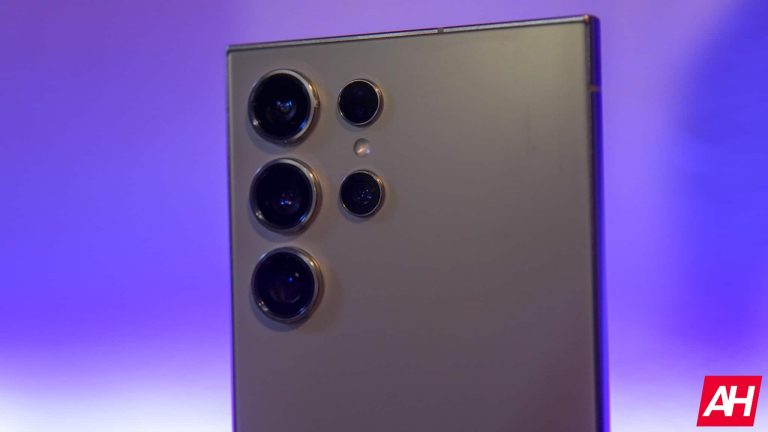
The Galaxy S24 Ultra has one of the best cameras on any smartphone today. You get a 200MP main camera, a 50MP 5x zoom camera, a 10MP 3x zoom camera, a 12MP ultrawide lens, and a 12MP selfie camera. The phone captures excellent photos and videos in most lighting conditions and shooting parameters. You can take out your phone and capture the shot without fiddling with settings. The image will come out brilliant in most scenarios.
However, there is still plenty of room for improvement in some areas, like camera zoom. At certain zoom levels (1.6-1.9x and 4.6-9.9x), the images come out darker than normal if you have locked the auto exposure. The difference in exposure is easily noticeable when you capture the same scene at 1.9x and 2x zoom. While unlocking auto exposure will solve the problem, inconsistent behavior at different zoom levels is still an issue.
This may not be a major problem for everyone, as most people likely use the on-screen zoom shortcuts (1x, 3x, 5x, 10x, etc.) to capture any scene. The problem doesn’t occur at these zoom levels. You will notice a drop in image quality or exposure only when zooming in to the specified levels using the zoom slider while keeping auto exposure locked. Thankfully, Samsung says an upcoming update for the Galaxy S24 Ultra will fix this issue.
The company hasn’t provided a timeline for the update. We will let you know when the rollout begins. In the meantime, you can try unlocking auto exposure and autofocus when capturing zoom shots with your Galaxy S24 Ultra. Simply tap the area you want to focus on once and press the lock shape that appears on the screen. You can press and hold the area to lock auto exposure and autofocus.
The other two models should also get this update
The Galaxy S24 series arrived on the market at the end of January. Samsung has already rolled out two updates to the devices. The first update brought some camera and display improvements, while the second update was just a security patch. All three models received these updates. The next camera update should also roll out to the entire lineup. Samsung may release the update later this month or in April.
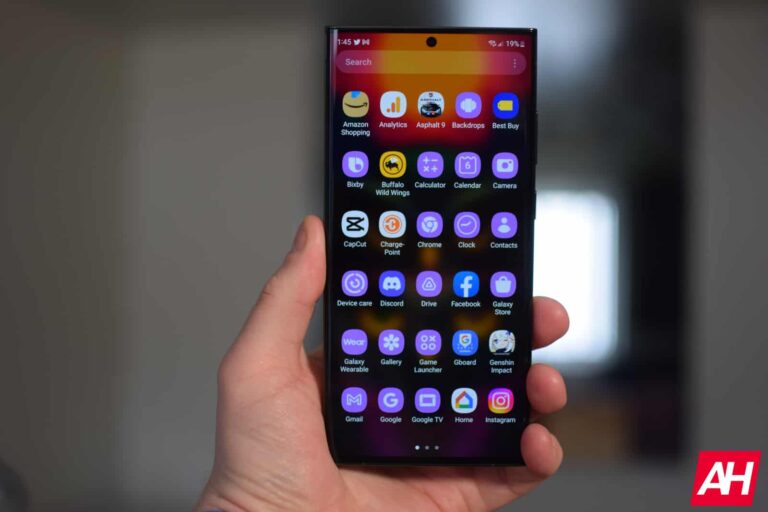
If you use a Pixel device, you will see the Google search bar on your home screen. This is your fast track to the Google app. It’s not customizable at all, and that’s just how the company wants it. Now, you can access Google Gemini through the Google app. This negates the need to download the Gemini app on the Google Play Store.
Pixel users in the EU can change their default search engine
This is a phenomenon that only the EU could bring. Obviously, since Pixel phones are all manufactured by Google, the company will add its own services to create a unique user experience.
However, that’s not within the EU’s plan. According to some new reports, in the EU, Pixel users are able to change the default search engine. This means that the search bar at the bottom can be customized to use other search engines.
A screenshot posted by Mishaal Rahmen (via 91Mobiles) shows this in action. We see the ability to select different search engines for the search bar. This includes engines like DuckDuckGo. When you change the search engine, you will see the icon on the left side of the widget change to match the search engine you chose.
Right now, Google is in the process of rolling out this change. So, there’s a chance that some users will not be able to access it just yet. Also, this is going to be an EU-exclusive feature. So, don’t expect it to come to the United States.
This is something that is obviously against Google’s plans. Having the Google search engine as the default means that Google will have more control over the data that people produce. So, we can tell that Google is not happy about this.
Samsung‘s One UI 6.1 update may soon hit the Galaxy S23 series. The company has confirmed that the new One UI version will be available for its 2023 flagship lineup, including the Galaxy S23 FE, by the end of March. The rollout will likely begin in South Korea before reaching other markets.
Galaxy S23 will get the One UI 6.1 update this month
The Galaxy S23 series currently runs on Android 14-based One UI 6.0. In fact, all Samsung smartphones that received an update to Android 14 are on One UI 6.0. The Galaxy S24 and newer models, which shipped with the latest Android version out of the box, arrive with Samsung’s One UI 6.1 custom Android skin.
While it may not seem like a major update, there are a few reasons to be excited about One UI 6.1. The biggest is Galaxy AI. Samsung introduced a slew of AI features with the new One UI version. The Galaxy S24 series offers built-in AI tools for photo and video editing, notes, calls, messages, wallpapers, and more. You also get AI-powered camera enhancements.
Additionally, One UI 6.1 brings some UI tweaks and smoother system animations. Other miscellaneous changes improve the overall Galaxy experience. Like before, the new One UI version will be available for most Galaxy smartphones and tablets updated to Android 14. Some AI features may not be compatible with certain models, particularly low-cost ones.
Shortly after the Galaxy S24 launch, Samsung said it plans to begin the rollout in March, with the Galaxy S23 series getting the update first. The company recently confirmed that there is no change in the plan. The 2023 flagships, including the FE model, will get the update this month. The confirmation came from South Korea, so the rollout should begin there.
If we are to guess, Korean Galaxy S23 users may receive One UI 6.1 as early as this week. Users in the US, Europe, and a few other regions may get the update next week. If the Korean release is delayed until next week, we may hit April before a global rollout is underway. As usual, you can check for updates from the Settings app on your Galaxy device.
Other Galaxy devices will also get this update
The Galaxy S23 series should be followed by the Galaxy Z Fold 5 and Galaxy Z Flip 5 in Samsung’s One UI 6.1 party. The likes of the Galaxy S22 series, Galaxy S21 series, 2022 and 2021 foldables, recent mid-range phones, and recent Galaxy tablets will also get the update. As said earlier, the availability of features will vary depending on the hardware capabilities of the device.
Microsoft is all set to release a new Magic Erase feature in their OneDrive app, inspired by functions in Google Photos as revealed in the beta version of the app. The next update uses generative AI technology to smoothly and seamlessly remove undesired objects from pictures.
OneDrive Beta APK-teardown suggests a Magic Eraser feature on the horizon
The Magic Erase feature is yet to activate on the OneDrive application but its appearance may be imminent following some lines of code found in the beta version. OneDrive’s magic eraser is similar to that of Google Photos. It will allow users to choose objects from their images by outlining them with a brush tool, a technique they can use to remove selected objects. Afterward, Microsoft’s generative AI algorithms fill up spaces left after removal automatically for a smooth editing process.
The Android Beta version of the OneDrive app also comes with warnings against using Magic Erase features. As indicated by AndroidPolice, the tool works using Artificial Intelligence and hence may not give expected outcomes all the time. Users are also invited to send feedback if anything unusual happens during its operation.
While there are currently no screenshots showing how Magic Erase operates, relevant strings within the beta code suggest that it could soon be more widely available. Microsoft has already stated that Copilot for Onedrive will be accessible through web pages starting in late April which gives us reason to believe that Magic Erase might follow closely at around this time too.
There’s little to know about the accuracy of OneDrive’s Magic Eraser
Since last year, Google Photos has had a similar Magic Eraser function for Pixel owners and subscribers of Google One who have had a choice between manual selection or automatic suggestions. However, we do not know whether Microsoft’s implementation of Magic Erasers would include auto-suggests like those found on Google Photos.
This move by Microsoft adds another feather to its cap towards enhancing user experience. The company is making photo editing easier through the introduction of the magic erase feature as part of its productivity suite integrated with its renowned generative AI technology.
The ongoing “free wedding invite” scam is one of several innovative campaigns aimed at the senior population.
Through social media chats like WhatsApp, fraudsters use deceptive tactics, most often involving fake wedding invitations.
It communicates with its victims over WhatsApp and tricking them into installing an APK that finally sends user data to a C2 server that is hosted on Telegram.
“A malicious APK pretending to be a fake wedding invite is then shared with the victim. The victims, believing the APK to contain more details about the free wedding, install the malware and end up being exploited by having their SMS data being stolen”, F-Secure, a cyber security firm shared with Cyber Security News.
Alert Fatigue that helps no one as security teams need to triage 100s of vulnerabilities.:
The problem of vulnerability fatigue today
Difference between CVSS-specific vulnerability vs risk-based vulnerability
Evaluating vulnerabilities based on the business impact/risk
Automation to reduce alert fatigue and enhance security posture significantly
AcuRisQ, that helps you to quantify risk accurately:
Free-Wedding Invite Scam Via WhatsApp
The “wedding invite” scam, in which the victim receives a wedding invitation from an unidentified individual urging them to open the attached file to obtain further information about the wedding, was a scam that circulated throughout Malaysia.
Particularly, the “attached file” is actually an APK that infects the victim’s phone with malware.
The malware that exists is designed to steal various types of data from users’ phones, including device, build, and SMS information.
Original WhatsApp messages received as per a Facebook post
While researchers analyzed AndroidManifest.xml, there were certain risky permissions in use that enabled text message sending and reading.
Furthermore, the app does not appear in the App Launcher due to the Missing Launcher activity category. There were two broadcast recipients for the same push notification.
Observations in AndroidManifest.xml
“Once the app is installed on the phone, it stays hidden, as deduced from the MainActivity”, researchers said.
“For spyware, the reason behind hiding is to avoid detection and carry on with its objective of stealing user data as long as possible”.
As its C2 server, the malware makes use of a Telegram bot. Telegram bots are applications offered by the Telegram chat network.
It is configured to deliver real-time information and automate user interactions.
The application transfers stolen data to the Telegram bot, making it simple for a hacker to obtain information gathered on Telegram.
Collecting Device Information
Following the exfiltration of this data to the Telegram bot, the malware opens a seemingly secure website, distracting and calming the victim into a false sense of security.
The Safe Website
Although it seems to be a shopping website, its functionality is unrelated to the malware.
On the compromised device, the malware intercepts incoming SMS messages.
This may result in scammers gaining access to several sensitive data, such as personally identifiable information and one-time passwords, among others.
Such information can be misused in many ways, such as selling credentials that have been stolen or taking over banking sessions.
As a result, individuals should use caution when communicating digitally, especially with elders, as the environment of scam threat is always changing.
Security companies must also be knowledgeable about it to safeguard their clients.
Stay updated on Cybersecurity news, Whitepapers, and Infographics. Follow us on LinkedIn & Twitter.
OnePlus has several lines of phones, and they differ in name by market. Over in China, OnePlus’ secondary line of phones is known as its Ace phones. However, globally, they are known as the OnePlus Nord phones. When the OnePlus Ace 3V launches globally, it will be known as the Nord 4.
OnePlus reveals the launch date for the OnePlus Ace 3V
This is going to be the latest premium mid-range device from the company. It might seem a bit redundant, because of the OnePlus 12R. However, it differs in design significantly. This phone will officially launch on March 21st in China.
The reason why this phone is named the OnePlus Ace 3V and not the OnePlus Ace 4 is because the number 4 in China is associated with bad luck. This is the reason why there was no OnePlus 4 released back in 2017.
Rumored specs
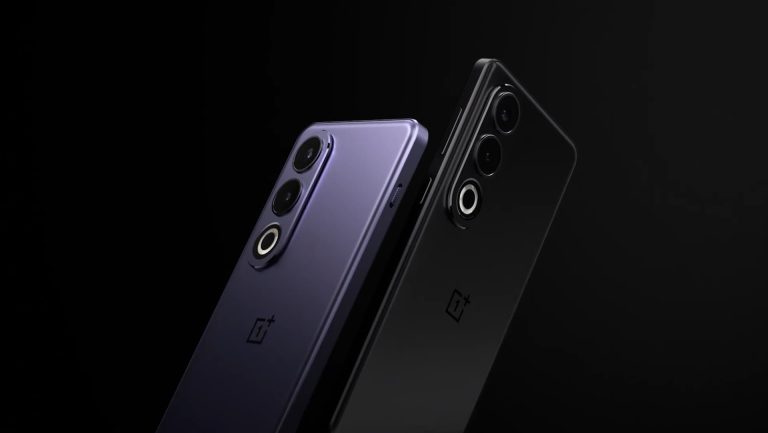
As for what this phone will offer, the company showcased a short video of it on its site, and it shows us a few details about the phone. One confirmed that this phone will have two camera sensors, but we are unsure of the resolution. Also, it will have an alert slider.
Looking at the back of the phone, we see that OnePlus is still differentiating its budget phones from its flagship phones in terms of design. This is the opposite of what Samsung is doing.
The glass looks like it will, unfortunately, be made of smooth glossy glass. The camera package will be a large pill-shaped component that will be made of metal. It looks like the frame of the phone will also be made of metal. Overall, you should expect a premium feel in the hand.
Moving on to the front, we see a center-mounted punch hole. What’s most notable about the front is the fact that the bezels look like they will be paper-thin. It almost looks like they will give the Galaxy S24 phones a run for their money.
Rumors state that the OnePlus Ace 3V will be the first phone to support the Qualcomm Snapdragon 7+ Gen 3. It could have up to 16GB of RAM and up to 512GB of storage, so just be an extremely capable device.
Lastly, OnePlus says that it will even be able to outlast the OnePlus 12 in terms of battery life. That will be an astounding feat, as the OnePlus 12 already has great battery life.
Right now, we don’t have any word on the potential price of this phone. However, it won’t be long until we find out. The launch is only a few days away.
If you’ve always wanted to visit Super Nintendo World but couldn’t justify the cost, perhaps Peacock could help you get there. The streaming service where you’ll find hit shows like Parks and Recreation is giving away a trip to Universal Studios Hollywood. This is fitting since Peacock is owned by Peacock TV LLC, which is owned by NBCUniversal Media Group. Universal Studios Hollywood is also where you’ll find Super Nintendo World.
The trip is in celebration of Super Nintendo World’s first anniversary since opening and you could be there to enjoy the festivities. The trip includes 2 days of fun for you and up to three guests in LA where the park is located. And interestingly enough, you don’t have to be subscribed to Peacock to enter.
The trip to Super Nintendo World is almost entirely covered by Peacock
I wouldn’t call this an all-expenses-paid trip, since you would obviously incur some cost somewhere. Whether that be with food or purchases of products at or outside the park. However, what you wouldn’t be paying for is the airfare and hotel accommodations, as well as entry to the park. And all of that is the most expensive stuff.
With that being said, here are the details. You get round-trip economy class airfare for you and up to three guests to LA. You also get two nights with standard hotel accommodations at the Sheraton Universal Hotel, two-day general admission tickets to Universal Studios Hollywood, and “non-exclusive ground transport to and from the airport and hotel.” Transportation very likely doesn’t include any travel that doesn’t go between the airport, hotel, and the park. So if you were to win you’d want to play for that. But all things considered, it’s a pretty super sweepstakes for any Mario fans.
You can actually enter through this link with absolutely no purchase necessary. Being subscribed to Peacock also doesn’t improve your chances of winning. So don’t feel obligated to subscribe in hopes that that would be the case. The entry period lasts until March 31 and you will need to be at least 18 to enter. If you have wanted to go to Super Nintendo World, it can’t hurt to give the contest a shot.
There is a continuous design language that Sony’s Xperia smartphones have followed over the years and the upcoming Xperia 1 VI will likely continue this trend. However, there are slight changes imminent with the newcomer’s design. The Xperia 1 VI will surely make its debut in May, and it might leave behind two of its predecessors’ trademark characteristics.
Sony Xperia 1 VI going wider with a new display ratio and lower resolution
To start with, the Xperia 1 VI will not have a 4K display which has always been a hallmark of Sony’s smartphones. Sony pioneered the introduction of 4K screens in mobile devices. But, according to rivals who prefer lower resolutions, 4K doesn’t have any significant effect on user experience. So, the company could allegedly drop this feature. This implies that there would be other areas concerning how well the phone performs and what it does.
Also, the Weibo leak claims that the Xperia 1 VI will not follow the tall cinematic 21:9 aspect ratio as found in previous Xperia models. Instead, it will utilize a 19.5:9 one. As seen from concept renders, this adjustment will make it shorter and wider than its predecessors. Although Sony’s aspect ratio was unique at 21:9, it might have failed to resonate with consumers thus necessitating alternative approaches by makers.
These rumored modifications are pointing to potential strategic changes that may be happening with Sony’s smartphones, aligning them with market trends and consumer preferences. However, it is important to note here that these are just rumors until Sony confirms them officially. But while the suggested decisions might have some logical reasoning behind them, their accuracy is yet to be established.
More leaks abound leaving fans excited about the upcoming Xperia lineup
Leaks in recent times have also disclosed RAM configurations of Sony’s soon-to-be-released Xperia 1 VI. As well as the Xperia 5 VI, and Xperia 10 VI. Further raising expectations for Sony’s imminent releases. Consequently, as fans anticipate more information and official statements from Sony, the exiting of the Xperia 1 VI from the realm of 4k display and tall aspect ratio represents an interesting turn of events.


.webp)
.webp)
.webp)
.webp)